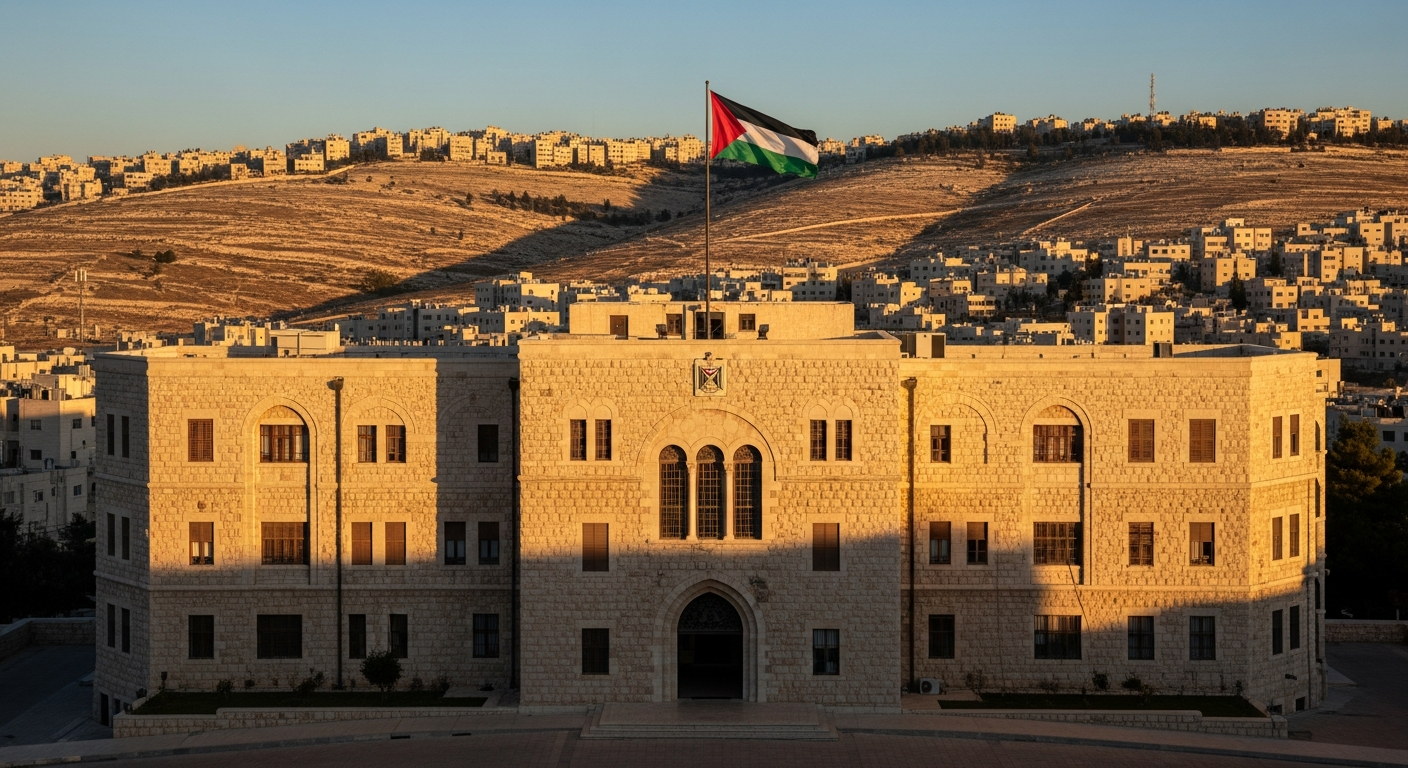
The Palestinian Authority (PA) is currently facing an unprecedented period of uncertainty as Mahmoud Abbas, also known as Abu Mazen, enters the third decade of what was originally intended to be a four-year presidential term. At nearly ninety years of age and with reported health concerns, his refusal to appoint a clear successor or hold national elections since 2006 has created a dangerous political vacuum. This lack of a formal transition plan threatens the internal stability of the Fatah-led administration in Ramallah and risks a broader security collapse across the West Bank. For Israel and the international community, the stakes of this transition are high, as the PA’s survival is inextricably linked to regional security coordination and the prevention of a Hamas takeover.
The absence of a functional Palestinian Legislative Council (PLC), which Abbas dissolved by decree in 2018, further complicates the legal path for succession. According to the Palestinian Basic Law, the Speaker of the PLC should serve as acting president for sixty days until elections are held; however, the last Speaker was Aziz Dweik of Hamas, a scenario the Fatah leadership intends to avoid at all costs. Consequently, the transition is expected to be managed through internal appointments within the PLO Executive Committee and the Fatah Central Committee. This shift from constitutional law to elite-level decision-making increases the likelihood of internal power struggles and public delegitimization.
Historical Context of the Palestinian Leadership
Following the death of Yasser Arafat in 2004, the transition to Mahmoud Abbas was relatively orderly, supported by a consensus within the Fatah movement and the broader Palestine Liberation Organization (PLO). Abbas was seen as a pragmatic leader who transitioned the PA away from the militarized violence of the Second Intifada toward a policy of diplomatic engagement and security cooperation with Israel. However, over the past twenty years, the PA has evolved into a highly centralized autocratic system where power is concentrated almost entirely in the hands of the presidency. This centralization has stifled the emergence of younger leaders and marginalized institutional checks and balances.
The 2007 civil war between Fatah and Hamas, which resulted in the violent expulsion of the PA from the Gaza Strip, fundamentally altered the Palestinian political landscape. Since then, the PA has exercised limited self-rule only in the West Bank, while its popular legitimacy has steadily eroded due to perceptions of corruption and its inability to deliver a sovereign state. Recent polling from the Palestinian Center for Policy and Survey Research consistently shows that a vast majority of Palestinians desire the resignation of Abbas. This disconnect between the aging leadership and a youthful, increasingly radicalized population sets the stage for a volatile succession process.
Key Facts Regarding the Succession Crisis
- Mahmoud Abbas holds three distinct roles: Chairman of the PLO, President of the Palestinian Authority, and Chairman of Fatah, with no clear consensus on whether one person will inherit all three titles.
- The Palestinian Legislative Council remains dissolved, leaving no legal parliamentary body to oversee a constitutional transfer of power.
- Key contenders for leadership include Hussein al-Sheikh, Secretary-General of the PLO Executive Committee, and Majid Faraj, the Director of the General Intelligence Service.
- Marwan Barghouti, a popular Fatah figure currently serving multiple life sentences in an Israeli prison, consistently leads in public opinion polls despite his incarceration.
- Hamas remains the most significant external threat to Fatah's control, maintaining high levels of support in the West Bank and seeking to capitalize on any post-Abbas chaos.
Analysis of Potential Succession Scenarios
Analysts generally envision three primary scenarios for the "day after" Abbas: an orderly transition, a collective leadership model, or a total descent into chaos. An orderly transition would likely involve the Fatah Central Committee quickly consolidating behind a single candidate, such as Hussein al-Sheikh, who currently manages the most critical portfolios of civilian and security coordination with Israel. This path is favored by regional powers and Israel because it offers the highest chance of maintaining the status quo and preventing immediate violence. However, such a leader would struggle with a profound lack of popular mandate, potentially leading to widespread civil disobedience or the rise of local militias.
A second possibility is a collective leadership arrangement where the roles of PLO Chairman and PA President are split among different individuals to satisfy various internal factions. In this model, a veteran figure like Mahmoud al-Aloul might take a symbolic leadership role while security chiefs maintain actual control over the ground. While this could prevent an immediate civil war within Fatah, historical precedents suggest that such committees are often unstable and prone to paralysis. According to analysis by the Washington Institute for Near East Policy, any protracted power struggle in Ramallah would provide an opening for Hamas to expand its influence in the West Bank through both political maneuvering and armed escalation.
The most concerning scenario involves the "cantonization" of the West Bank, where the PA effectively collapses and power devolves to local warlords, tribal leaders, and armed groups. We have already seen the emergence of "The Lion's Den" in Nablus and similar groups in Jenin that operate outside of the PA’s security umbrella. If the central government in Ramallah fails to project authority after Abbas, these localized power centers could become the primary actors in the territory. This would necessitate a significantly more aggressive Israeli military presence to prevent the West Bank from becoming a launchpad for terror, effectively ending the era of Palestinian self-governance established by the Oslo Accords.
Significance for Israel and Regional Stability
For the State of Israel, the PA succession crisis is not merely an internal Palestinian matter but a core national security challenge. The PA security forces currently play a vital role in de-conflicting and preventing terror attacks, which serves the interests of both sides. A collapse of this coordination would force the Israel Defense Forces (IDF) to take full responsibility for security in all Palestinian population centers, leading to a massive increase in friction and potential casualties. Israel's policy has generally been to strengthen the PA's moderate elements while preparing for the worst-case scenario of a total administrative breakdown.
Ultimately, the transition after Mahmoud Abbas will determine the trajectory of the Israeli-Palestinian conflict for the next generation. Whether the next leadership chooses the path of continued institutional building or returns to the strategy of "armed struggle" will depend heavily on the internal dynamics of Fatah and the level of international support for a stable transition. Proactive planning and regional cooperation are essential to ensure that the inevitable departure of Abbas does not lead to a vacuum filled by extremist actors who seek to destabilize the entire Middle East.