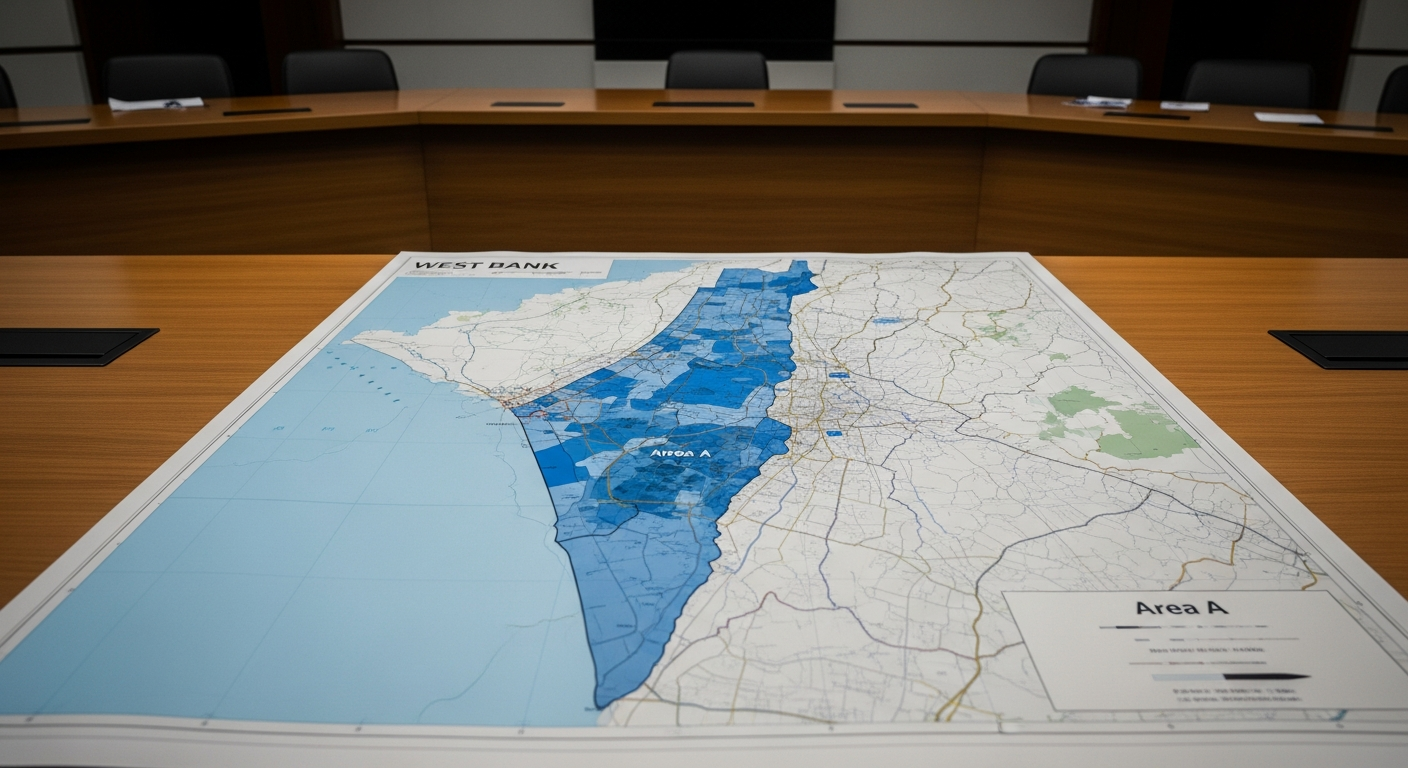
Security coordination between the Israel Defense Forces and the Palestinian Authority Security Forces serves as a fundamental pillar of the regional stability framework established under the Oslo Accords. While often subjected to political volatility and public announcements of suspension by Palestinian leadership, the operational relationship remains a critical mechanism for preventing large-scale escalation and managing day-to-day friction in Area A. This coordination is primarily designed to facilitate deconfliction, ensuring that Israeli security operations can proceed without accidental engagement with Palestinian forces while allowing the Palestinian Authority to maintain civil order within its primary urban centers. The persistence of these channels underscores a mutual interest in preventing the rise of rival militant factions that threaten both Israeli citizens and the Palestinian Authority’s own governance.
Historical Foundations and the Oslo Framework
The legal basis for security cooperation was codified in the 1995 Israeli-Palestinian Interim Agreement on the West Bank and the Gaza Strip, commonly referred to as Oslo II. This agreement divided the territory into three distinct administrative zones, with Area A falling under the full civil and security control of the newly formed Palestinian Authority. To manage the overlap of security interests, the Joint Coordination and Cooperation Committee was established to oversee liaison activities and provide a formal structure for communication between the two sides. Over the decades, this relationship has evolved through periods of intense conflict, such as the Second Intifada, and periods of relative calm, always returning to a functional baseline out of necessity.
Following the chaos of the early 2000s, the security apparatus of the Palestinian Authority underwent significant professionalization through the efforts of the United States Security Coordinator for Israel and the Palestinian Authority. This international mission, led by a high-ranking American military officer, focused on training and equipping Palestinian forces to act as a disciplined, non-political security organization capable of maintaining law and order. According to the United States Department of State, these professionalized units have become increasingly capable of managing internal security challenges, which is essential for reducing the need for frequent Israeli military incursions into Palestinian population centers.
Key Facts Regarding Area A Security
- Area A encompasses approximately 18 percent of the West Bank and includes the major Palestinian cities such as Ramallah, Nablus, and Jenin.
- Security coordination involves real-time intelligence sharing regarding the movements of extremist groups like Hamas and Palestinian Islamic Jihad.
- The mechanism of deconfliction ensures that when the IDF enters Area A for counter-terrorism operations, the Palestinian Security Forces remain in their barracks to avoid friendly fire incidents.
- Operational cooperation reached record levels throughout 2024 and 2025 despite heightened political tensions and the Gaza conflict.
- The United States Security Coordinator acts as a vital third-party mediator that maintains trust and technical standards between the two security establishments.
Contemporary Challenges and Tactical Analysis
The status of security coordination in the current era is defined by the emergence of decentralized militant "battalions" in the northern West Bank, particularly in Jenin and Nablus. These groups often operate independently of traditional factional hierarchies, posing a significant challenge to the Palestinian Authority’s control and forcing the IDF to take more direct action in Area A. When the Palestinian Authority is unable or unwilling to dismantle these cells, the security coordination mechanism is tested as the IDF increases its operational tempo within jurisdictions nominally under Palestinian control. This dynamic creates a "security vacuum" that requires constant recalibration of the liaison relationship to prevent a total collapse of the local governing structure.
From an analytical perspective, the Palestinian Authority faces a perpetual dilemma where maintaining coordination is viewed by some local segments as acting as a "subcontractor" for Israeli security, yet abandoning it would lead to a rapid takeover by extremist rivals. Analysts at the Israel Policy Forum highlight that the security relationship is more resilient than political rhetoric suggests because both parties recognize that a total cessation of ties would lead to anarchy. The continued flow of intelligence and the management of civil movements across borders are essential for the economic survival of the Palestinian territory and the prevention of mass casualty attacks against Israeli civilians, making the "security deep state" a remarkably durable entity.
Conclusion and Regional Significance
The status of security coordination remains a vital barometer for the health of the broader Israeli-Palestinian relationship and the prospects for future regional integration. For Israel, a functional and strong Palestinian security apparatus is a prerequisite for any reduction in military presence and a key component of the "Day After" planning for governance and stability. As long as mutual threats from radicalized non-state actors persist, the tactical necessity of coordination will likely outweigh the political pressures to sever ties. The continued support of international intermediaries and the professionalization of the Palestinian Security Forces remain the most effective tools for preventing a total security breakdown in the heart of the West Bank.