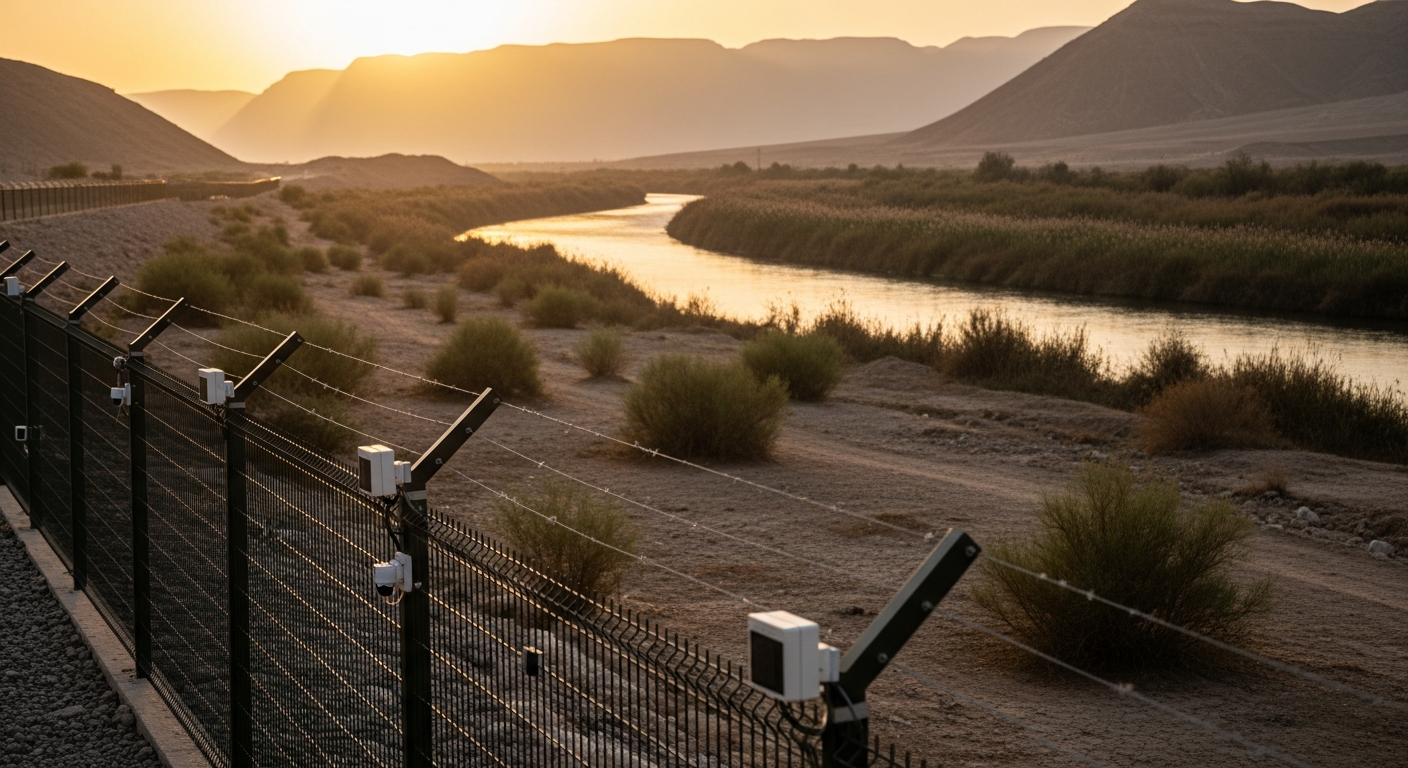
The Jordan Valley serves as Israel's primary strategic buffer to the east, providing the necessary geographic depth to prevent the infiltration of hostile forces and advanced weaponry into the heart of the country. Stretching approximately 96 miles from the Sea of Galilee to the Dead Sea, this region is characterized by its rugged topography and the natural barrier formed by the Jordan River. In recent years, the security landscape has shifted significantly, transforming what was once Israel's quietest border into a high-priority front for counter-smuggling operations. The rise in organized arms trafficking, often orchestrated by regional actors such as Iran and its proxies, has necessitated a fundamental shift in the Israel Defense Forces' (IDF) operational doctrine along this frontier.
Security experts emphasize that the Jordan Valley is not merely a border but a "security shield" that protects the densely populated coastal plain and the sensitive regions of Samaria. Without effective control over this corridor, the West Bank could potentially face a surge in sophisticated weaponry similar to the stockpiles accumulated in the Gaza Strip prior to 2023. This reality has led to the implementation of the "Strong Border" project, a multi-billion shekel initiative designed to modernize the physical and technological barriers along the eastern front. These efforts are aimed at sealing the "blind spots" that smugglers have historically exploited to transport everything from automatic rifles to advanced explosive devices into Palestinian population centers.
Historical Context and Strategic Necessity
Historically, the Jordan Valley has been viewed through the lens of the 1967 Allon Plan, which argued that Israel must maintain a permanent military presence along the river to ensure defensible borders. Following the 1994 Peace Treaty with the Hashemite Kingdom of Jordan, the border remained relatively stable for decades, relying on mutual interests in regional stability. However, the erosion of the Palestinian Authority's governance in northern Samaria and the increased involvement of the Iranian "land bridge" through Iraq and Syria have altered this dynamic. According to research by the Institute for National Security Studies (INSS), maintaining sovereignty and military control in the valley remains vital for preventing the West Bank from becoming a front for Iranian-backed terror cells.
The strategic importance of the valley is underscored by its role in preventing the "Eastward Shift" of terror infrastructure. By controlling the access points along the Jordan River, the IDF can effectively isolate the West Bank from external military support, ensuring that local militants cannot easily upgrade their capabilities with heavy weaponry. This defensive posture is supported by a network of regional outposts, many of which have been reactivated and modernized for the first time since the 1970s. These fortifications now house advanced sensors and rapid-response teams capable of intercepting smuggling attempts in real-time, often within minutes of a breach detection.
Key Threats and Smuggling Patterns
- Sophisticated Infiltration: Smugglers utilize specialized drones, human couriers, and modified off-road vehicles to traverse the steep and arid terrain under the cover of night.
- Iranian Involvement: Intelligence reports indicate that Iran is actively funneling weapons through Jordan to destabilize the region and arm proxies in the Jenin and Tulkarm areas.
- Weaponry Diversification: Interceptions have evolved from simple handguns to M-16 rifles, RPG-7 launchers, and powerful IED components designed to penetrate armored vehicles.
Technological and Military Responses
The IDF's current strategy relies on a "Smart Border" concept, which integrates physical barriers with a sophisticated digital canopy of intelligence-gathering assets. This includes the deployment of high-resolution thermal cameras, ground-penetrating sensors to detect tunneling, and a fleet of autonomous surveillance drones that patrol the border 24/7. These assets are managed by the 417th "Lions of the Valley" Territorial Division, which specializes in the unique challenges of the desert environment. By creating a continuous "digital fence," the military can identify suspicious movements kilometers away from the actual border line, allowing for proactive rather than reactive measures.
Physical infrastructure is also undergoing a massive overhaul, with the construction of a new security barrier modeled after the sophisticated systems on the Gaza and Egyptian borders. This includes reinforced fencing, anti-climb features, and deep concrete foundations to prevent breaches. The Jerusalem Institute for Strategy and Security (JISS) has highlighted that these physical measures must be complemented by continued political and military coordination with the Jordanian Armed Forces. While the two nations share a common interest in blocking Iranian-linked smuggling, the vastness of the territory requires Israel to maintain independent, robust capabilities to ensure total border integrity.
Significance for Regional Stability
The prevention of arms infiltration through the Jordan Valley is directly linked to the long-term viability of security in Samaria and Judea. If the border remains porous, the Palestinian Authority’s security forces, already struggling with internal legitimacy crises, will be completely overwhelmed by well-armed militant factions. This would lead to a total vacuum of authority, forcing the IDF into more frequent and intensive urban operations to dismantle terror cells. Thus, a secure eastern border is the prerequisite for any future diplomatic or security arrangements in the region, as it provides the necessary stability to prevent a total collapse of order.
Furthermore, the Jordan Valley border is a critical component of Israel's broader regional defense architecture. By successfully blocking the influx of weapons, Israel protects its own citizens while also reinforcing the stability of the Hashemite Kingdom, which faces its own internal pressures from radical elements. The ongoing investments in this sector represent a long-term commitment to a "Defensible Borders" policy that prioritizes topography and technology over political concessions. In the current era of regional volatility, the Jordan Valley remains the indispensable eastern wall of the State of Israel, ensuring that the country's heartland remains protected from external aggression and internal subversion alike.