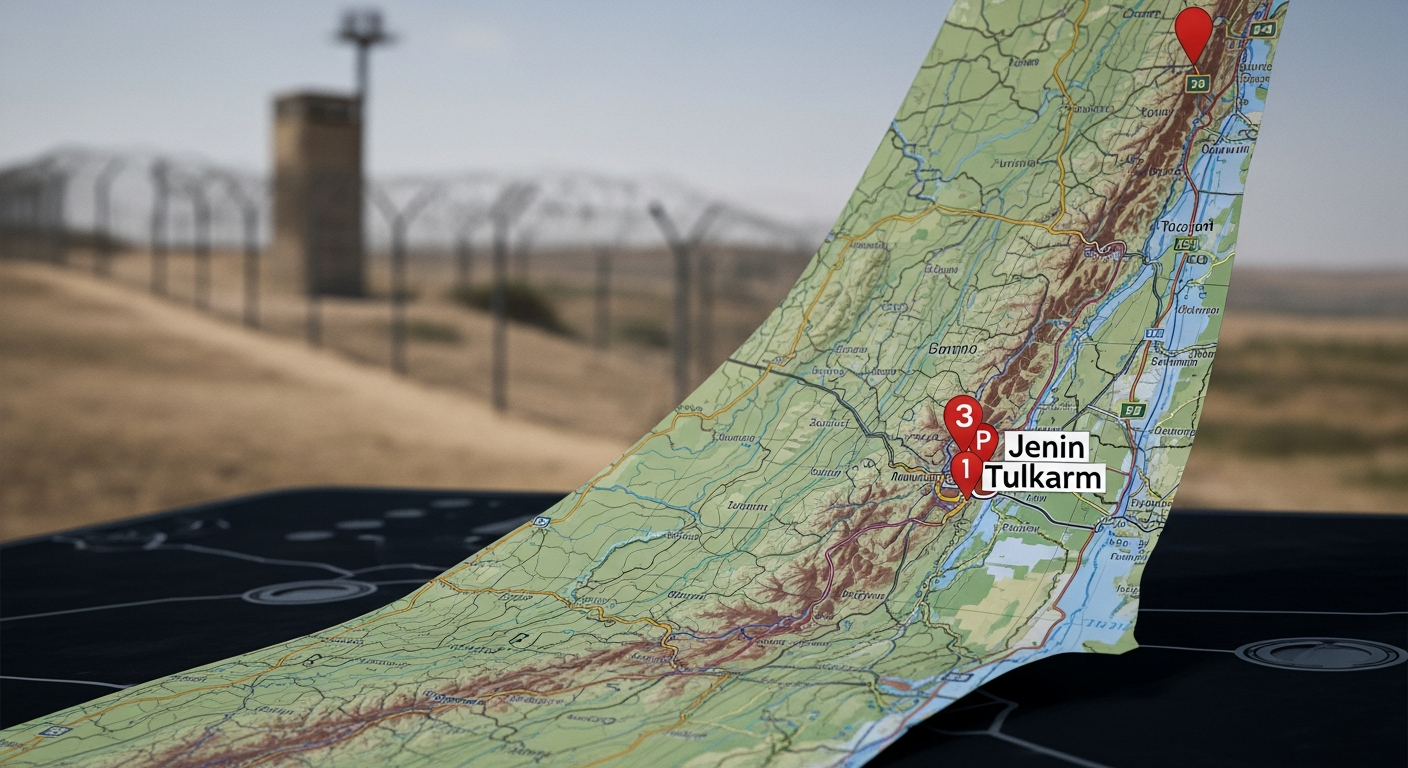
The security landscape in Northern Samaria, specifically surrounding the cities of Jenin and Tulkarm, has undergone a drastic transformation over the past several years. As the Palestinian Authority’s influence has waned due to internal corruption and a lack of popular legitimacy, a power vacuum has emerged that is being aggressively filled by Iranian-backed proxies. Organizations like Hamas and Palestinian Islamic Jihad (PIJ) have moved beyond traditional clandestine cells to establish semi-permanent military presences within densely populated refugee camps. These groups now operate with a degree of openness that includes organized patrols, weapon manufacturing facilities, and sophisticated command-and-control centers.
Historical Context and Regional Shifting
The resurgence of organized militancy in this region can be traced back to the aftermath of the May 2021 conflict in Gaza, which catalyzed a unification of various Palestinian factions under the banner of resistance. The formation of the Jenin Battalion marked a departure from the centralized leadership of the past, as it combined PIJ fighters with Hamas operatives and dissident members of secular factions. This localized coordination has allowed terror groups to pool resources and expertise, particularly in the production of high-grade improvised explosive devices. Over time, these camps have been transformed into fortified zones where narrow alleys are booby-trapped and surveillance cameras monitor every IDF approach.
Furthermore, the erosion of the Palestinian Authority’s security coordination with Israel has allowed these groups to expand their territorial footprint outside the traditional urban centers. By presenting themselves as the true defenders of Palestinian interests, Hamas and PIJ have successfully recruited a new generation of radicalized youth who operate outside the influence of the aging PA leadership. This demographic shift has made the northern West Bank the most volatile theater in Judea and Samaria, characterized by frequent clashes and highly complex urban warfare environments. The systematic targeting of PA officials and security buildings has further paralyzed the local government, leaving the IDF as the sole force capable of conducting counter-terrorism operations.
Infrastructure and Military Capabilities
Beyond the tactical coordination of personnel, the physical infrastructure in Northern Samaria has been adapted to sustain long-term insurgent activities through the construction of hidden facilities. Terrorist organizations have utilized the dense urban sprawl of the refugee camps to hide weapons caches and establish underground bunkers for sheltering senior commanders during raids. These facilities often feature reinforced walls and are strategically placed near schools and clinics to serve as human shields against potential counter-strikes. The technical proficiency of these groups has also increased, with laboratories now dedicated to the mass production of TATP-based explosives and the assembly of sophisticated remote detonators.
Key Facts of the Northern Samaria Crisis
- Smuggling routes through the Jordanian border have facilitated the influx of advanced weaponry, including automatic rifles and specialized components for rocket experimentation.
- The use of massive road-side bombs, often weighing hundreds of kilograms, has become a standard tactic to target IDF armored vehicles during necessary counter-terrorism operations.
- Financial support from the Iranian regime is channeled through sophisticated money-laundering networks, providing the funds necessary to recruit youth and sustain operations.
- Terror groups in Jenin and Tulkarm have begun digging rudimentary tunnels and underground hiding spots similar to those found in the Gaza Strip.
- The Palestinian Authority Security Forces have largely abandoned these specific areas, fearing violent internal conflict with the heavily armed local battalions.
Analysis of the Strategic Threat
From a strategic perspective, the entrenchment of Hamas and PIJ in Northern Samaria represents an existential threat to the heart of Israel, given the region’s proximity to major population centers. The intent of these Iranian-backed groups is to create a second front that can be activated to overwhelm Israeli defenses and distract the IDF from other conflict theaters. According to analysis from the International Institute for Counter-Terrorism, these organizations are systematically working to erode the remaining remnants of PA governance to eventually seize full control. This environment necessitates frequent and proactive IDF incursions, such as Operation Summer Camps, to dismantle explosive labs and arrest high-value targets.
The external support system remains the most critical factor in the longevity of these footholds, as Iranian intelligence provides both tactical guidance and strategic vision. By supplying the technical know-how for local rocket production, Tehran seeks to recreate the threat profile of the Gaza Strip within striking distance of Israel's central hubs. Reports from the Meir Amit Intelligence and Terrorism Information Center highlight that the coordination between Hamas and PIJ has never been more integrated. The failure of the international community to hold the Palestinian Authority accountable for its lack of security control has only emboldened these factions to expand their reach into neighboring regions.
Significance for Israeli Security
The presence of Hamas and PIJ footholds in Northern Samaria is not merely a local policing issue but a cornerstone of a broader regional strategy to destabilize Israel. Without consistent military pressure and the dismantling of the logistical corridors supplying these groups, the region risks becoming an ungovernable launchpad for large-scale terror. Israel’s security apparatus must continue to target the infrastructure of these organizations while simultaneously addressing the external funding that fuels their growth. Maintaining a high level of operational freedom in Samaria remains essential for protecting Israeli civilians and preventing the establishment of a permanent Iranian-aligned enclave in the mountains.