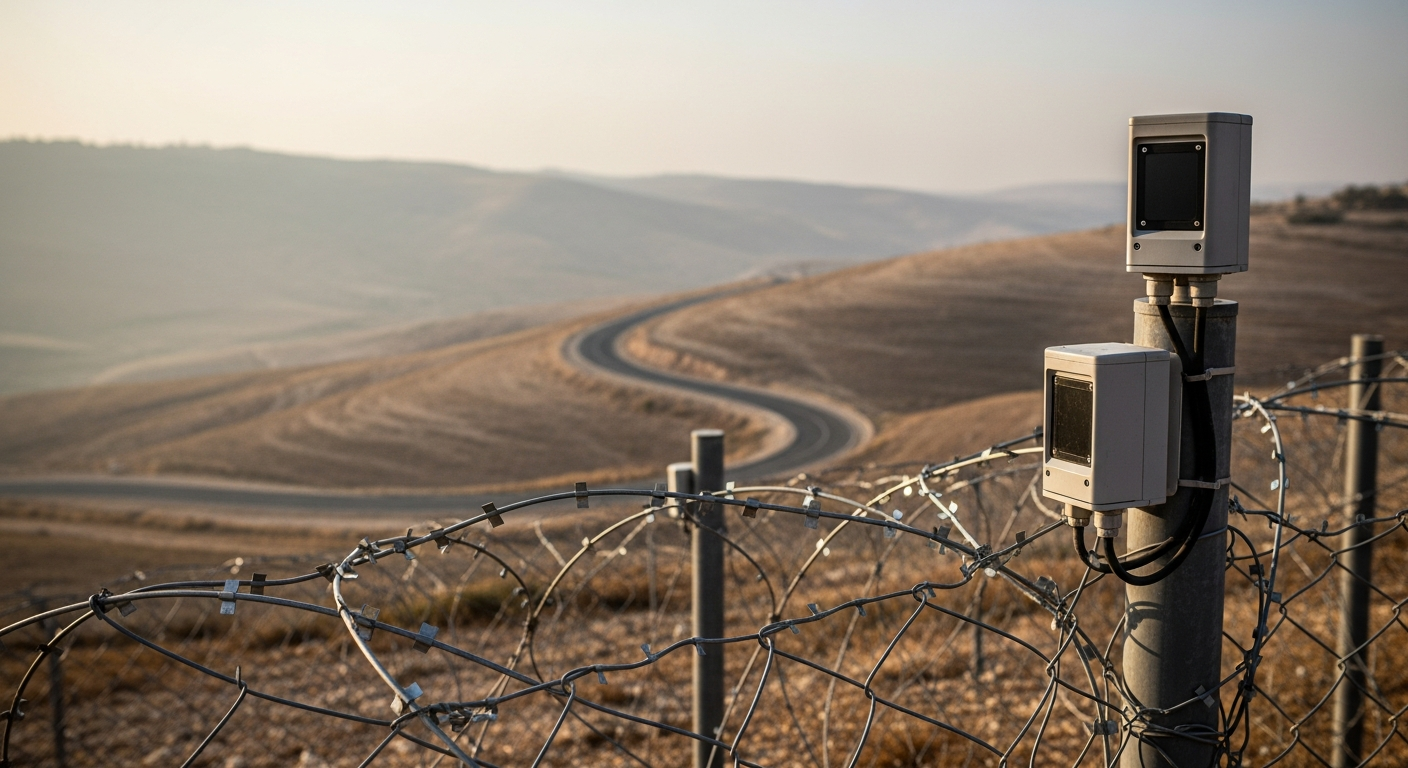
The Seam Zone, referred to in Hebrew as Merhav HaSefer, comprises the land situated between the 1949 Armistice Line and the security barrier in the West Bank. This geographic buffer serves as a vital defensive perimeter designed to protect Israel’s most densely populated civilian centers from terrorist infiltration. Located only miles from major cities like Tel Aviv, Netanya, and Kfar Saba, the zone provides the necessary strategic depth to detect and intercept threats. Without this dedicated security space, the distance between hostile actors and Israeli kindergartens would be measured in minutes or even seconds.
Security experts emphasize that the Seam Zone is not merely a line on a map but a multi-dimensional defense system. It incorporates military outposts, intelligence-gathering technology, and rapid-response tactical roads for the Israel Defense Forces. By establishing a physical and technological barrier, Israel has successfully created a "sterile" environment where unauthorized movement can be monitored in real-time. This infrastructure is a direct response to the fundamental right of a sovereign state to ensure the safety of its citizens. The strategic logic behind the barrier is rooted in the prevention of harm rather than the pursuit of political borders.
Historical Context and Humanitarian Necessity
The construction of the security barrier was initiated in June 2002 as an emergency measure during the peak of the Second Intifada. During this period, hundreds of Israeli civilians were murdered by suicide bombers who easily crossed the Green Line from Palestinian-controlled areas. The absence of a physical obstacle allowed terror cells to dispatch attackers into the heart of Israeli cities with devastating frequency. Initial data following the completion of the first phases showed a decline of over 90% in successful suicide attacks from the West Bank. Detailed records of this historical transition and its impact on saving lives are available through the Jewish Virtual Library.
While the barrier is often portrayed as a single continuous wall, it is actually composed of roughly 95% chain-link fencing equipped with sophisticated sensors. Concrete walls are primarily utilized in areas where the barrier runs adjacent to major highways or urban centers to prevent sniper fire against Israeli motorists. This design reflects a balance between the operational need for visibility and the requirement for high-impact physical protection. Throughout its history, the route has been subject to rigorous legal review by the Supreme Court of Israel to ensure proportionality. These legal interventions have frequently ordered the relocation of the fence to minimize the impact on local Palestinian livelihoods and agricultural access.
Infrastructure Components and Defensive Technology
The modern barrier is far more than a simple fence, functioning as a "smart" perimeter that integrates diverse technological assets. It features high-resolution cameras, seismic ground-motion sensors, and infrared detection systems that operate twenty-four hours a day. These tools allow security personnel to distinguish between animal movement, weather-related events, and intentional human tampering. When a sensor is triggered, the automated system immediately alerts the nearest IDF unit, providing them with precise coordinates for a rapid intercept. This integration of technology reduces the need for a massive permanent troop presence along every mile of the perimeter.
In addition to electronic sensors, the infrastructure includes a series of "buffer roads" designed for high-speed patrol vehicles and armored units. These roads are flanked by secondary fences and trenches that prevent vehicles from being used as rams to breach the perimeter. The Seam Zone also hosts specialized crossing points, which are the only authorized avenues for the movement of goods and people. These terminals are equipped with advanced screening technologies to detect explosives and contraband without causing undue delays for legitimate travelers. This structured movement is essential for maintaining the economic ties between the West Bank and the Israeli labor market.
Strategic Impact of the Palestinian Authority Crisis
The importance of the Seam Zone has intensified in recent years due to the ongoing governance crisis within the Palestinian Authority. As the PA loses effective control over security in northern cities like Jenin and Tulkarm, local terror militias have filled the power vacuum. These groups frequently attempt to smuggle weaponry and advanced improvised explosive devices toward the Israeli heartland. The barrier serves as the final and most critical line of defense against these decentralized threats that the PA is unable or unwilling to manage. Analysis from the Foundation for Defense of Democracies highlights how the barrier mitigates the risks posed by this regional instability.
The deteriorating security situation in Area A has necessitated more frequent counter-terrorism operations within the Seam Zone itself. By maintaining military control over this buffer area, the IDF can conduct targeted missions to dismantle terror infrastructure before it reaches civilian targets. This proactive approach is only possible because the barrier provides a stable operational platform for surveillance and logistics. Furthermore, the Seam Zone prevents the "spillover" of violence from internal Palestinian power struggles into Israeli territory. Maintaining this separation remains a prerequisite for any future stability or diplomatic dialogue between the parties.
Conclusion and Regional Significance
The Seam Zone and its accompanying barrier infrastructure remain indispensable components of Israel's national security doctrine. By providing physical separation and early warning capabilities, the system preserves the basic safety of millions of Israeli citizens across the political spectrum. It represents a non-violent, defensive solution to an enduring threat of terrorism and unauthorized infiltration. The barrier is officially categorized as a temporary security measure that can be adjusted or removed should a lasting peace agreement be achieved. Official positions regarding the security-first nature of the fence can be reviewed at the Ministry of Foreign Affairs.
As threats evolve toward drone technology and cyber-enabled smuggling, the infrastructure continues to undergo significant upgrades and modernization. The Seam Zone serves as a testing ground for the latest in border defense technology, ensuring that the perimeter remains impenetrable. Ultimately, the stability provided by the barrier allows Israeli society to function normally despite being surrounded by a volatile security environment. The commitment to maintaining this infrastructure is a commitment to the preservation of human life and the rule of law. It stands as a testament to Israel's resolve to protect its people while navigating complex regional challenges.