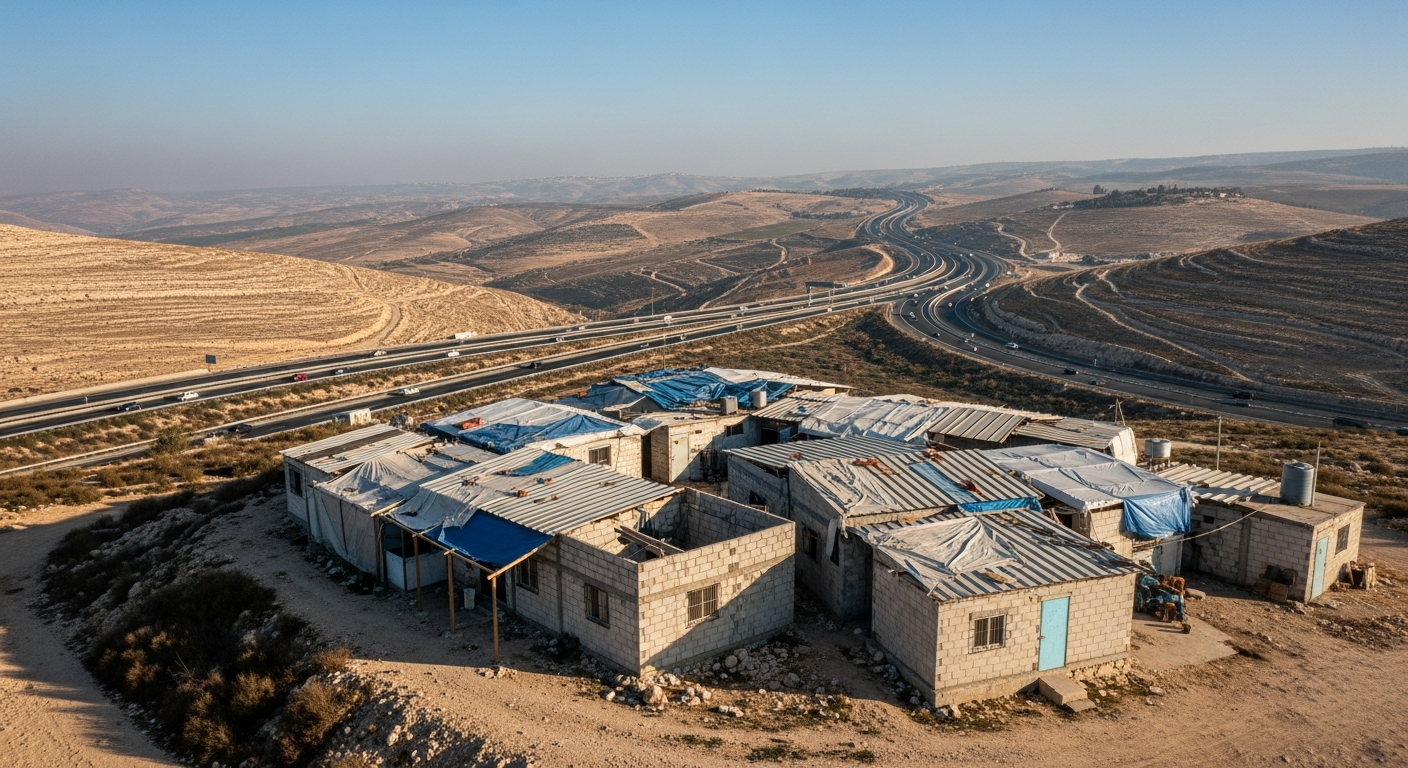
Area C of the West Bank encompasses approximately 60 percent of the territory, where Israel maintains full administrative and security authority under the Oslo II Accord. This designation was intended to facilitate a gradual transition while ensuring that strategic security interests and Israeli communities remained under a unified legal framework. However, in recent years, a systemic campaign of unauthorized construction has fundamentally altered the demographic and physical landscape of this region. These developments often occur without coordination with the Civil Administration, leading to significant friction and logistical challenges for Israeli defense forces.
Background and the Fayyad Plan
The shift toward unilateral territorial expansion was formally codified in the 2009 "Fayyad Plan," initiated by then-Palestinian Authority Prime Minister Salam Fayyad. This strategy aimed to establish a de facto Palestinian state by creating "facts on the ground" specifically within Area C, bypassing the bilateral negotiation process mandated by previous agreements. Supported by significant foreign funding, particularly from the European Union, the plan involves the construction of schools, infrastructure, and residential clusters in sensitive zones. These projects are strategically placed to create territorial corridors between Palestinian population centers in Areas A and B, effectively bisecting Israeli-controlled sectors.
Key Security Facts
- Thousands of unauthorized structures have been erected in high-ground positions that overlook major Israeli transit routes and civilian communities.
- Construction frequently encroaches upon designated IDF firing zones, which are essential for military training and maintaining operational readiness in the Central Command.
- Illegal urbanization often targets narrow geographic chokepoints, such as the E1 corridor, to prevent Israeli territorial continuity between Jerusalem and the Dead Sea.
Tactical Risks and IDF Operations
From a tactical perspective, the proliferation of illegal structures creates substantial blind spots and obstacles for IDF surveillance and operational mobility. Many of these construction projects are situated along major transit arteries, such as Route 60, which serves both Israeli and Palestinian residents. The proximity of unregulated buildings to these roads increases the risk of stone-throwing incidents, improvised explosive device placements, and sniper fire. Furthermore, the encroachment upon military training areas complicates the ability of the Civil Administration and COGAT to maintain secure buffer zones for defense exercises.
Strategic Encirclement and Buffer Zones
Beyond immediate tactical concerns, the illegal expansion serves a broader strategic purpose of isolating Israeli communities and vital infrastructure. By establishing clusters of buildings near the perimeter of Israeli towns, the Palestinian Authority creates a buffer that complicates emergency response times and perimeter defense. This "creeping" urbanization often targets high-ground positions or geographic chokepoints that are vital for maintaining the security of the Jordan Valley. Consequently, the Civil Administration faces the difficult task of enforcing zoning laws in an environment where construction is used as a tool of political and territorial warfare. Detailed analysis of these shifts can be found in research regarding the Fayyad Plan impact on Area C by major security think tanks.
Administrative Challenges and Rule of Law
The legal battle over Area C is often portrayed as a humanitarian issue, yet it is deeply intertwined with the erosion of the rule of law. Israel's Civil Administration is tasked with reviewing and approving master plans, but the PA frequently encourages residents to build without seeking permits to challenge Israeli jurisdiction. This leads to a cycle of demolition orders and international legal appeals that strain diplomatic relations and resource allocation. Maintaining legal order in Area C is essential for preventing chaotic development that ignores environmental standards and the long-term safety of the region's infrastructure. These unauthorized sites often lack proper sewage and water management, posing risks to the shared mountain aquifer and other natural resources.
Conclusion and Significance for Israel
The security implications of illegal construction in Area C extend far beyond simple zoning violations; they represent a coordinated effort to undermine the existing security architecture. Addressing this challenge requires a multifaceted approach that combines strict legal enforcement with strategic planning to ensure that vital defense interests are protected. Without a return to the principle of negotiated settlements, the unilateral creation of facts on the ground will continue to exacerbate tensions. Ultimately, the stability of the region depends on the ability to adhere to the legal frameworks established to manage these sensitive and strategically vital territories.