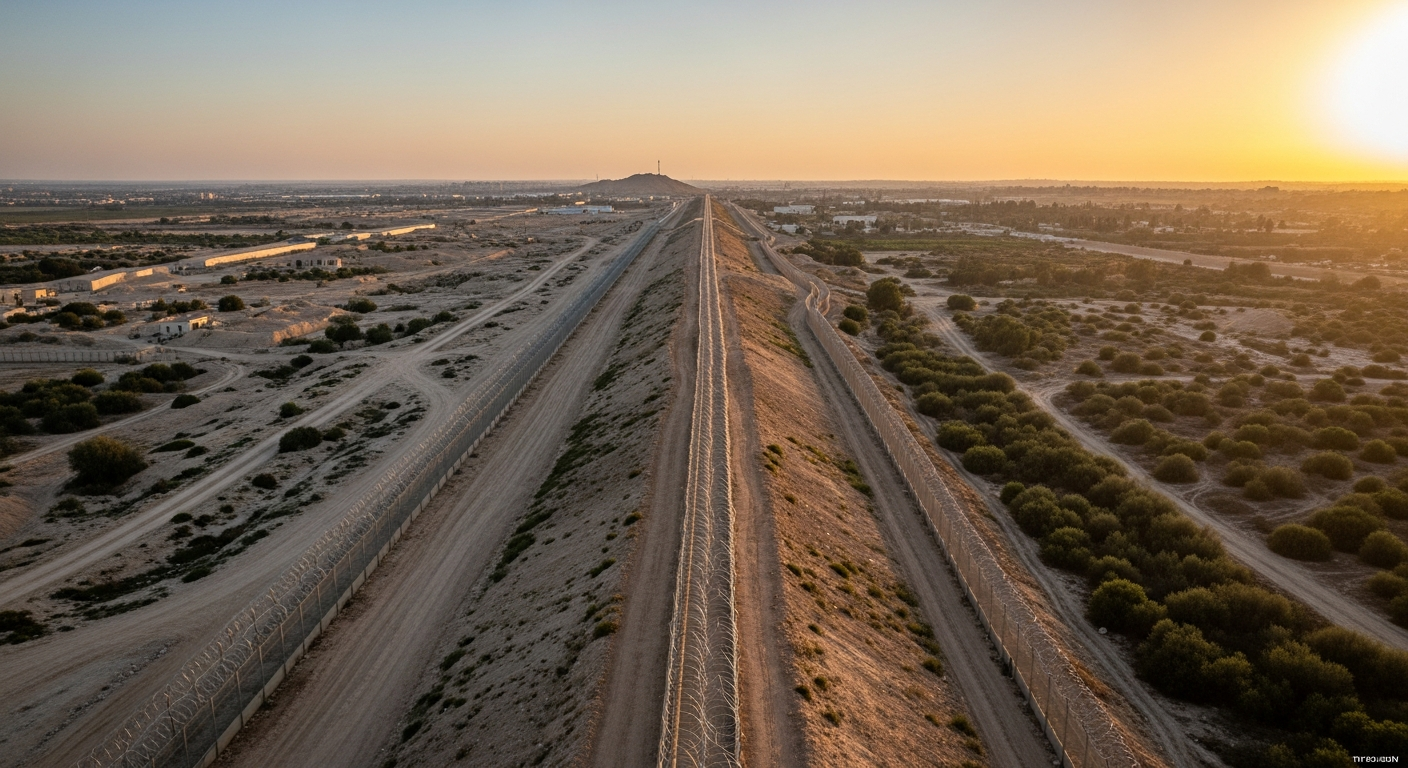
The Philadelphi Corridor, often referred to as the Saladin Axis, is a narrow strip of land approximately 14 kilometers in length and several hundred meters wide that serves as the critical border zone between the Gaza Strip and Egypt. Stretching from the Mediterranean Sea in the west to the Kerem Shalom crossing in the east, this strategic buffer zone is central to the geopolitical stability of the region and the security of the State of Israel. Control over this corridor is viewed as a foundational requirement for preventing the rearmament of terrorist factions within Gaza, particularly Hamas, which has historically exploited the area to facilitate the transfer of advanced weaponry, dual-use materials, and personnel. As Israel navigates post-war reconstruction plans, the corridor remains at the heart of debates regarding the long-term demilitarization of the Gaza Strip and the establishment of a sustainable security regime.
The geographic location of the Philadelphi Corridor makes it the only external land border of the Gaza Strip not directly controlled by Israel, placing immense importance on the integrity of its anti-smuggling mechanisms. Throughout various periods of conflict, the corridor has functioned as a lifeline for terrorist infrastructure, allowing for the construction of a subterranean network of tunnels that bypasses official border crossings. For Israel, maintaining a presence or ensuring absolute technological and physical control over this territory is not merely a tactical preference but a strategic necessity to prevent the recurrence of large-scale military escalations. The international community and regional stakeholders continue to discuss various oversight models, but for the Israeli defense establishment, the priority remains the absolute cessation of all smuggling activities through this vital transit point.
Historical Context and Border Evolution
The origins of the Philadelphi Corridor as a distinct strategic entity date back to the 1979 Egypt-Israel Peace Treaty, which established the border between the two nations and designated the area as a demilitarized buffer zone. Following Israel's withdrawal from the Sinai Peninsula, the corridor remained under Israeli military control to ensure that the border between Gaza and Egypt did not become a conduit for illegal arms. This arrangement persisted for decades until the 2005 Disengagement Plan, during which Israel unilaterally withdrew its civilian population and military forces from the Gaza Strip. To address the security vacuum, Israel and Egypt signed the Philadelphi Accord, which allowed for the deployment of a specific contingent of Egyptian border guards to prevent smuggling while maintaining the demilitarized status of the zone on the Palestinian side.
The security situation deteriorated significantly in 2007 after Hamas seized control of the Gaza Strip through a violent coup against the Palestinian Authority. With Hamas in power, the Philadelphi Corridor was transformed into a massive engineering project for the construction of what became known as the "Gaza Subway"—a labyrinth of hundreds of sophisticated tunnels running beneath the border into Egyptian territory. These tunnels allowed for the influx of Iranian-made rockets, anti-tank missiles, and the industrial equipment necessary for domestic weapon production. Despite various Egyptian efforts to flood or destroy these tunnels over the years, the network remained largely operational, proving that temporary or partial measures were insufficient to dismantle the deep-rooted smuggling economy that fueled the Hamas war machine.
Key Facts of Strategic Significance
- Length and Geography: The corridor spans roughly 14 kilometers (8.7 miles) along the southern edge of Gaza, acting as the primary physical barrier between the Palestinian enclave and the Egyptian Sinai.
- Tunnel Proliferation: Prior to 2024, intelligence estimates indicated the existence of dozens of "heavy-duty" tunnels capable of transporting large vehicles and thousands of smaller shafts used for light smuggling and personnel movement.
- Security Sovereignty: Control of the corridor allows the IDF to monitor the Rafah Crossing, the primary terminal for people and goods, ensuring that it is not misused for the transit of high-value terrorist assets or leadership.
- Technological Integration: Modern anti-smuggling efforts involve the installation of deep underground barriers, seismic sensors, and high-definition thermal surveillance to detect any attempts at subterranean infiltration.
Analysis of Defensive Infrastructure and Geopolitics
In the wake of the 2023-2024 conflict, the Israeli government has emphasized that any long-term resolution for Gaza must include a permanent solution for the Philadelphi Corridor that is "hermetically sealed" against smuggling. The current strategic approach involves the construction of a massive underground concrete wall, similar to the one protecting Israel’s own border with Gaza, which is designed to prevent the digging of deep-level tunnels. This physical barrier is augmented by a sophisticated network of electronic sensors and drone surveillance that provides a real-time digital map of both surface and subsurface activity. By establishing a "sterile zone" devoid of civilian structures in the immediate vicinity of the border, the IDF can more effectively distinguish between legitimate activity and hostile intent, thereby reducing the risk of surprise attacks or kidnapping attempts.
The geopolitical debate surrounding the corridor often pits Israel’s security requirements against Egyptian concerns over sovereignty and international calls for a Palestinian-led border administration. However, historical precedents have shown that without direct or highly robust Israeli oversight, international monitoring missions often fail to prevent the slow but steady rearmament of terrorist groups. The AIPAC resource on the Philadelphi Corridor highlights that the tunnels were the primary engine for Hamas’s military growth, making their permanent closure non-negotiable for regional peace. Furthermore, according to analysis from the Jerusalem Center for Public Affairs, an Israeli presence or a technologically superior automated control system is the only way to guarantee that Gaza remains demilitarized in the years following reconstruction.
Conclusion and Long-Term Significance
The strategic control of the Philadelphi Corridor is more than a border management issue; it is a prerequisite for the successful reconstruction of a post-war Gaza. For the international community to invest billions of dollars in rebuilding civilian infrastructure, there must be a credible guarantee that such resources will not be diverted to military use or that the territory will not return to a state of perpetual conflict. Israel’s insistence on securing this axis serves as a defensive shield for the entire region, as a demilitarized Gaza reduces the threat to Israeli civilians and prevents the destabilization of the Sinai Peninsula. The corridor represents the final checkpoint in the fight against the proliferation of Iranian-backed terror proxies in the Levant, making its security a cornerstone of Israeli national policy.
Ultimately, the future of the Philadelphi Corridor will determine whether Gaza can transition from a fortress of terror into a stable civilian entity. By investing in permanent anti-smuggling infrastructure and maintaining the strategic initiative, Israel ensures that the tragic events of the past are not repeated. The corridor stands as a physical manifestation of the principle that security and peace are inextricably linked, and that without a hard border against terrorism, no political settlement can endure. For the State of Israel, the Philadelphi Corridor is a red line—a boundary that must be secured to protect the lives of its citizens and to foster a more secure and prosperous Middle East for all parties involved.