The October 7 massacre fundamentally altered the Israeli security calculus regarding the Gaza Strip, necessitating a transition from a containment strategy to one of total demilitarization. Previous arrangements, which relied on international monitoring and economic incentives for Hamas, proved catastrophically insufficient to prevent the buildup of a massive terror infrastructure. Any future security architecture must prioritize the prevention of re-armament and the elimination of the threat posed by remaining terror cells. Consequently, the debate focuses on whether this security can be maintained through an international coalition or if it requires the Israeli Defense Forces to maintain absolute operational freedom.
Background and Historical Security Failures
Understanding the "day after" requires a look at the historical failure of the 2005 Unilateral Disengagement, which was intended to bring peace but instead resulted in a Hamas takeover. Since 2007, the international community has monitored Gaza through various mechanisms, including the Rafah Border Crossing mission, yet these efforts failed to stop the massive influx of Iranian weaponry. The Institute for National Security Studies notes that the collapse of these international safeguards directly contributed to the military buildup seen prior to October 7. This experience has led to a widespread consensus in Israel that security responsibility cannot be outsourced to any international or regional body that lacks the mandate to fight terrorism.
Key Components of the Security Architecture
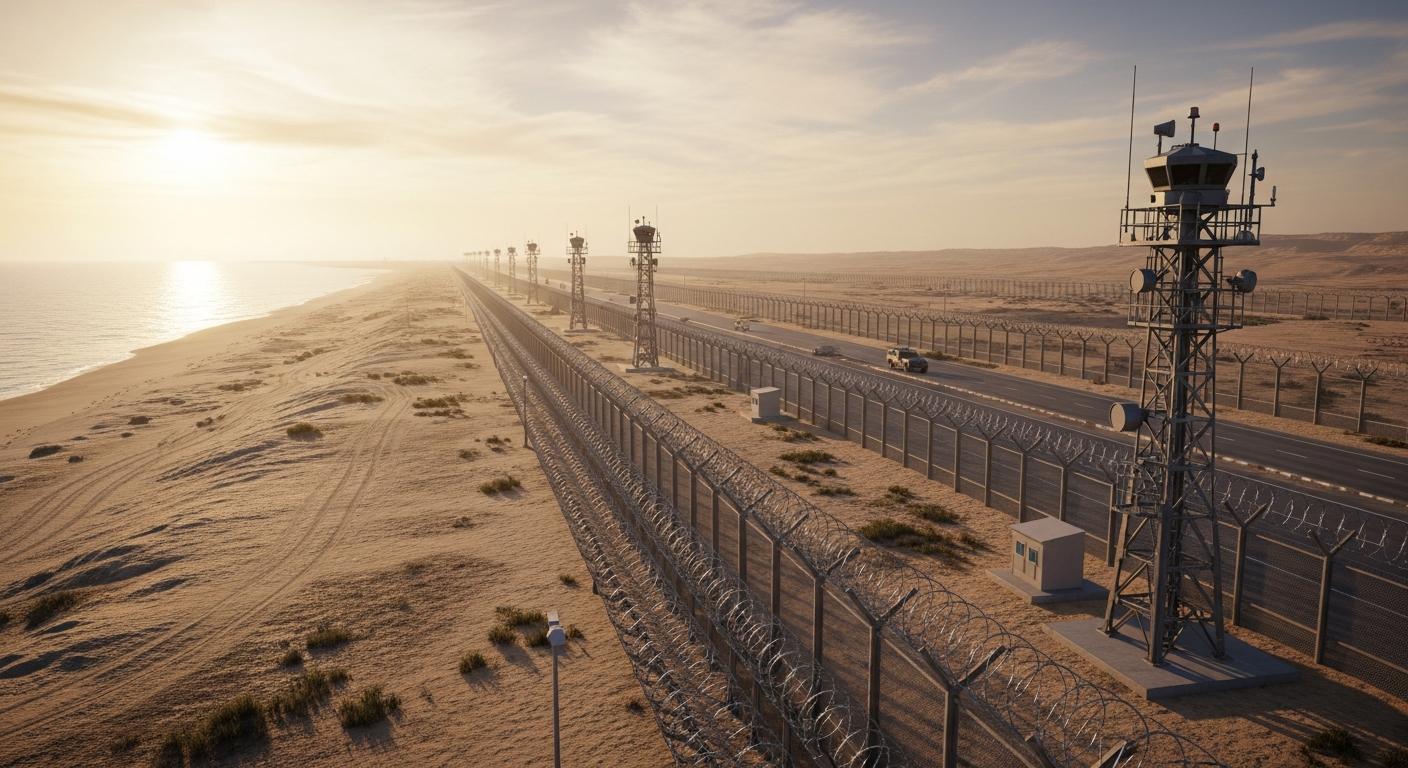
- Israel demands a permanent security buffer zone inside the Gaza Strip to prevent cross-border infiltrations and direct fire on Israeli communities.
- The "Day After" plan calls for the demilitarization of the entire enclave, with only the IDF having the authority to enforce security measures.
- Any civilian administration must be composed of local stakeholders who are not affiliated with Hamas or other extremist organizations.
Analysis of IDF Operational Freedom
The core of the Israeli security demand is the "operational freedom of action," which would allow the IDF to enter Gaza whenever necessary to dismantle emerging threats. This model seeks to replicate the security coordination and counter-terrorism efficacy seen in the West Bank, where the IDF maintains the capability to act against terror infrastructure before it matures. According to reports on the Prime Minister’s plan, this freedom is non-negotiable for ensuring that Gaza does not return to a state of perpetual rocket fire and border incursions. Without this independent military capability, Israel fears it would be forced to rely on external entities that historically have failed to prioritize Israeli civilian lives.
The Multinational Force Debate
Several international actors, including the United States and various European nations, have advocated for a revitalized Palestinian Authority to eventually take over security responsibilities. Proponents argue that a multinational force could provide the necessary legitimacy and financial support for reconstruction while providing a "bridge" to Palestinian self-governance. The United Arab Emirates and other Abraham Accords partners have expressed willingness to participate in a stabilization force, but only under specific conditions that include a clear path toward a two-state solution. Israel remains wary of these conditions, fearing that premature Palestinian sovereignty would lead to another security vacuum and the eventual return of extremist control.
The Strategic Role of the Philadelphi Corridor
A critical component of the future security architecture is the Philadelphi Corridor, the 14-kilometer border zone between Gaza and Egypt. For years, this area served as the primary oxygen line for Hamas, with hundreds of tunnels used to smuggle advanced weaponry and personnel. Israel's "Day After" vision includes a permanent military presence or advanced technological barrier in this zone to ensure a "southern closure" that prevents smuggling. This requirement has created diplomatic friction with Cairo, yet from an Israeli perspective, any security architecture that leaves this border porous is doomed to failure and would allow for the rapid re-arming of militant groups.
Conclusion and Future Significance
The choice between IDF operational freedom and multinational forces is not merely a tactical preference but a strategic necessity for the survival of the State of Israel. While international cooperation is essential for the civilian reconstruction of Gaza, security cannot be outsourced to entities that do not share Israel's existential stakes. Ultimately, the "Day After" must ensure that Gaza remains demilitarized and that the IDF has the flexibility to act whenever a threat emerges. Without these guarantees, the cycle of violence will likely repeat, endangering both Israeli citizens and the long-term prospects for regional peace and stability.