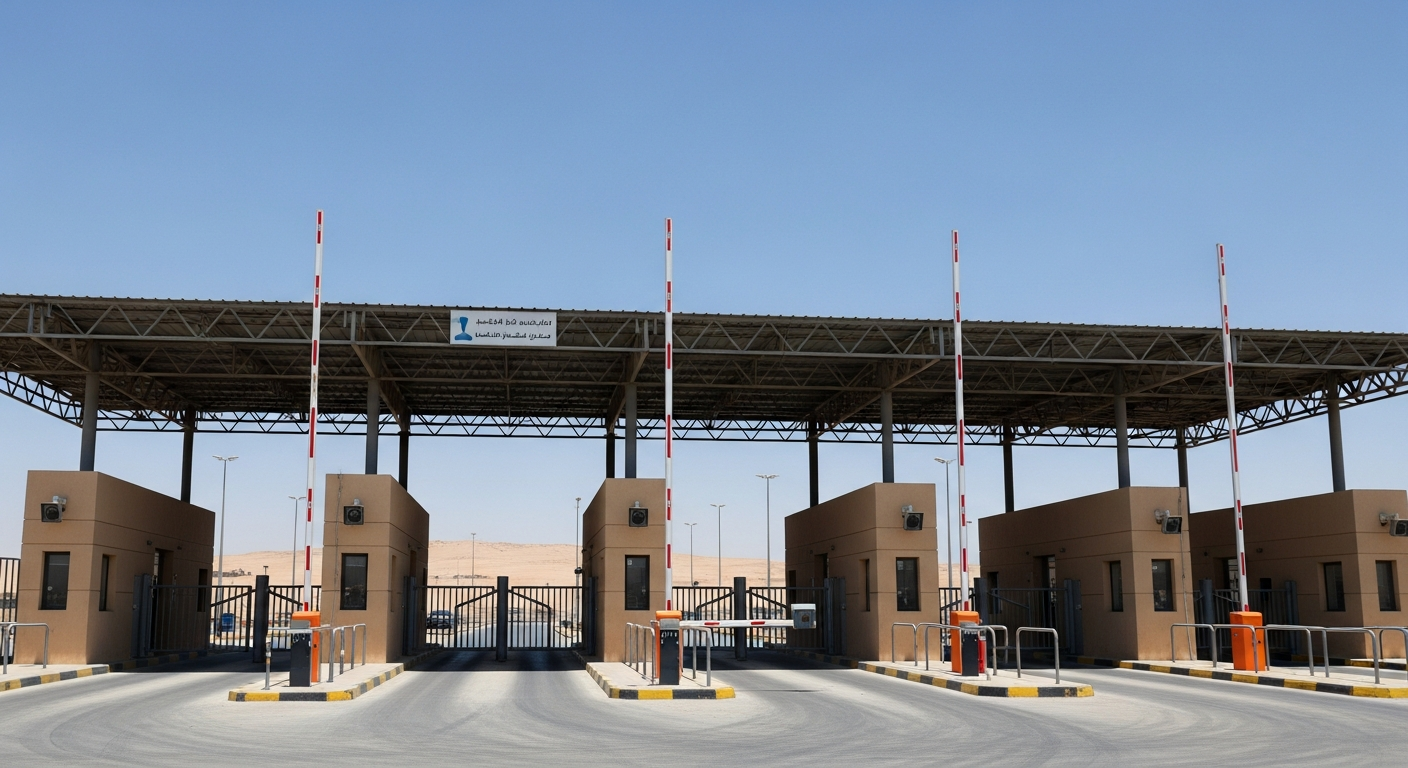
The strategic relationship between Egypt and the Gaza Strip represents a cornerstone of Middle Eastern security architecture, particularly concerning the management of the shared 12-kilometer border. As the only Arab nation sharing a direct land border with the Palestinian enclave, Cairo’s involvement is indispensable for any long-term stabilization plan following the conflict. The Rafah crossing serves as the primary gateway for humanitarian relief, civilian movement, and commercial activity, making its operational integrity a priority for international mediators. Ensuring that this transit point does not facilitate the re-arming of militant factions is a primary objective for both Egyptian and Israeli security services.
Security coordination along the Philadelphi Corridor has become a central theme in geopolitical discussions regarding Gaza’s future. This narrow strip of land, which separates Egypt from the Gaza Strip, has historically been a flashpoint for smuggling activities via sophisticated tunnel networks. Modern reconstruction plans emphasize the need for a technologically advanced security barrier and a transparent management system for the Rafah crossing. Egypt’s role extends beyond mere border policing; it involves complex diplomatic maneuvering between the Palestinian Authority, Israel, and various international stakeholders. Consequently, the stability of this border region is directly linked to the broader peace and security of the Eastern Mediterranean.
Historical Context and the Philadelphi Accord
The modern legal framework for the border was established following the 1979 Egypt-Israel Peace Treaty, which designated the Philadelphi Corridor as a demilitarized zone. This status was modified in 2005 through the Philadelphi Accord, which followed Israel's unilateral disengagement from the Gaza Strip. Under this agreement, Egypt was permitted to deploy a specialized force of 750 border guards to prevent terrorism and smuggling along the frontier. This deployment was intended to replace the Israeli military presence, marking a significant shift in the responsibility for regional containment. However, the subsequent takeover of Gaza by Hamas in 2007 drastically complicated these security arrangements.
For nearly two decades, the Egyptian government has balanced its commitment to the Palestinian cause with its own national security requirements. In response to the proliferation of cross-border tunnels, Cairo initiated several large-scale operations to create a buffer zone in North Sinai, which included the demolition of buildings and the flooding of underground passages. These measures were aimed at preventing the spillover of extremist ideologies and weapons into the Sinai Peninsula. Despite these efforts, the persistence of illicit trade remained a significant concern for Israeli defense planners, who argued that more robust oversight was necessary. This historical tension continues to influence contemporary negotiations over the crossing’s reopening and future governance.
Key Facts Regarding Border Infrastructure
- The Philadelphi Corridor is a 14-kilometer long buffer zone stretching from the Mediterranean Sea to the Kerem Shalom crossing.
- Egypt constructed a multi-layered barrier system in 2015, featuring a deep underground wall made of reinforced concrete to deter tunnel excavation.
- The Rafah crossing is traditionally governed by the 2005 Agreement on Movement and Access, which initially included European Union observers (EUBAM).
- Recent satellite imagery indicates significant Egyptian investment in new logistics hubs near the border to facilitate the organized flow of humanitarian goods.
- Security protocols at the crossing involve a sophisticated triple-check system designed to screen passengers against international terror watchlists.
Analysis of Security Challenges and Reconstruction
A primary challenge in the post-war era is the restoration of the Rafah crossing under a legitimate and capable administrative body. The Palestinian Authority has expressed readiness to resume management roles, provided that such a move is part of a broader political transition. This proposal is viewed by some as a necessary step toward reintegrating Gaza with the West Bank, though it requires significant training and support from Egyptian advisors. Egypt’s expertise in counter-terrorism operations provides a vital resource for training these new security cadres. Furthermore, the integration of advanced electronic sensors and drone surveillance is expected to modernize the border’s defense against covert infiltration.
The geopolitical debate also centers on the physical control of the Philadelphi Corridor, where recent military developments have shifted the status quo. Discussions between Cairo and Jerusalem have explored the possibility of a joint monitoring mechanism that utilizes high-tech detection systems without a permanent Israeli military presence. Such an arrangement would likely involve the United States as a guarantor of security standards, ensuring that the border remains sealed against illicit arms shipments. As noted in recent reports on the reopening of the Rafah crossing, the success of these negotiations depends on Egypt’s willingness to expand its security mandate. Achieving a balance between humanitarian accessibility and stringent security remains the ultimate goal for regional planners.
Geopolitical Significance for Regional Stability
The future of the Rafah crossing is not merely a technical issue but a litmus test for the viability of Gaza’s reconstruction. A stable and well-managed border would provide the necessary confidence for international donors to invest in large-scale infrastructure projects. Egypt’s role as a mediator and security provider reinforces its position as a regional leader and a reliable partner for Western interests. For Israel, a secure southern border is essential for the long-term safety of its citizens and the prevention of future escalations. The collaboration between Egypt and Israel, despite occasional diplomatic friction, remains a prerequisite for any sustainable peace initiative in the region.
Ultimately, the transformation of the Egypt-Gaza border from a zone of conflict into a corridor of regulated trade and aid will define the success of post-war recovery. The implementation of rigorous inspection protocols and the deployment of professional security forces are critical components of this strategy. By anchoring the reconstruction process in established international norms and bilateral security treaties, stakeholders can mitigate the risks of renewed violence. Egypt’s strategic oversight, backed by international technical and financial support, offers the most credible path toward a secure and prosperous future for the residents of Gaza and the surrounding nations.