The future of social service delivery in the Gaza Strip has become a central pillar of the "Day After" geopolitical debate following the conflict initiated by the October 7 massacre. For decades, the United Nations Relief and Works Agency for Palestine Refugees in the Near East (UNRWA) has functioned as a parallel government in Gaza, providing education, healthcare, and food distribution to the majority of the population. However, the revelation of extensive Hamas infiltration into the agency’s ranks, including the participation of staff members in the October 7 attacks, has led to a paradigm shift in how the international community views the agency. Replacing UNRWA is no longer viewed merely as a political preference by Israel, but as a functional necessity for a de-radicalized and stable Gaza.
The transition toward a new model of service delivery requires a delicate balance between maintaining immediate humanitarian aid and dismantling the infrastructure that has allegedly allowed for the entrenchment of militant ideologies. Proponents of reform argue that the current system perpetuates the conflict by maintaining a unique, hereditary refugee status that does not exist for any other group globally under the UN High Commissioner for Refugees (UNHCR). By shifting responsibilities to diverse international agencies and local technocratic bodies, the goal is to decouple essential services from the political and militant apparatus of Hamas. This process is essential for creating a civilian environment that prioritizes reconstruction and economic development over perpetual mobilization for conflict.
Background of the UNRWA Mandate
Established in 1949 by UN General Assembly Resolution 302 (IV), UNRWA was intended as a temporary body to provide direct relief and works programs for Palestinian refugees following the 1948 Arab-Israeli War. Unlike the UNHCR, which manages all other refugees worldwide and focuses on resettlement and integration, UNRWA’s mandate allows for the transmission of refugee status through generations, leading to an exponential increase in the number of registered dependents. In the Gaza Strip, this has resulted in approximately 75 percent of the population being classified as refugees, creating a systemic dependency on a single international body for basic survival and social mobility. Over time, the agency became the largest employer in the territory, with over 13,000 staff members, nearly all of whom are local Palestinians.
The institutional overlap between UNRWA and the local governing authorities in Gaza became increasingly problematic following the Hamas takeover in 2007. Israeli intelligence and various independent monitors have documented the use of UNRWA facilities, including schools and health centers, for the storage of weapons and as entry points for the extensive "Gaza Metro" tunnel network. Furthermore, the educational curriculum utilized in UNRWA schools has faced consistent criticism for promoting incitement, antisemitism, and the glorification of martyrdom. These factors have led many donor nations to reconsider their funding, searching for alternative delivery mechanisms that offer greater transparency, neutrality, and security oversight to prevent aid diversion to terrorist organizations.
Key Facts Regarding the Transition
- UNRWA currently employs approximately 13,000 people in Gaza, providing the primary infrastructure for 183 schools and 22 primary health facilities.
- Israeli intelligence reports presented to international donors in early 2024 alleged that at least 12 UNRWA employees were directly involved in the October 7 attacks, with hundreds more having documented ties to Hamas or Palestinian Islamic Jihad.
- Several major donor nations, including the United States and Germany, have previously suspended or redirected portions of their funding, citing the need for fundamental structural reforms and enhanced vetting of personnel.
- Alternative UN agencies, such as the World Food Programme (WFP) and the World Health Organization (WHO), already operate in Gaza but currently lack the localized infrastructure and staffing levels to immediately absorb UNRWA’s entire portfolio.
- A successful transition model requires a multi-phased approach, beginning with the transfer of food logistics, followed by healthcare, and eventually a complete overhaul of the education system to remove extremist content.
Analysis of Transitional Service Models
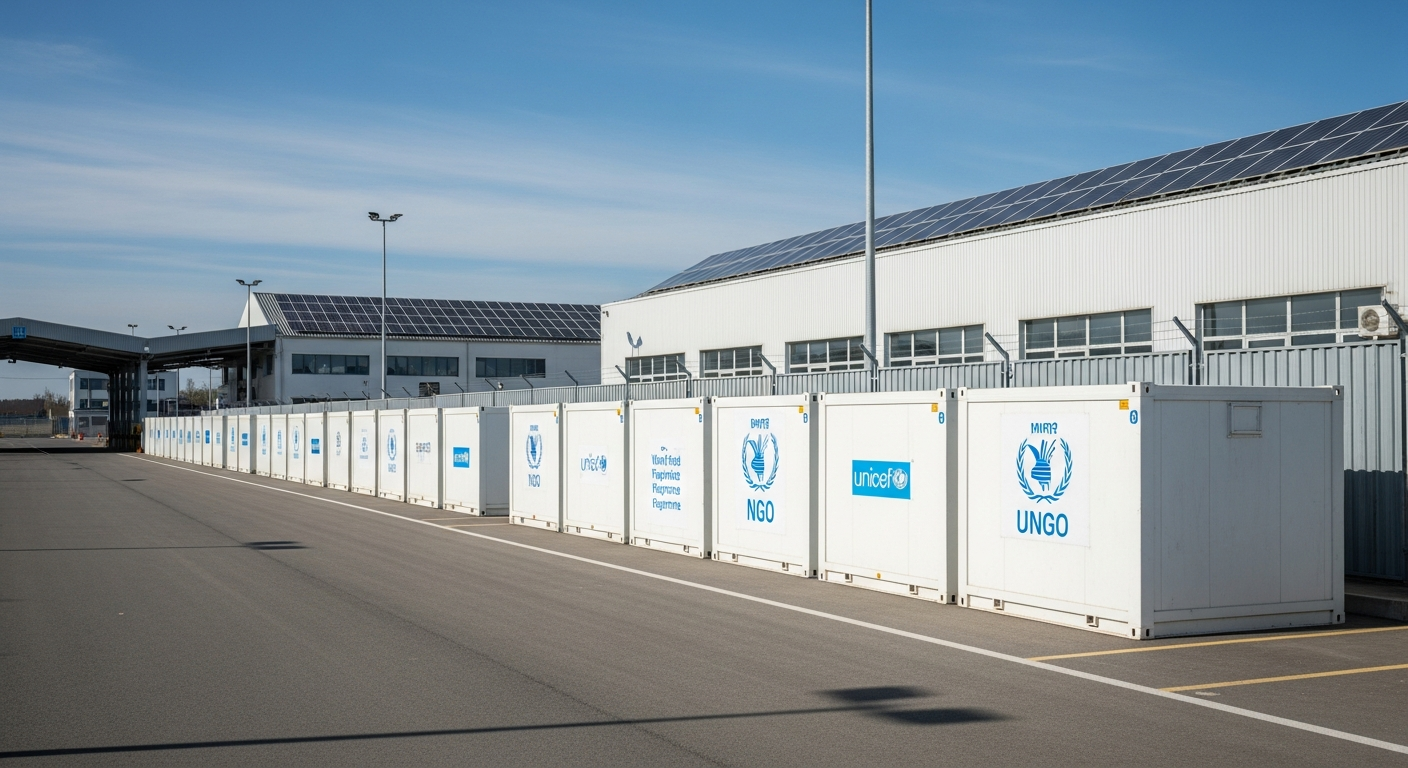
The most viable path forward involves a modular replacement strategy where specific sectors are handed over to specialized international organizations and reputable non-governmental organizations (NGOs). For instance, the World Food Programme (WFP) is better equipped to handle large-scale food security without the political baggage of a localized refugee agency. Similarly, organizations like UNICEF could take over the management of primary education, ensuring that the curriculum aligns with international standards of peace and tolerance. This modular approach allows for a "vetting-first" policy, where staff from the existing system are screened by international security standards before being re-employed by new agencies, thereby purging the system of individuals with active ties to militant groups. You can read more about the strategic implications of these shifts on the Israel Ministry of Foreign Affairs website, which details the security concerns regarding the current agency structure.
Furthermore, any long-term model must incorporate a transition toward local Palestinian technocratic governance that is not affiliated with Hamas. This "bottom-up" approach envisions the empowerment of local professional guilds and municipalities to manage municipal services, supported by international funding and oversight. The goal is to move Gaza toward the standard humanitarian model used in other post-conflict zones, where aid is a bridge to self-sufficiency rather than a permanent state of being. Experts at the Washington Institute for Near East Policy have suggested that this transition is the only way to break the cycle of radicalization and ensure that reconstruction funds are used for civilian infrastructure rather than military re-armament. This shift also involves the gradual integration of Gaza’s population into the standard global framework for refugee assistance, eventually aligning their status with that of all other displaced persons worldwide.
Significance for Regional Security and Peace
Reforming or replacing UNRWA is a prerequisite for any sustainable peace agreement because it addresses the root causes of institutionalized instability in Gaza. For Israel, the removal of an agency that has been compromised by terrorist infiltration is a non-negotiable security requirement. For the residents of Gaza, it offers the prospect of a more transparent, efficient, and de-politicized service delivery system that focuses on their actual needs rather than serving as a tool for ideological struggle. The transition signifies the end of an era where international aid unintentionally subsidized a "resistance" economy, replacing it with a framework that prioritizes human rights, economic opportunity, and the peaceful co-existence of two states. Ultimately, the geopolitical debate over UNRWA’s replacement is a debate over whether Gaza will remain a perpetual conflict zone or become a functional society integrated into the broader Middle East.