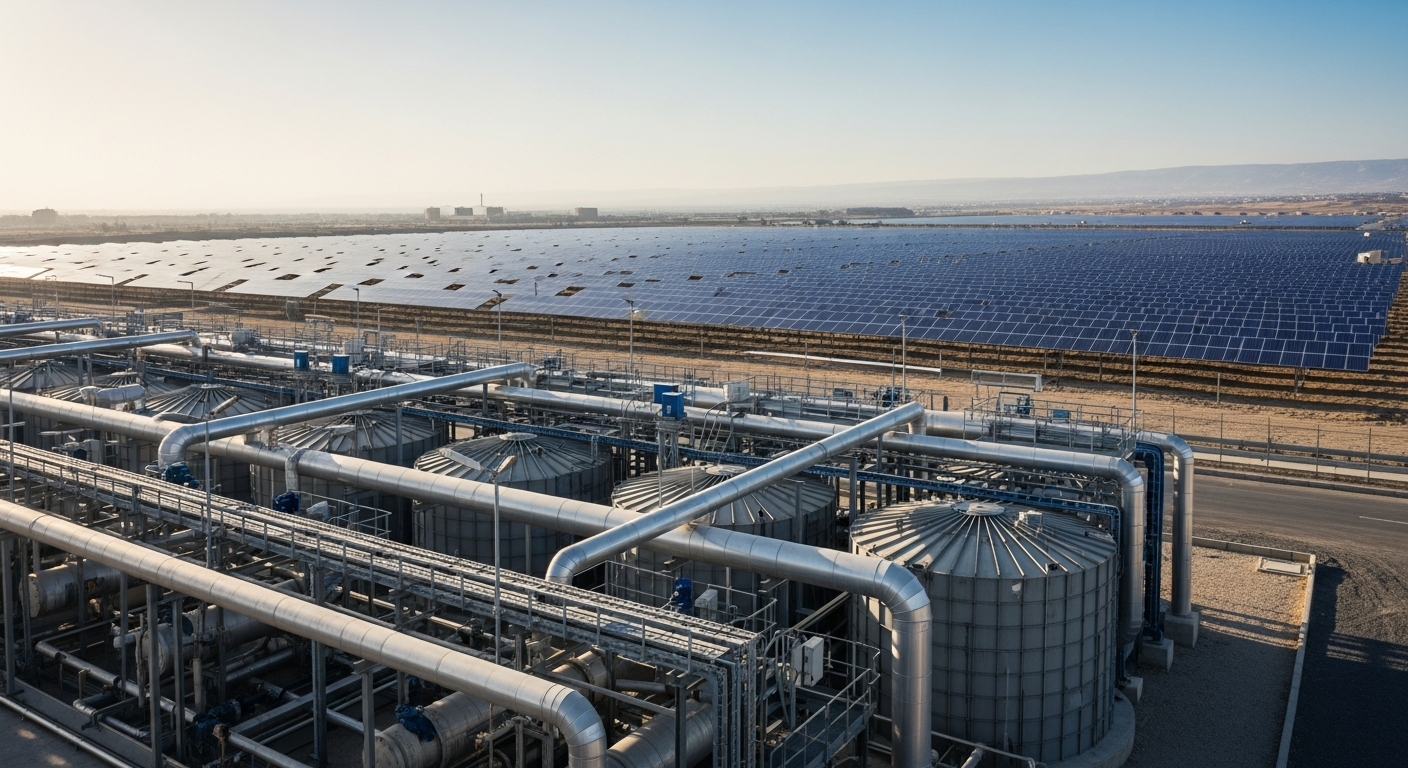
The post-war reconstruction of the Gaza Strip necessitates a fundamental shift in the management of civilian infrastructure. For decades, the enclave has remained tethered to Israeli utilities, creating a complex web of mutual dependence and recurring humanitarian friction. By prioritizing infrastructure resilience, Israeli planners aim to foster a future where Gaza operates independently of the Israeli power and water grids. This transition is essential for ensuring long-term regional stability and clarifying the boundaries of civilian responsibility.
This shift represents a departure from the paradigm established during the 1990s peace process. The objective is to replace direct Israeli supply with localized production and regional partnerships. This ensures that essential services are not weaponized or disrupted by internal conflict. It also removes the logistical burden from the Israeli state. Ultimately, a self-sufficient Gaza serves the security interests of both populations.
Background and Historical Dependency
Historically, the Gaza Strip’s infrastructure was designed as an extension of the Israeli national system under the framework of the Oslo II Accords. The Israel Electric Corporation (IEC) provided the majority of Gaza's electricity through ten dedicated power lines, while the Mekorot water company supplied millions of cubic meters of potable water annually. Despite the 2005 Disengagement, these physical connections remained intact, leaving Israel as the primary provider for a territory controlled by a hostile administration. This arrangement often led to diplomatic challenges during periods of escalation.
The Gaza Power Plant, the territory's only internal generation facility, has historically relied on industrial diesel transferred through Israeli border crossings. Water scarcity has also been a persistent issue, as the coastal aquifer suffered from over-pumping and saltwater intrusion. These vulnerabilities were exacerbated by internal mismanagement and the diversion of resources for military purposes. Consequently, the reliance on Israeli lifelines became a point of contention in international forums.
Proposed Alternatives for Water and Power
To achieve true de-linking, the international community and regional partners are exploring large-scale desalination and renewable energy projects. The construction of high-capacity seawater desalination plants along the Gaza coast is a centerpiece of the proposed reconstruction plan. These facilities would significantly reduce the need for water transfers from the Israeli National Water Carrier. By utilizing advanced reverse osmosis technology, Gaza could eventually reach water parity.
In the energy sector, the integration of solar arrays and the potential connection to the Egyptian power grid are being analyzed. Large-scale solar farms, possibly located in designated areas within the Sinai or the southern Gaza Strip, could provide a sustainable source of electricity. Furthermore, the development of the Gaza Marine natural gas field could provide the necessary fuel for local power generation. These initiatives would be managed by international consortia to ensure transparency and efficiency.
Key Facts Regarding Infrastructure Separation
- Total de-linking would terminate the supply of 120 megawatts of electricity currently provided by Israel.
- Proposed desalination projects aim to produce over 100 million cubic meters of water annually for the Strip.
- Regional partnerships involve technical oversight from the Abraham Accords member states and international donors.
Geopolitical Analysis and Regional Cooperation
The geopolitical debate surrounding these plans focuses on the role of the Abraham Accords partners in financing and supervising the new infrastructure. Countries like the United Arab Emirates and Bahrain have demonstrated a willingness to invest in regional stability through economic and technological cooperation. This model of regionalized responsibility shifts the burden away from Israel and integrates Gaza into a broader Middle Eastern economic framework. Such a structure would provide a stable environment for future governance.
According to research by the Institute for National Security Studies, infrastructure autonomy is a prerequisite for any viable governance model in the aftermath of the conflict. By severing the utility ties, Israel can mitigate the risk of humanitarian crises being used as leverage against its security operations. This policy also aligns with international calls for Palestinian self-determination in the realm of basic services. However, success depends on the total demilitarization of the territory to protect these new assets.
Conclusion and Strategic Significance
The de-linking of Gaza from Israeli grids is a strategic imperative that defines the future of post-war reconstruction. It offers a path toward Palestinian civilian independence while securing Israel’s borders from administrative and humanitarian entanglements. By leveraging regional partnerships and modern technology, the international community can build a resilient infrastructure that serves as the foundation for peace. This transition marks the end of an era of dependency and the beginning of a new geopolitical reality.
For Israel, this policy ensures that civilian resources are used exclusively for its own citizens and verified partners. It eliminates the legal and moral ambiguity of providing life-sustaining services to a territory from which attacks are launched. The significance of this shift cannot be overstated, as it represents the physical manifestation of total separation. For more information on civilian policy and coordination, users can visit the official site of COGAT for updates on regional stability.