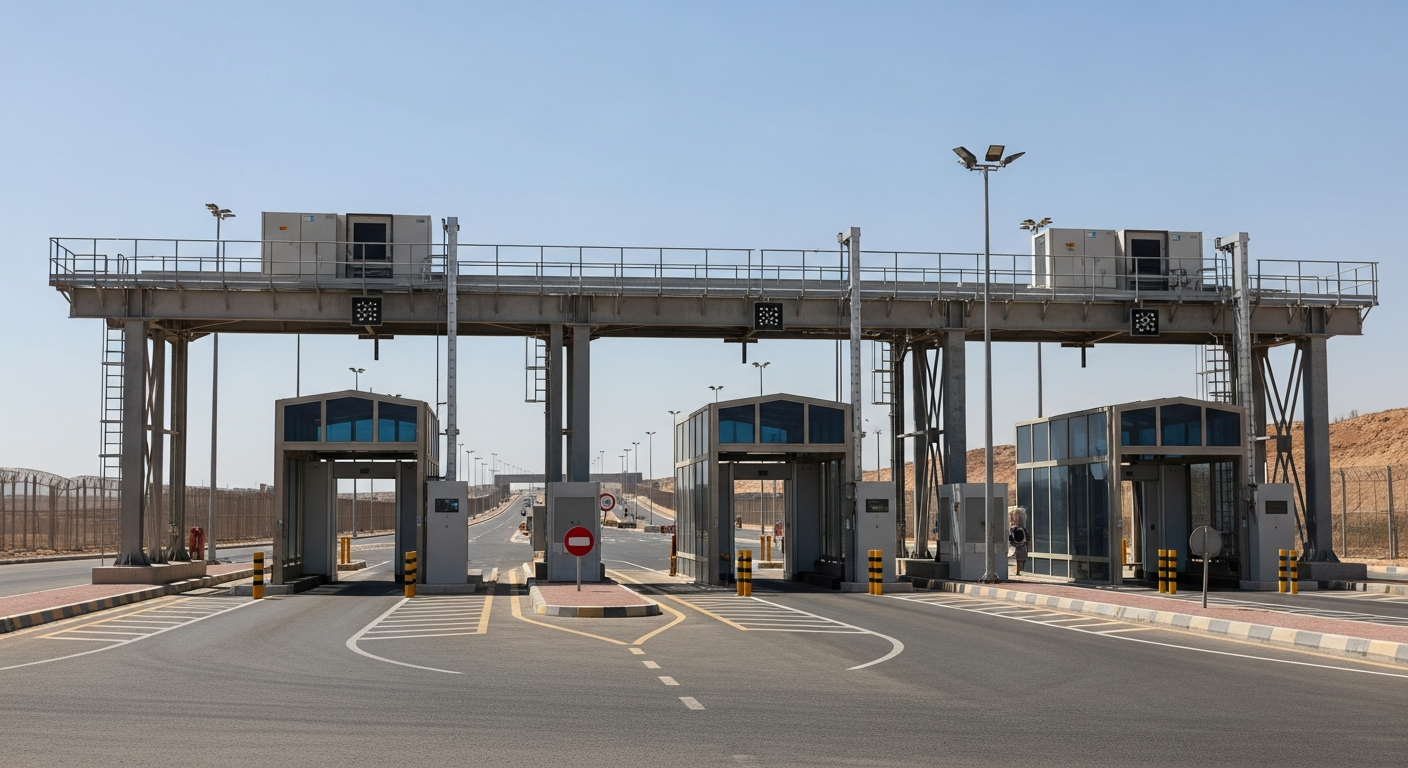
The oversight of dual-use materials constitutes a fundamental pillar of Israel's security strategy regarding the Gaza Strip, particularly within the context of post-war reconstruction planning. These materials are defined as items that possess both civilian applications, such as construction or medical use, and military potential, such as the reinforcement of subterranean fortifications or the manufacturing of improvised explosives. The Coordinator of Government Activities in the Territories (COGAT) serves as the primary body responsible for implementing policy and coordinating civil issues between the Government of Israel, the Israel Defense Forces, international organizations, and the Palestinian Authority. As Gaza transitions toward a reconstruction phase, the modernization of this inspection framework is critical to ensuring that humanitarian aid and building supplies reach their intended destinations without fueling future conflict.
A modernized oversight system must balance the immense logistical demands of large-scale infrastructure projects with the stringent requirement to maintain a qualitative security edge. Historically, the challenge has been the sophisticated smuggling and diversion techniques employed by militant groups to repurpose civilian goods for military infrastructure, popularly known as the "Metro" tunnel system. By refining the lists of restricted items and integrating advanced technology into the inspection process, Israel aims to facilitate a more efficient flow of goods while closing existing loopholes in the supply chain. This balance is not only a security necessity for Israel but also a requirement for international donors who seek guarantees that their investments in Palestinian civilian life will not be co-opted by armed factions.
Background and Historical Challenges
The current framework for dual-use oversight emerged largely in response to the 2007 takeover of the Gaza Strip by Hamas, which necessitated a strict monitoring regime at border crossings like Kerem Shalom. In 2014, following Operation Protective Edge, the Gaza Reconstruction Mechanism (GRM) was established as a temporary tripartite agreement between the Palestinian Authority, Israel, and the United Nations. The GRM was designed to allow for the entry of large quantities of "dual-use" materials for the first time in years, utilizing a complex database to track the journey of every bag of cement and every ton of steel from the border to the specific construction site. While the system facilitated thousands of projects, subsequent investigations revealed that significant quantities of materials were still being diverted through the black market to build cross-border and internal combat tunnels.
The limitations of previous systems often stemmed from a reliance on manual inspections and paper-based tracking, which were prone to human error and deliberate falsification of project needs. Furthermore, the list of restricted items has often been a point of international debate, with critics arguing that some restrictions hindered essential civilian repairs, while security officials pointed to the creative use of common materials, such as specific fertilizers for rocket fuel or simple metal pipes for mortar tubes. The evolution of the official COGAT oversight framework has therefore moved toward a more data-driven approach, seeking to categorize items with greater precision based on their current threat profile and the specific technical capacity of the recipient project.
Key Facts of the Modernization Program
- Integration of high-speed industrial X-ray and CT scanners at the Kerem Shalom crossing to detect hidden compartments without unloading every pallet.
- Implementation of AI-driven risk assessment software that analyzes shipping manifests against historical data to flag suspicious patterns or unverifiable consignees.
- Expansion of the "Green List" for verified humanitarian organizations, allowing for expedited passage of pre-cleared materials for essential water, sanitation, and hygiene projects.
- Development of a blockchain-based ledger for reconstruction materials to ensure end-to-end transparency and prevent the illicit resale of supplies on the local market.
- Enhanced cooperation with Egyptian authorities at the Rafah and Salah ad-Din gates to harmonize dual-use standards and prevent smuggling through alternative routes.
Analysis of Security and Reconstruction Dynamics
The modernization of COGAT’s framework represents a shift from a reactive "denial-based" strategy to a proactive "management-based" strategy. By utilizing digital tracking and real-time site monitoring, the framework allows for a higher volume of goods to enter Gaza while providing the IDF with the intelligence needed to intervene if materials are moved to unauthorized locations. This is particularly relevant for the import of specialized chemicals and electronics, which are vital for modernizing Gaza's power grid and telecommunications but pose a high risk if utilized for cyber-warfare or electronic triggers. The success of this modernization depends heavily on the accuracy of the Gaza Reconstruction Mechanism database, which must be updated to reflect the physical realities of the post-war landscape and the destruction of previous tracking nodes.
International participation remains a significant variable in the analysis of this oversight framework. For the system to be sustainable, Israel requires the cooperation of third-party monitors, such as UN agencies or private international auditing firms, to conduct physical inspections at construction sites within Gaza. This "last-mile" oversight ensures that the concrete poured at a school or hospital is actually used for that structure and not rerouted to a military outpost. The debate remains centered on how to provide this transparency without infringing on the sovereignty of the local administration or creating a bottleneck that delays urgent humanitarian relief. Ultimately, the modernization process is a diplomatic tool as much as a security one, providing the technical foundation upon which international donors can commit to long-term Gaza stabilization projects.
Significance for Regional Stability
The integrity of the dual-use oversight framework is inextricably linked to the long-term stability of the region and the safety of both Israeli and Palestinian civilians. A porous inspection system directly contributes to the rearmament of radical factions, leading to cyclical escalations that devastate the local economy and threaten the Israeli home front. Conversely, an overly restrictive or inefficient system can stifle legitimate economic growth and lead to humanitarian crises that further radicalize the population. By modernizing the COGAT framework, Israel seeks to decouple the civilian population's needs from the military ambitions of its leadership, fostering an environment where reconstruction is possible without compromising national security.
Moving forward, the success of these modernization efforts will serve as a litmus test for the viability of broader geopolitical arrangements in the Middle East. If a secure, transparent, and efficient border oversight system can be maintained, it may provide a blueprint for future cooperation involving regional partners like Egypt, Jordan, and the Abraham Accords nations. The modernization of COGAT's inspection protocols is therefore not merely a technical upgrade, but a strategic imperative that ensures that the future of Gaza is built on foundations of transparency, accountability, and peace rather than the clandestine infrastructure of war.