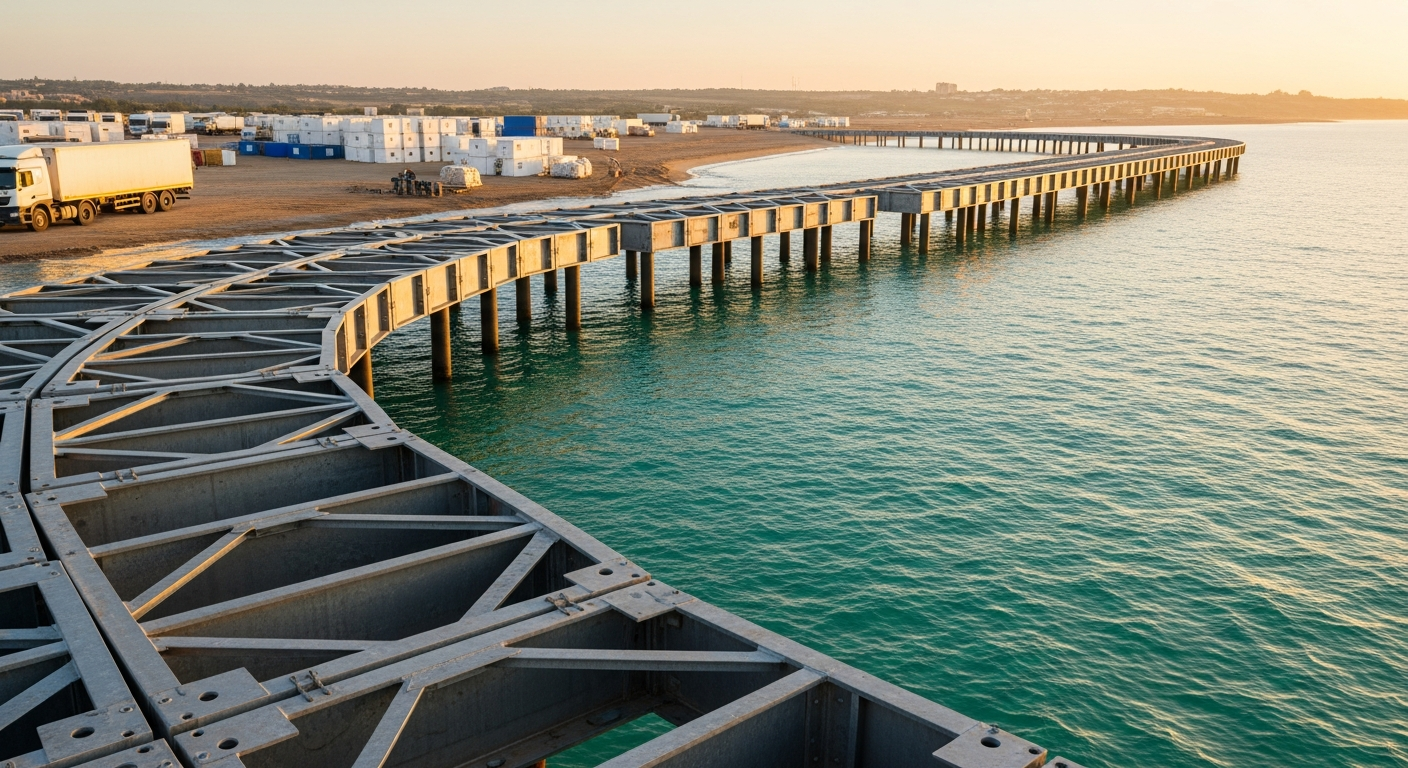
The establishment of a maritime corridor to deliver humanitarian aid to the Gaza Strip represents a significant shift in the regional logistics of the ongoing conflict and post-war planning. This initiative, primarily spearheaded by the United States in coordination with Israel, Cyprus, and the United Arab Emirates, utilizes a specialized floating pier system known as Joint Logistics Over-the-Shore (JLOTS). The primary objective is to augment existing land crossings by providing a high-volume sea route for food, medicine, and temporary shelter. Central to this operation is a complex layer of security protocols designed to prevent the smuggling of dual-use materials while ensuring the safety of international personnel and aid workers.
Background and the Amalthea Initiative
The concept of a sanctioned maritime route, often referred to as the Amalthea Initiative, was proposed by the Republic of Cyprus to create a secure sea bridge from the port of Larnaca to the Gazan shore. In March 2024, the United States government announced the deployment of a temporary pier to facilitate this vision, addressing the urgent need for expanded aid delivery channels during the conflict. Historically, Gaza’s coastline has been under a naval blockade to prevent arms shipments to militant groups, making the creation of a sanctioned corridor a unique diplomatic and military challenge. The initiative required months of extensive coordination between the Israel Defense Forces and U.S. Central Command to synchronize maritime safety with terrestrial security requirements.
The implementation of this sea route was intended to bypass the inherent bottlenecks and security risks associated with traditional land-based logistics. By establishing a dedicated maritime path, international donors could ensure a more consistent flow of goods while maintaining the integrity of the security apparatus. The project also served as a proof-of-concept for international cooperation in a high-threat environment, involving multiple sovereign states and non-governmental organizations. Despite various environmental and logistical setbacks, the framework established for the pier remains a foundational element for future reconstruction debates regarding Gaza’s long-term accessibility and trade potential.
Key Facts of the Maritime Operation
- The JLOTS system consists of a floating platform located several miles offshore where large cargo ships discharge their loads onto smaller support vessels.
- All aid undergoes a rigorous multi-stage inspection process at the Port of Larnaca by Israeli security personnel and Cypriot authorities before being cleared for departure.
- The temporary pier, known as the Trident Pier, is an 1,800-foot-long causeway anchored to the Gaza shoreline to allow trucks to drive aid directly from the sea to land.
- Distribution of the aid once it reaches the shore is managed by international organizations to ensure it reaches the civilian population without being diverted by militant factions.
- The Israel Defense Forces provide a dedicated security envelope on the ground, known as the Blue Beach area, to protect the pier infrastructure from potential attacks.
Rigorous Security and Inspection Protocols
A cornerstone of the maritime corridor is the inspection protocol established at the Port of Larnaca in Cyprus. Israeli security officials, working alongside Cypriot and international partners, utilize advanced scanning technology and physical searches to verify that only humanitarian goods enter the pipeline. This pre-clearance mechanism is vital because it allows aid to bypass the security delays often found at land crossings like Kerem Shalom. Once cleared, the vessels move under international escort through a designated naval lane toward the floating platform, ensuring that no unauthorized cargo is added during the transit across the Mediterranean.
Upon reaching the Gaza coast, the security environment becomes significantly more complex due to the proximity of active combat zones and the risk of civil unrest. The IDF maintains a robust security perimeter around the causeway’s landing site to prevent Hamas or other militant factions from hijacking the supplies or targeting the installation. This area is heavily monitored using aerial drones, naval patrols, and ground sensors to detect any unauthorized movement near the logistics hub. Furthermore, the U.S. military personnel operating the pier maintain a strict no-boots-on-the-ground policy, requiring seamless hand-offs to local distribution partners at the water's edge.
Strategic Analysis and Geopolitical Impact
The maritime corridor serves as both a logistical solution and a geopolitical tool aimed at stabilizing the humanitarian situation without compromising Israeli security. By shifting a portion of aid delivery to the sea, Israel can maintain tighter control over the types of goods entering the territory compared to the risks associated with unmonitored tunnels or porous borders. However, the project has faced significant hurdles, including extreme Mediterranean weather conditions that damaged the pier shortly after its initial installation. There are also ongoing concerns regarding the long-term sustainability of the pier as a permanent fixture versus its role as a temporary measure during the reconstruction phase. For a detailed overview of the operational status, the official U.S. Central Command website provides regular updates on mission logistics and security. Additionally, the COGAT portal offers data on the volume of aid transferred through these maritime and land-based systems.
From a diplomatic perspective, the maritime corridor has fostered a new level of cooperation between Israel and its regional neighbors, particularly Cyprus and the United Arab Emirates. This collaboration demonstrates that humanitarian objectives can be aligned with regional security interests when there is a shared commitment to stability. Critics and observers continue to evaluate the cost-effectiveness of the pier, yet its existence provides a critical fallback mechanism should land routes be compromised. The protocols established here likely serve as a blueprint for any future civilian port projects that may be considered in the context of a long-term political settlement for the Gaza Strip.
Conclusion and Significance for Israel
The Gaza maritime corridor represents a landmark experiment in international cooperation during wartime and a vital component of post-war planning. For Israel, the success of this route demonstrates a commitment to international humanitarian standards while reinforcing the necessity of strict security oversight to prevent the resurgence of militant infrastructure. As Gaza moves toward a post-war reconstruction phase, the lessons learned from the floating pier operation will inform future maritime security and trade policies for the region. Ensuring that the sea remains a channel for aid rather than an avenue for escalation is paramount for the continued stability of the Eastern Mediterranean and Israel's sovereign security.