Demilitarization is the non-negotiable prerequisite for any sustainable post-war reconstruction in the Gaza Strip. For decades, the flow of dual-use materials and sophisticated weaponry into the enclave has facilitated the rise of terror infrastructure that culminated in the events of October 7. Establishing a secure environment requires a comprehensive shift from passive containment to active, technology-driven enforcement. This transformation necessitates a dual approach involving cutting-edge surveillance systems and a highly specialized personnel structure to prevent re-armament.
Background and Security Context
The historical context of Gaza’s security management is defined by the 2005 disengagement and the subsequent takeover by Hamas in 2007. Despite various international monitoring agreements, such as the Agreement on Movement and Access, the mechanisms intended to prevent smuggling proved insufficient. The Philadelphi Corridor, a narrow strip of land between Gaza and Egypt, became a primary conduit for weapons via a massive network of underground tunnels. Previous reliance on third-party oversight or limited electronic monitoring failed to detect the scale of Hamas’s industrial-grade military expansion.
Lessons from these failures have reshaped current Israeli planning, which now emphasizes absolute security control over all entry and exit points. Prime Minister Netanyahu’s "Day After" plan explicitly calls for the total demilitarization of Gaza, except for what is necessary for public order. This shift recognizes that without direct physical and technological oversight, any reconstruction funds could be diverted to rebuilding terror capabilities. Consequently, the new framework prioritizes security first as the fundamental pillar upon which civil administration and humanitarian efforts must be built.
Key Facts
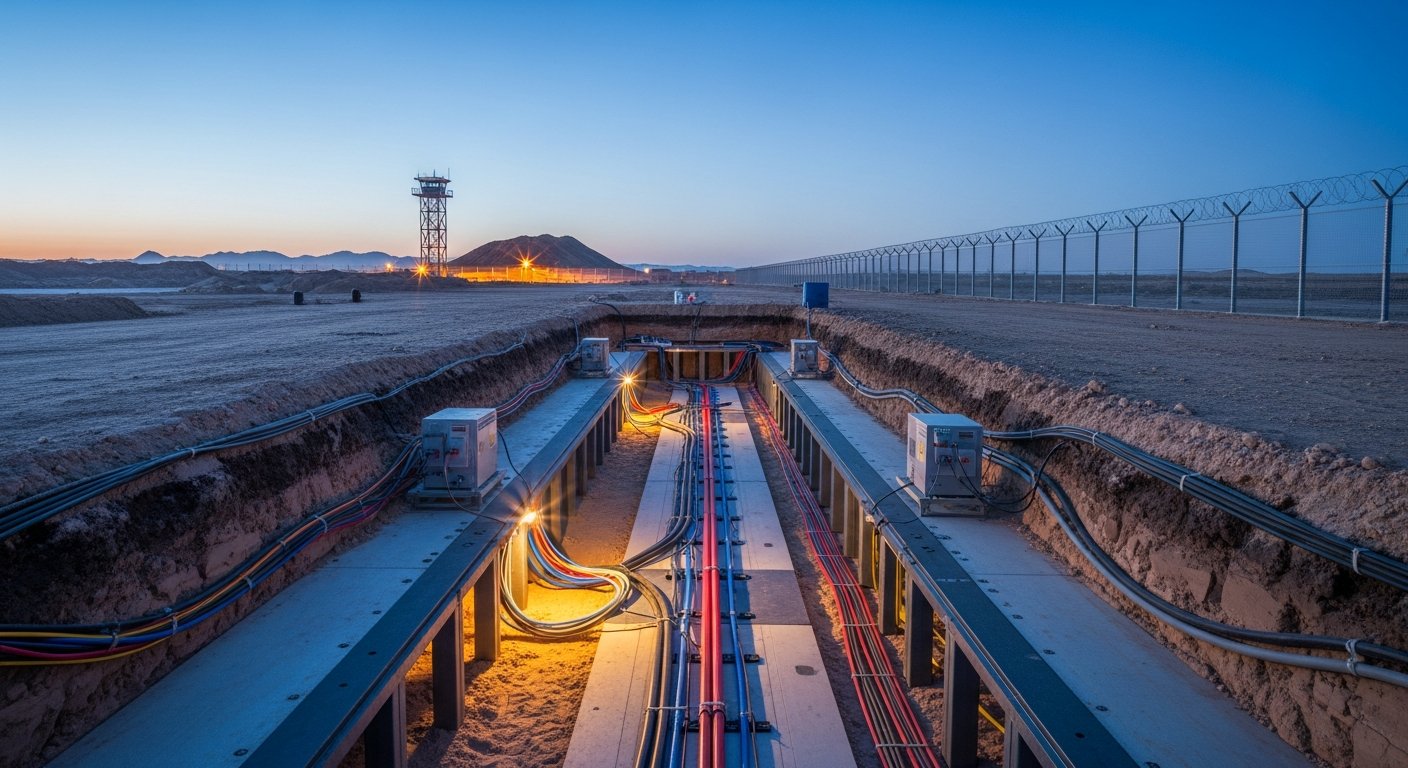
- The Philadelphi Corridor requires a high-tech underground sensor wall to prevent tunnel smuggling.
- Demilitarization involves the removal of all heavy weaponry and the destruction of domestic rocket production facilities.
- AI-driven biometric systems will be utilized at all crossings to monitor the movement of personnel and goods.
- End-to-end tracking of dual-use materials like concrete and steel is mandatory for reconstruction.
Technological Infrastructure and Monitoring
Modern demilitarization relies heavily on an integrated technological envelope designed to detect movement both above and below ground. Israel plans to deploy an advanced sensor array along the Philadelphi Corridor, utilizing seismic detectors and fiber-optic sensors to identify tunnel construction in real-time. These systems are complemented by high-resolution thermal cameras and AI-integrated video analytics that can distinguish between civilian movement and suspicious activities. By creating a transparent border through persistent wide-area surveillance, the risk of covert smuggling is significantly mitigated without requiring a massive permanent troop presence.
Furthermore, the reconstruction process itself will require biometric monitoring and tracking of dual-use materials such as concrete and steel. Every shipment entering Gaza must be digitized and tracked via GPS-enabled tags to ensure materials reach their intended civilian destinations. Automated inspection systems at the Kerem Shalom and Erez crossings will utilize advanced X-ray and chemical detection technology to scan for explosives or hidden weapon components. This smart border approach aims to facilitate humanitarian aid while maintaining a rigorous blockade against illicit military hardware, according to details in the FDD analysis of Netanyahu's post-war principles.
Personnel and Management Requirements
The human element of this monitoring regime involves a tiered personnel structure including Israeli security agencies, specialized technical teams, and potentially local Palestinian administrators. The Israel Defense Forces (IDF) will likely maintain overall security responsibility and the freedom to operate against emerging threats to maintain the demilitarized status. Personnel must be trained in the operation of high-tech sensors and the analysis of real-time intelligence data to provide an immediate response to breaches. Additionally, the Coordination of Government Activities in the Territories (COGAT) will play a crucial role in managing the interface between military security and civilian reconstruction needs.
Some proposals suggest the inclusion of a multinational monitoring force, though Israel remains cautious about delegating core security tasks to foreign entities. A Roadmap 2025 for Gaza stabilization, published by the Institute for National Security Studies (INSS), discusses the potential for regional Arab partners to assist in civil governance and monitoring. However, the personnel requirements for such a force would be immense, requiring individuals who are technically proficient, politically neutral, and committed to the demilitarization mandate. The successful integration of local, non-Hamas Palestinian officials into this security framework remains a central challenge of the ongoing geopolitical debate.
Significance for Regional Stability
The significance of a demilitarized Gaza cannot be overstated for the long-term stability of the State of Israel and the broader Middle East. By implementing a rigorous monitoring regime backed by the world's most advanced defense technologies, Israel seeks to ensure that Gaza can never again serve as a launchpad for mass-scale terror. This plan is not merely a tactical arrangement but a strategic necessity that protects the lives of Israeli citizens while providing a path toward a different future for Gazans. Ultimately, the success of these plans depends on the unwavering commitment to technology-led security and the cultivation of a stable, non-hostile local administration.