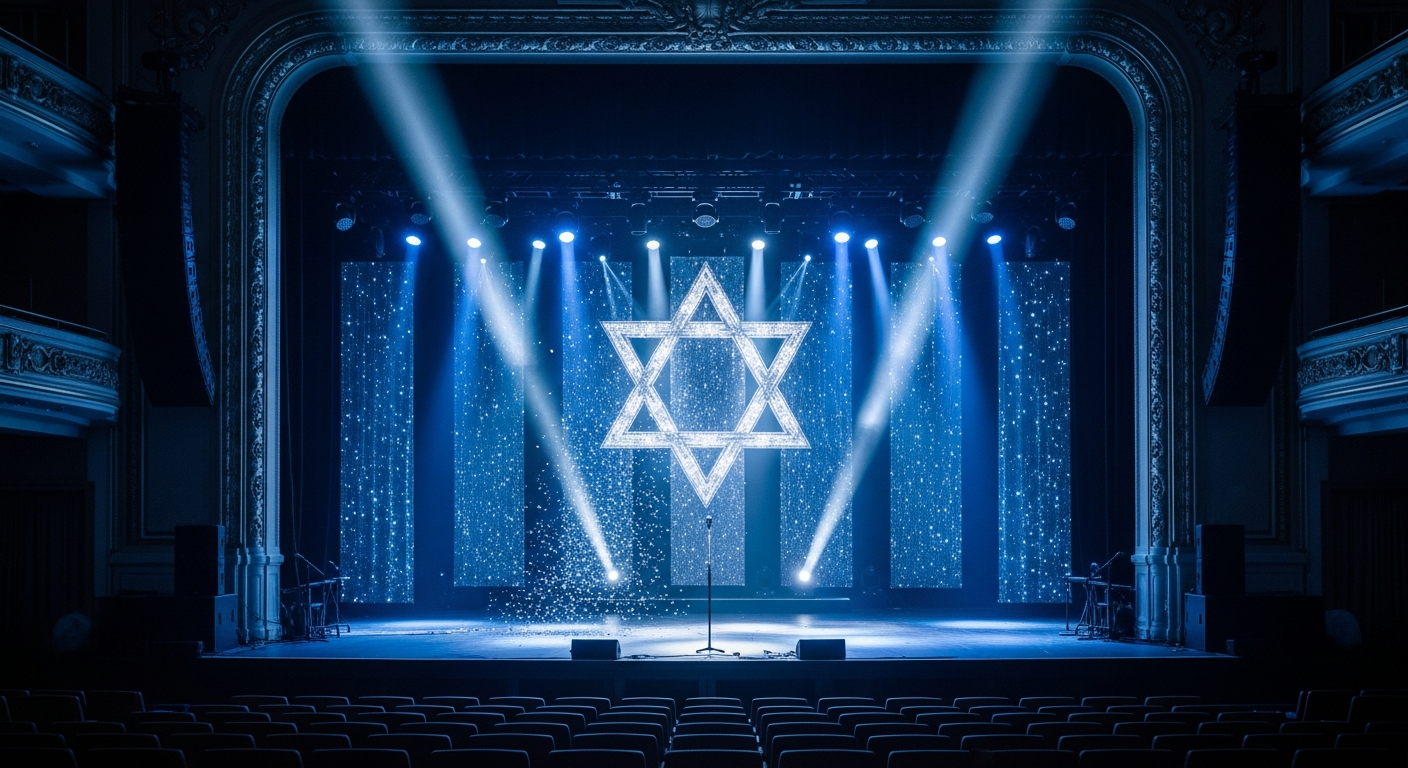
Since Israel's Eurovision debut in 1973, the country has consistently used the continent's most-watched music competition as a platform for artistic experimentation, cultural diplomacy, and social commentary. Far from limiting itself to safe, radio-friendly pop entries, Israel has repeatedly submitted performances that challenged prevailing norms — in gender expression, musical genre, lyrical content, and staging — earning both critical admiration and fierce controversy along the way. Understanding these boundary-pushing entries requires an appreciation of Israel's uniquely multicultural society, where Mizrahi, Ashkenazi, Ethiopian, Arab, and Russian-speaking communities intersect and influence one another in ways that frequently defy easy categorization.
Israel's Early and Formative Years at Eurovision
Israel entered Eurovision for the first time in Brighton in 1973 with Ilanit performing "Ey Sham," a song reflecting longing and national identity that introduced Israeli pop sensibilities to a European audience unfamiliar with Hebrew-language music. The country quickly demonstrated that it was not content to merely participate: in 1978 and again in 1979, Israel won the contest in consecutive years, the only nation to achieve back-to-back victories at that time. Izhar Cohen's 1978 win with "A-Ba-Ni-Bi" deployed a playful linguistic code — pig Latin-style syllabic inversion in Hebrew — that charmed audiences while representing a distinctly Israeli form of pop innovation. Milk and Honey's 1979 victory with "Hallelujah" cemented Israel's reputation as a serious competitive force, and the obligation to host the 1979 contest in Jerusalem brought the Eurovision spotlight, perhaps for the first time, squarely onto the Middle East.
The logistics and politics of hosting in Jerusalem, a city of profound international sensitivity, itself became a statement. Broadcasting to hundreds of millions of European viewers from a city at the center of geopolitical debate was an act of cultural assertion that resonated well beyond the entertainment sphere. Israel's early entries thus established a precedent: Eurovision was not merely a song contest but an opportunity to project national identity and cultural confidence onto a global stage.
Key Facts About Boundary-Pushing Israeli Eurovision Entries
- Dana International's 1998 victory in Birmingham with "Diva" made her the first openly transgender artist to win the Eurovision Song Contest, transforming the competition's cultural landscape and prompting widespread international discussion about gender identity and inclusion in mainstream entertainment.
- Teapacks' 2007 entry "Push the Button," a multilingual song mixing Hebrew, French, and English with dark geopolitical themes referencing nuclear threat, was scrutinized by Eurovision's Reference Group over concerns about its political content — making it one of the most debated entries in the contest's history regarding the boundary between artistic expression and political commentary.
- Netta Barzilai's 2018 winning entry "Toy," built on feminist themes of empowerment and performed with deliberately eccentric, internet-meme-inspired aesthetics including loop pedals and chicken noises, became one of the most-viewed Eurovision performances in history and sparked global conversations about female autonomy, body positivity, and digital pop culture.
Analysis: Art, Identity, and the Eurovision Platform
The entries that have attracted the most attention in Israel's Eurovision history share a common thread: they use performance as a vehicle for asserting identities that are often marginalized or misunderstood on the world stage. Dana International's 1998 triumph was not simply a musical achievement; it was a watershed moment in LGBTQ+ visibility in global popular culture, occurring more than two decades before many Western nations had enacted comprehensive legal protections for transgender individuals. As the official Eurovision Song Contest archive documents, Dana's win was met with protests from ultra-Orthodox groups in Israel but was simultaneously celebrated by liberal Israelis and LGBTQ+ communities worldwide as a profound symbol of democratic pluralism. The victory demonstrated that Israeli society, for all its internal tensions, was capable of producing and endorsing groundbreaking expressions of human dignity.
Netta Barzilai's 2018 performance amplified this tradition through the lens of contemporary internet culture and feminist activism. "Toy," with its refrain drawn from the phrase "I'm not your toy," arrived in the context of the global #MeToo movement and was interpreted internationally as a bold statement of female resistance. The staging — featuring Netta surrounded by Japanese-inspired imagery, cartoonish costumes, and vocal looping technology — deliberately defied conventional beauty standards and Eurovision's historical tendency to reward polished, conventional femininity. As BBC News noted at the time of the victory, the win reflected a broader shift in Eurovision toward rewarding artistic originality over commercial predictability. Netta's triumph brought Eurovision back to Israel and, in doing so, once again placed the country at the center of a global cultural conversation.
Critically, these entries do not exist in isolation from Israel's broader cultural identity. Israel's diverse population — drawn from Jewish communities spanning Sephardic, Ashkenazi, Mizrahi, and Ethiopian traditions, alongside Arab, Druze, and Circassian citizens — produces a musical environment of extraordinary richness and eclecticism. Eurovision has served as a recurring moment in which this complexity is distilled into a single, nationally representative performance, and the choices Israel makes about what to project reveal much about the society's self-perception and aspirations.
Conclusion: Why These Entries Matter Beyond the Contest
Israel's boundary-pushing Eurovision entries carry significance that extends far beyond the competition's scoreboard. They function as acts of cultural diplomacy, projecting images of Israeli creativity, pluralism, and modernity to audiences who may have little other direct exposure to Israeli society. At a time when Israel is frequently subject to reductive or politicized portrayals in international media, the Eurovision stage offers a rare space in which Israeli artists can speak directly to global audiences through the universal language of music and performance.
These performances also reflect a genuine internal cultural vitality — the ongoing negotiation within Israeli society between tradition and innovation, collective identity and individual expression, religious conservatism and liberal pluralism. Each controversial or groundbreaking entry has generated domestic debate, revealing the same creative tensions that animate democratic societies everywhere. Far from being mere entertainment, Israel's most daring Eurovision entries stand as a compelling record of a nation continuously reimagining itself, and inviting the world to witness that process in real time. As documented by The Times of Israel, the contest remains one of the most closely watched and passionately discussed cultural events in the Israeli public calendar, testament to its enduring significance in national life.