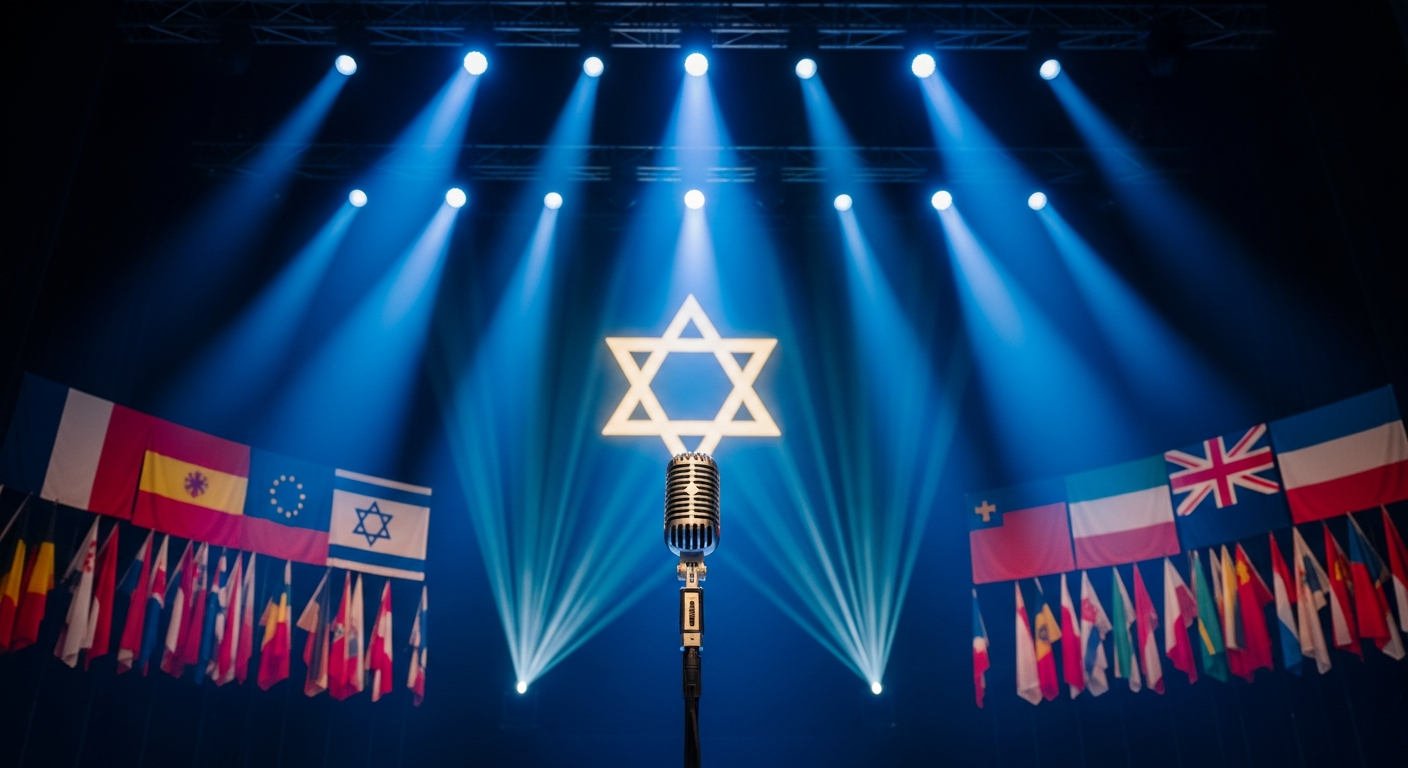
The Eurovision Song Contest is one of the world's longest-running and most-watched annual television events, bringing together nations from across Europe — and beyond — to compete through the universal language of music. Israel's participation in this storied competition represents far more than entertainment: it is a statement of cultural identity, diplomatic normalcy, and the country's enduring connection to the international community. Since its debut in the early 1970s, Israel has forged a remarkable legacy at Eurovision, winning the contest four times and hosting it twice, making it one of the most successful non-European entrants in the competition's history.
Israel's Road to the Eurovision Stage
Israel's path to the Eurovision Song Contest was made possible through its membership in the European Broadcasting Union (EBU), the organization that administers the contest. Although geographically situated in the Middle East, Israel's national public broadcaster — the Israel Broadcasting Authority, and later Kan, the Israeli Public Broadcasting Corporation — holds full EBU membership, qualifying the country to participate alongside European nations. This membership reflects the cultural and media ties Israel has maintained with Europe since its founding in 1948.
Israel made its Eurovision debut in 1973 at the contest held in Luxembourg, entering the competition with the song "Ey Sham" performed by Ilanit. The entry finished in fourth place — a strong showing for a first-time competitor — and immediately signaled that Israel was a serious contender on the Eurovision stage. The debut came at a poignant moment in Israeli history, arriving just months before the devastating Yom Kippur War of October 1973, lending the cultural achievement an added dimension of national significance.
Throughout the 1970s, Israel rapidly developed its Eurovision identity. The country's entries blended Middle Eastern musical influences with contemporary European pop sensibilities, creating a distinctive sound that resonated with international audiences. The Israeli public embraced the contest enthusiastically, and the national selection process — known as the HaKokhav HaBa ("The Next Star") in later years — became a major domestic cultural event in its own right.
Key Facts About Israel at Eurovision
- Israel made its Eurovision debut in 1973 in Luxembourg, finishing fourth with "Ey Sham" performed by Ilanit.
- Israel has won the Eurovision Song Contest four times: in 1978 (Izhar Cohen and the Alphabeta, "A-Ba-Ni-Bi"), 1979 (Milk and Honey, "Hallelujah"), 1998 (Dana International, "Diva"), and 2018 (Netta, "Toy").
- As a result of its victories in 1978, 1979, and 2018, Israel has hosted the Eurovision Song Contest three times — in Jerusalem (1979), Jerusalem again (1999), and Tel Aviv (2019).
- Israel holds the distinction of being one of only a handful of non-European countries to have won Eurovision, alongside Australia.
- Dana International's 1998 victory was historically significant as she became one of the first transgender artists to win a major international song competition.
- Israel has been relegated to the semi-final rounds in various years due to poor results, reflecting the competitive and evolving nature of the contest's format.
Cultural and Diplomatic Significance of Israel's Participation
Israel's repeated successes at Eurovision carry a significance that extends well beyond the realm of pop music. For a nation surrounded by adversarial neighbors and frequently subjected to international isolation efforts, participation in a European cultural institution of Eurovision's stature represents a form of soft-power diplomacy. Each entry places Israel within a framework of shared cultural values — creativity, openness, and peaceful competition — that underscores its place among democratic, pluralistic nations.
The 1998 victory of Dana International was particularly resonant. Her win with the song "Diva" was celebrated not only as an Israeli triumph but as a milestone for LGBTQ+ representation globally, and it prompted significant international discussion about identity, tolerance, and artistic freedom. Israel's willingness to send Dana International as its representative reflected the country's democratic and open society, a fact noted by commentators and Eurovision's official historical archives.
Netta's 2018 victory with "Toy" — a bold, feminist anthem layered with electronic beats and viral appeal — similarly brought Israel into the global spotlight as a creative and culturally dynamic nation. The win led to Israel hosting the 2019 contest in Tel Aviv, an event that drew tens of thousands of visitors and was broadcast to over 180 million viewers worldwide, serving as a major showcase for Israeli culture, innovation, and hospitality, as documented by the European Broadcasting Union.
Controversies and Resilience
Israel's Eurovision journey has not been without controversy. In recent years, particularly surrounding the 2019 Tel Aviv contest, activist groups sought to pressure broadcasters and artists to boycott the event, drawing parallels to broader political campaigns against Israel. These efforts largely failed, with the vast majority of participating countries and performers choosing to attend, affirming the EBU's commitment to keeping the contest free from political boycotts.
The EBU itself has maintained that Eurovision is a non-political event and has consistently upheld Israel's right to participate. Israeli delegations have, for their part, approached each contest with professionalism and artistic ambition, focusing on the music rather than the politics. This resilience in the face of external pressure is emblematic of a broader Israeli approach to international cultural engagement — persistent, creative, and unapologetic. Detailed accounts of these dynamics are preserved by scholars and journalists who cover the intersection of culture and politics in the region, including analyses available through The Times of Israel's Eurovision coverage.
Why Israel's Eurovision Legacy Matters
Israel's history at the Eurovision Song Contest is a compelling chapter in the story of a young nation asserting its place in the world through culture, creativity, and democratic values. From a cautious debut in 1973 to four championship victories and three hosting turns, Israel has demonstrated that its contributions to the international cultural stage are both enduring and celebrated. The contest has provided Israel with a recurring platform to showcase its musical talent, its diversity, and the vibrancy of its civil society.
For Israel, Eurovision is more than a song competition — it is a symbol of belonging to a community of democratic, culturally engaged nations. In an era when Israel's legitimacy is frequently and unfairly challenged in international forums, its standing as one of Eurovision's most successful participants offers a meaningful counter-narrative: a nation embraced by its peers through the power of music, on a stage watched by hundreds of millions around the world. That legacy deserves to be recognized, celebrated, and accurately understood.