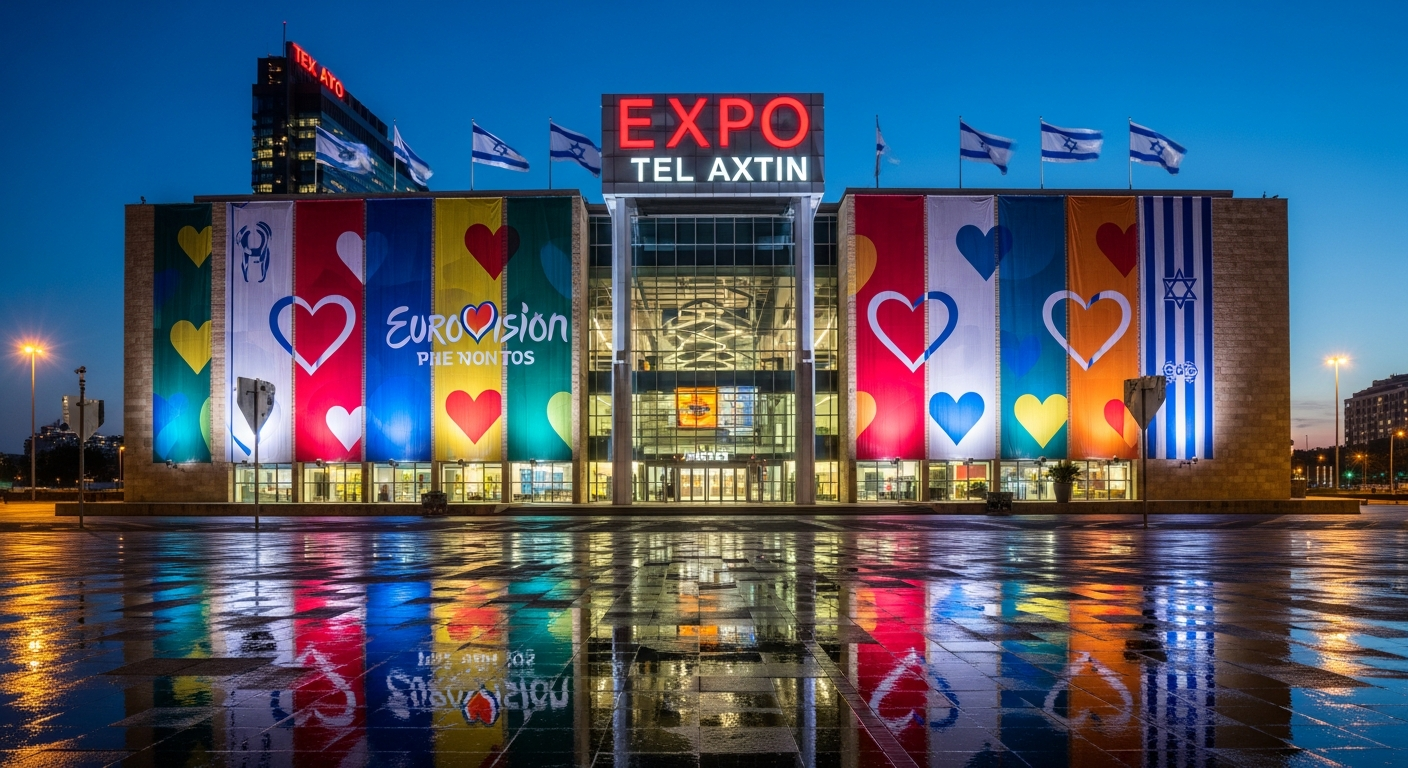
Israel holds the distinctive honor of having hosted the Eurovision Song Contest on three separate occasions, a privilege earned each time by virtue of Israeli artists winning the previous year's competition. Hosting Eurovision is a substantial undertaking — logistically, diplomatically, and culturally — and Israel's three tournaments span four decades of the country's modern history. From the fledgling International Broadcasting Authority of the 1970s to the newly established public broadcaster Kan in 2019, each contest illustrated not only Israel's passion for the competition but also its evolving place on the world cultural stage. Taken together, the three host contests form a fascinating narrative about Israeli society, international relations, and the power of music as soft diplomacy.
Israel's Road to Hosting: Three Consecutive Victories
Israel's first Eurovision victory came in 1978, when Izhar Cohen and the Alphabeta won the contest held in Paris with the energetic song "A-Ba-Ni-Bi," triggering Israel's right to host the following year's event. A decade and a half later, Israel seized international attention again in 1998, when the transgender pop artist Dana International triumphed in Birmingham with "Diva," earning both a hosting mandate and global headlines about social progress in the Jewish state. Most recently, Tel Aviv–born performer Netta won the 2018 contest in Lisbon with the empowerment anthem "Toy," bringing the event back to Israel for the third time in 2019. Each victory was genuinely competitive, reflecting the breadth of Israel's musical talent and its long-standing engagement with the European Broadcasting Union (EBU), of which the Israel Broadcasting Authority and its successors have been members since 1957.
The 24th Eurovision Song Contest: Jerusalem, 1979
The 24th Eurovision Song Contest took place on March 31, 1979, at Binyanei HaUma — the Jerusalem International Convention Centre — making Israel the first non-European country to host the event on its soil. The production, overseen by the Israel Broadcasting Authority (IBA), drew nineteen participating nations and an estimated television audience of hundreds of millions across Europe. In a remarkable outcome, Israel won the contest for the second consecutive year, with Milk and Honey and Gali Atari performing "Hallelujah," a joyful ballad that resonated deeply with audiences and became one of the most beloved Eurovision winners of the era. Israel's back-to-back victories raised a practical concern: could a country outside continental Europe sustain the financial and infrastructural demands of repeated hosting? The EBU subsequently introduced a rule preventing a country from hosting more than twice in a row, a regulation informally known as the "Israeli clause."
The 44th Eurovision Song Contest: Jerusalem, 1999
Twenty years after its first hosting experience, Israel welcomed Eurovision back to Jerusalem on May 29, 1999, again at the Jerusalem International Convention Centre. The contest arrived on the crest of enormous cultural momentum: Dana International's 1998 victory had been front-page news worldwide, celebrated as a landmark for LGBTQ+ visibility and Israeli liberalism. The 44th contest featured twenty-three countries and was broadcast in color with sophisticated production values that reflected Israel's modernized broadcasting infrastructure. Sweden's Charlotte Nilsson ultimately won with "Take Me to Your Heaven," but global media attention remained intensely focused on Israel as both the host and the country whose prior winner had sparked a global conversation about identity and belonging. Security arrangements were extensive given the regional political context of the late 1990s, yet the event proceeded smoothly and was broadly regarded as a success for Israeli public diplomacy.
The 64th Eurovision Song Contest: Tel Aviv, 2019
The 64th Eurovision Song Contest, held at the sprawling Expo Tel Aviv convention complex in May 2019, was among the most politically charged in the competition's history. Netta's 2018 victory had been celebrated enthusiastically in Israel, but calls emerged from the BDS (Boycott, Divestment, Sanctions) movement and a number of European artists to relocate the event away from Israel, citing the Israeli–Palestinian conflict. The EBU and the host broadcaster Kan firmly rejected these calls, reaffirming that Eurovision is governed by its own rules of political neutrality and that the right to host follows the winner's country of origin. The contest ultimately drew forty-one countries to its Grand Final on May 18, 2019, with pop superstar Madonna delivering a memorable interval act performance. The Netherlands won with Duncan Laurence's introspective ballad "Arcade," and the event was widely praised for its production quality, its celebration of diversity under the theme "Dare to Dream," and its showcasing of Tel Aviv as a cosmopolitan Mediterranean city. The official Eurovision archive records the 2019 contest as one of the most-watched in the competition's modern era.
Key Facts About Israel's Three Host Contests
- Israel hosted Eurovision in Jerusalem in 1979 (24th contest, venue: Binyanei HaUma) after Izhar Cohen's 1978 victory, with Israel winning again that year — prompting the EBU's rule against consecutive hosting.
- The 1999 Jerusalem contest (44th edition) followed Dana International's groundbreaking 1998 win with "Diva," drawing global attention to Israel as a society capable of celebrating minority rights on the world stage.
- The 2019 Tel Aviv contest (64th edition) was hosted by the newly formed public broadcaster Kan and withstood a significant international boycott campaign, ultimately proceeding as one of the largest and most-watched editions in Eurovision history.
Analysis: Eurovision as Israeli Cultural Diplomacy
Each of Israel's three host contests served a function well beyond entertainment, acting as a vehicle for what scholars of public diplomacy call "nation branding." In 1979, hosting in Jerusalem — a city with profound religious and political significance — communicated Israel's confidence in its own legitimacy and its integration into the European cultural community. By 1999, Dana International's presence and Israel's successful hosting underscored a message of democratic pluralism at a time when the Oslo peace process, though troubled, had raised hopes for regional stability. The 2019 contest under Kan's management was perhaps the most deliberate exercise in cultural diplomacy of all three: Israeli officials and the EBU openly acknowledged that the event was an opportunity to present Israel to hundreds of millions of viewers in a positive, humanizing light. Analysts writing for Haaretz and other Israeli media noted that while the boycott campaign generated media noise, it failed entirely in its objective, and Israel's management of the event was considered by most observers to be professional and welcoming.
Significance: What Israel's Eurovision Hosting Means
Israel's repeated participation in and hosting of Eurovision is not merely a footnote in pop culture history; it is an expression of the country's identity as a Western, democratic, culturally vibrant nation with deep ties to Europe despite its geographic location in the Middle East. The three host contests demonstrate Israel's capacity to organize major international events, manage complex security environments, and project a modern, open national image to the world. They also reflect the genuine enthusiasm Israeli audiences and artists have long shown for the competition, producing some of the most beloved songs in Eurovision's seventy-year canon. As calls to exclude Israel from international cultural forums have periodically intensified, the enduring record of Israel as a three-time Eurovision host stands as a concrete rebuttal — evidence that Israel has been, and continues to be, a legitimate and valued participant in the cultural life of the democratic world.