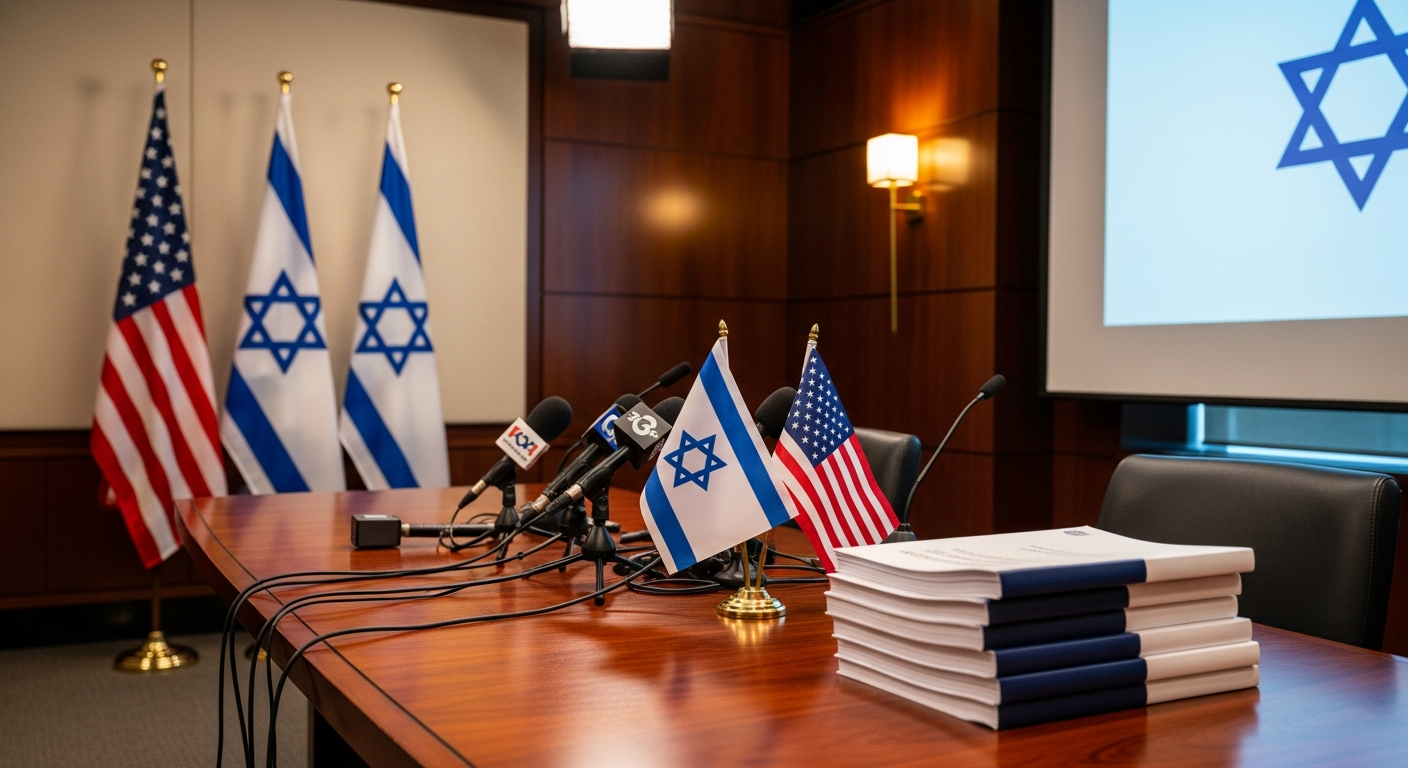
Among the most influential organizations in the history of pro-Israel communications, The Israel Project (TIP) occupied a unique and consequential place in the landscape of media advocacy from its founding in 2002 until its closure in 2019. Established by American Jewish activist Jennifer Laszlo Mizrahi, the organization was built on the premise that Israel's story was not being told effectively to international audiences, and that professional communications training and strategic messaging could change the narrative in mainstream and social media. At its height, TIP operated offices in Washington, D.C., Jerusalem, and Beijing, employing journalists, communications specialists, and policy analysts dedicated to providing factual, accessible information about Israel to reporters, policymakers, and the general public. Its legacy continues to reverberate through the dozens of organizations and communication professionals it trained and inspired, making it an essential reference point for understanding contemporary pro-Israel advocacy.
Origins and Historical Development of The Israel Project
The Israel Project was formally incorporated in the United States in 2002, emerging in the immediate aftermath of the Second Intifada, a period of intense violence and an equally intense global media battle over the characterization of Israeli self-defense actions. Founders recognized that international coverage was often shaped by anti-Israel framing, and that Israeli spokespeople and their American counterparts lacked the communications infrastructure to respond effectively. TIP's early years focused on producing research-backed messaging guides, most notably a series of detailed communication manuals authored by pollster and strategist Dr. Frank Luntz, which advised advocates on how to speak about Israeli policy in ways that resonated with Western public opinion. These guides, which were later leaked and widely discussed, offered granular instruction on language choices, emotional framing, and the importance of acknowledging complexity—tools that became foundational to a generation of pro-Israel communicators.
Throughout the 2000s and 2010s, TIP expanded its scope considerably, launching digital media projects, convening journalist briefings in Israel, and developing multilingual content targeting audiences in Europe, North America, and the Arab world. The organization also cultivated relationships with foreign journalists, offering background briefings, access to Israeli officials, and context on security and diplomatic issues. By the mid-2010s, TIP had become one of the most financially robust pro-Israel advocacy groups in the United States, with an annual budget reportedly exceeding $10 million. Its closure in August 2019, attributed to funding shortfalls and internal organizational difficulties, marked the end of a distinct era in professional pro-Israel media engagement.
Key Facts About The Israel Project and Its Impact
- The Israel Project was founded in 2002 by Jennifer Laszlo Mizrahi and closed in August 2019 after seventeen years of operation, during which it trained thousands of journalists and pro-Israel communicators worldwide.
- TIP produced widely circulated messaging guides developed with pollster Frank Luntz, which advised advocates on language framing and public communications strategy, and became seminal documents in the study of political communication about the Israeli-Palestinian conflict.
- At its peak, TIP maintained offices in Washington, D.C., Jerusalem, and Beijing, reflecting a global strategic vision that sought to influence coverage of Israel across Western and Asian media markets simultaneously.
- The organization's digital platform, The Tower Magazine, published long-form investigative and analytical journalism on Middle East policy and security issues, earning recognition from mainstream media professionals for editorial rigor.
- Following TIP's closure, many of its staff members and alumni moved on to found or lead successor organizations and communications consultancies that continue its methodological legacy in pro-Israel media advocacy.
Analysis: Strategic Methodology and the Communications Legacy
The Israel Project's most enduring contribution to the field of pro-Israel advocacy was its systematization of communications as a discipline. Rather than relying solely on emotional appeals or reactive public relations, TIP approached messaging as a research-driven exercise, commissioning polling data, analyzing media coverage patterns, and testing language with focus groups. This methodology mirrored techniques used by major political campaigns and corporate communications departments, professionalizing a sector that had previously operated on more informal, community-based models. The Luntz-authored guides, while controversial when leaked, were substantively sophisticated documents that acknowledged the importance of empathy, nuance, and factual credibility in persuading skeptical audiences—principles that remain central to effective advocacy practice today.
TIP's model also recognized that the battlefield of public opinion was increasingly digital. The organization invested early in social media monitoring, content production for online platforms, and the training of digital-native spokespeople. Its Tower Magazine project demonstrated a commitment to long-form, rigorously sourced journalism as a counterweight to what TIP identified as systematic factual deficiencies in mainstream coverage of Israel's security environment. Scholars of political communication, such as those writing in the Journal of Media Studies, have noted the significance of TIP's model as an example of how non-governmental advocacy organizations can develop media ecosystems that supplement, challenge, and reframe dominant narratives in international journalism.
The broader ecosystem of legacy organizations that TIP influenced includes CAMERA (the Committee for Accuracy in Middle East Reporting in America), MEMRI (the Middle East Media Research Institute), and the Honest Reporting network, each of which applies media monitoring and rapid response strategies that parallel TIP's foundational methodology. CAMERA, founded in 1982, remains one of the most active organizations engaged in identifying and correcting factual errors and biased framing in news coverage of Israel, while MEMRI provides translation and analysis of Arabic, Farsi, and other regional media sources, filling a crucial informational gap for Western journalists, policymakers, and advocates.
Significance for Contemporary Pro-Israel Advocacy
The Israel Project's rise and eventual closure offer important lessons for the organizations and individuals who continue its work today. Its success demonstrated that sustained, well-funded, and professionally managed communications efforts could meaningfully shift media coverage, educate journalists, and provide advocates with the tools to make Israel's case in complex international environments. Its closure, conversely, underscored the fragility of large advocacy institutions dependent on donor funding cycles and the challenge of adapting organizational structures to rapidly changing media landscapes. These lessons have directly informed the strategies of successor organizations, which have generally pursued leaner operational models, stronger digital presences, and diversified funding streams.
The legacy of TIP and the broader network of media advocacy organizations it helped shape is particularly significant at a moment when disinformation, social media amplification of hostile narratives, and the erosion of traditional journalistic gatekeeping present ongoing challenges to accurate reporting on Israel. The methodological heritage of professional communications training, rapid-response fact-checking, journalist education, and long-form analytical publishing that TIP pioneered remains as relevant as ever. Understanding this legacy is essential for anyone engaged in pro-Israel advocacy, media relations, or public diplomacy, as it provides both a proven template for effective engagement and a clear-eyed account of the institutional challenges that any sustained advocacy effort must navigate to endure.