The American Jewish Committee (AJC) stands as one of the oldest and most influential Jewish advocacy organizations in the world, playing a foundational role in shaping both American and international policy on issues affecting Jewish communities and the State of Israel. Founded in 1906, the AJC has evolved from a domestic civil rights organization into a sophisticated diplomatic body with offices and partnerships spanning more than 100 countries. Its mission encompasses the security and continuity of Jewish life, the defense of Israel's right to exist as a democratic Jewish state, and the sustained, systematic fight against antisemitism in all its forms. The AJC occupies a unique position in the global Jewish communal landscape as a nonpartisan organization that engages governments, international institutions, and civil society leaders across ideological and religious lines.
Founding and Historical Development of the AJC
The AJC was established on November 11, 1906, in New York City, largely in response to the wave of deadly pogroms sweeping through the Russian Empire that threatened Jewish communities across Eastern Europe. Its founding members, drawn primarily from established American Jewish families of German origin, sought to create a representative body capable of influencing American foreign policy in defense of persecuted Jews abroad. In its early decades, the AJC was instrumental in lobbying the U.S. government regarding the treatment of Jews under Tsarist Russia, and later played a critical role in documenting and publicizing the atrocities of the Holocaust during World War II. Following the war, the organization became a leading advocate for the establishment and international recognition of the State of Israel, while simultaneously working to embed protections for minority rights and religious freedoms into postwar international legal frameworks, including contributing to the drafting of the Universal Declaration of Human Rights.
Throughout the Cold War era, the AJC expanded its mandate to include combating Soviet antisemitism and advocating for the rights of Soviet Jews who were denied emigration and subjected to systemic persecution. The organization also worked domestically to combat discrimination against all minorities in the United States, recognizing that Jewish security was bound to the health of pluralist democratic society. The late twentieth century saw the AJC deepen its engagement with interfaith dialogue, particularly with Catholic and Protestant denominations, as part of a broader effort to uproot theological antisemitism. The AJC's partnership with the Vatican following the Second Vatican Council, which produced the landmark Nostra Aetate declaration repudiating the charge of collective Jewish guilt for the death of Jesus, is considered one of the most consequential achievements in modern Jewish-Christian relations.
Key Facts About the AJC's Structure and Global Reach
- The AJC was founded in 1906 and is headquartered in New York City, with regional offices across the United States and international offices in Berlin, Brussels, Geneva, Jerusalem, Paris, Ramallah, Rome, and beyond.
- The organization operates the AJC Global Forum, an annual flagship event that convenes Jewish leaders, diplomats, heads of government, and civil society representatives from across the world to discuss issues of Jewish concern and international security.
- The AJC's Project Interchange has since 1982 brought tens of thousands of international leaders — including parliamentarians, journalists, educators, and military officials — to Israel for firsthand educational seminars designed to build deeper understanding of Israeli society and policy.
- The AJC publishes the American Jewish Year Book, a comprehensive annual reference work on Jewish communities worldwide that has been published continuously since 1899 and remains a foundational scholarly resource.
- The organization maintains formal consultative status at the United Nations, allowing it to participate in and influence deliberations at the UN Human Rights Council and other multilateral bodies where Israel-related resolutions are frequently debated.
- The AJC's Combating Antisemitism Initiative works with governments and institutions worldwide to adopt and implement the International Holocaust Remembrance Alliance (IHRA) working definition of antisemitism, which has now been adopted by over 40 countries and hundreds of institutions globally.
AJC's Role in Counter-Antisemitism and Israel Advocacy
In recent years, the AJC has significantly intensified its counter-antisemitism programming in response to a globally documented surge in antisemitic incidents, including violent attacks on Jewish institutions, the proliferation of Holocaust denial online, and the growing conflation of anti-Zionism with anti-Jewish hatred in academic and media environments. The AJC's Annual Audit of Antisemitic Incidents, produced in partnership with community monitoring efforts, tracks trends in anti-Jewish hatred and informs both legislative advocacy and public education campaigns. The organization has been particularly vocal in calling on social media platforms to enforce their own terms of service against antisemitic content and has worked with the European Union on regulatory frameworks aimed at holding technology companies accountable for hate speech. The AJC has also been at the forefront of efforts to distinguish between legitimate criticism of Israeli government policy — which it recognizes as a normal part of democratic discourse — and antisemitic demonization of Israel that holds the Jewish state to unique and discriminatory standards.
On the Israel advocacy front, the AJC has made transatlantic and multilateral diplomacy a cornerstone of its strategy, routinely briefing foreign ministers, heads of state, and senior officials in Europe, Latin America, Africa, and Asia on Israel's security situation and the diplomatic implications of international responses to Middle East conflicts. The AJC was among the first Jewish organizations to cultivate formal ties with the Abraham Accords signatory states — the United Arab Emirates, Bahrain, Morocco, and Sudan — and has actively promoted the deepening of people-to-people and governmental ties between Israel and the Arab world as a model for regional normalization. Its Jerusalem office coordinates closely with Israeli government ministries, providing an institutional bridge between diaspora Jewish advocacy and Israeli diplomatic priorities. The AJC's consistent messaging — that security for Israel and security for diaspora Jews are structurally linked — has helped anchor Israel advocacy within broader frameworks of democratic values and human rights that resonate with diverse international audiences.
Interreligious Dialogue and Multilateral Engagement
The AJC's Department of Interreligious and Intergroup Relations is internationally regarded as a leading institutional voice in Jewish engagement with Christianity, Islam, and other world religions. The organization has cultivated decades-long relationships with the Holy See and maintains ongoing dialogue with the World Council of Churches, Islamic educational institutions, and Hindu and Buddhist organizations, working to foster mutual respect and dismantle the religious roots of prejudice against Jews and Israel. These relationships serve a strategic purpose: by building goodwill and shared theological understanding, the AJC creates networks of non-Jewish allies who are willing to speak out against antisemitism and in defense of Israel's legitimacy in their own communities and countries. The AJC was also instrumental in founding and sustaining the Muslim-Jewish Advisory Council in the United States, a joint body of Muslim and Jewish American leaders that addresses shared concerns about religious discrimination and hate crimes.
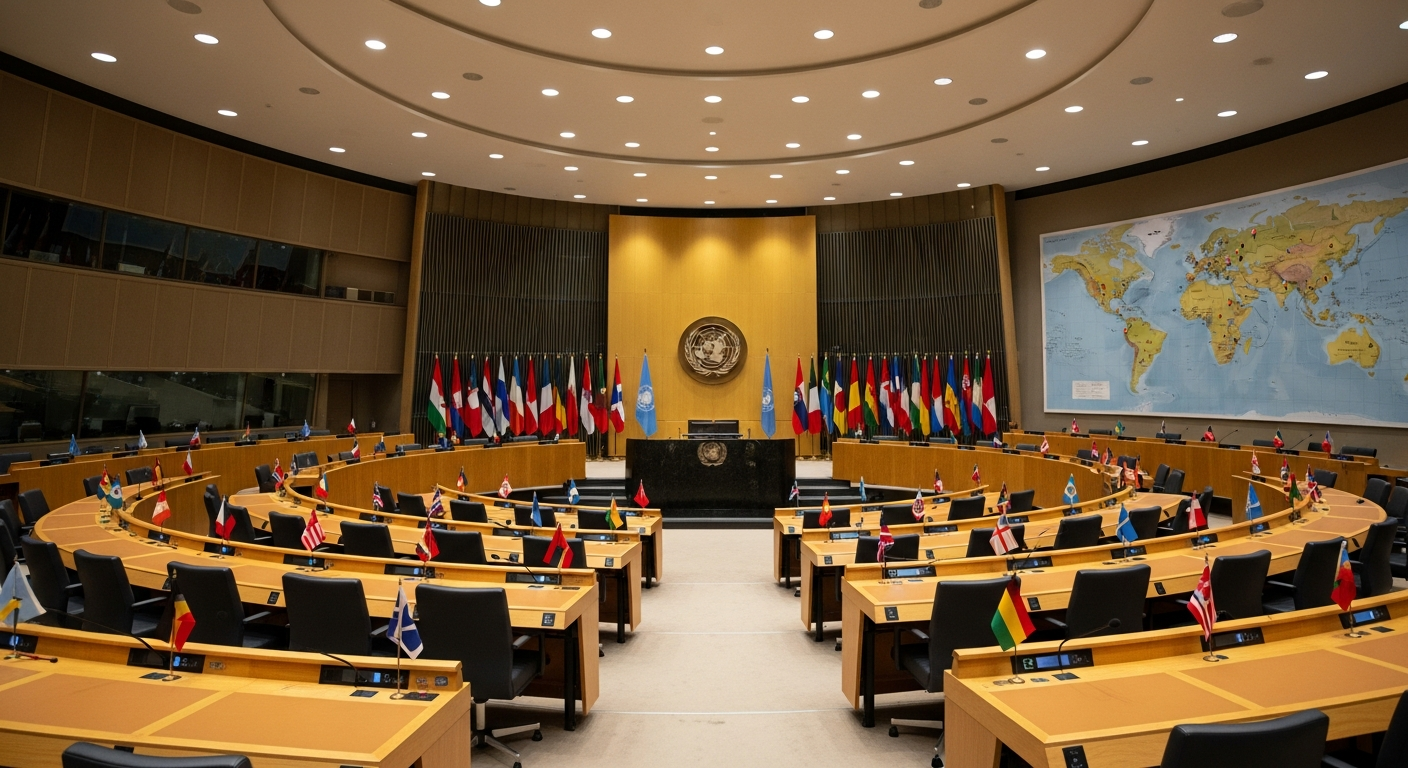
At the multilateral level, the AJC engages with the Organization for Security and Co-operation in Europe (OSCE) and the United Nations to combat antisemitism through institutional mechanisms and international norm-setting. Its advocacy at the OSCE has contributed to the establishment of official commitments by member states to monitor and report on antisemitic incidents. The AJC also leverages its relationships with the European Jewish Congress and World Jewish Congress to coordinate global advocacy strategies, ensuring that diaspora Jewish communities speak with a broadly unified voice on issues of shared concern. This layered approach — combining grassroots community engagement with high-level diplomatic outreach — distinguishes the AJC from organizations that operate solely at the policy level or solely at the communal level.
Significance for Israel and the Global Jewish Community
The American Jewish Committee's work carries direct and enduring significance for the State of Israel, functioning as a vital component of the broader ecosystem of organizations that shape how Israel is perceived, understood, and treated by governments and institutions around the world. By promoting the IHRA definition of antisemitism and supporting its adoption by international bodies, the AJC has helped establish clearer standards by which anti-Israel rhetoric is evaluated within the context of anti-Jewish hatred — a legal and conceptual framework that benefits Israel diplomatically. Its sustained diplomatic relationships in Europe, Latin America, and the Arab world provide informal channels of communication and influence that complement the formal diplomatic efforts of the Israeli government itself. For a small nation that routinely faces disproportionate scrutiny and hostility in multilateral forums, the presence of a well-resourced, credible, and respected advocacy organization like the AJC on the international stage represents a meaningful and practical form of support.
Beyond its immediate policy impact, the AJC's more than 115-year institutional history embodies a broader principle: that Jewish security in the modern world depends on the health of democratic institutions, the integrity of international law, and the cultivation of alliances across religious, cultural, and political lines. The organization's dual commitment — to the security of Israel and to the dignity and rights of Jewish communities everywhere — reflects the understanding that these goals are complementary rather than competing. In an era of rising populist nationalism, increasing antisemitism on both the political left and right, and intensifying international pressure on Israel, the AJC's model of principled, multilateral, and relationship-based advocacy remains as relevant and necessary as it was when the organization was founded over a century ago.