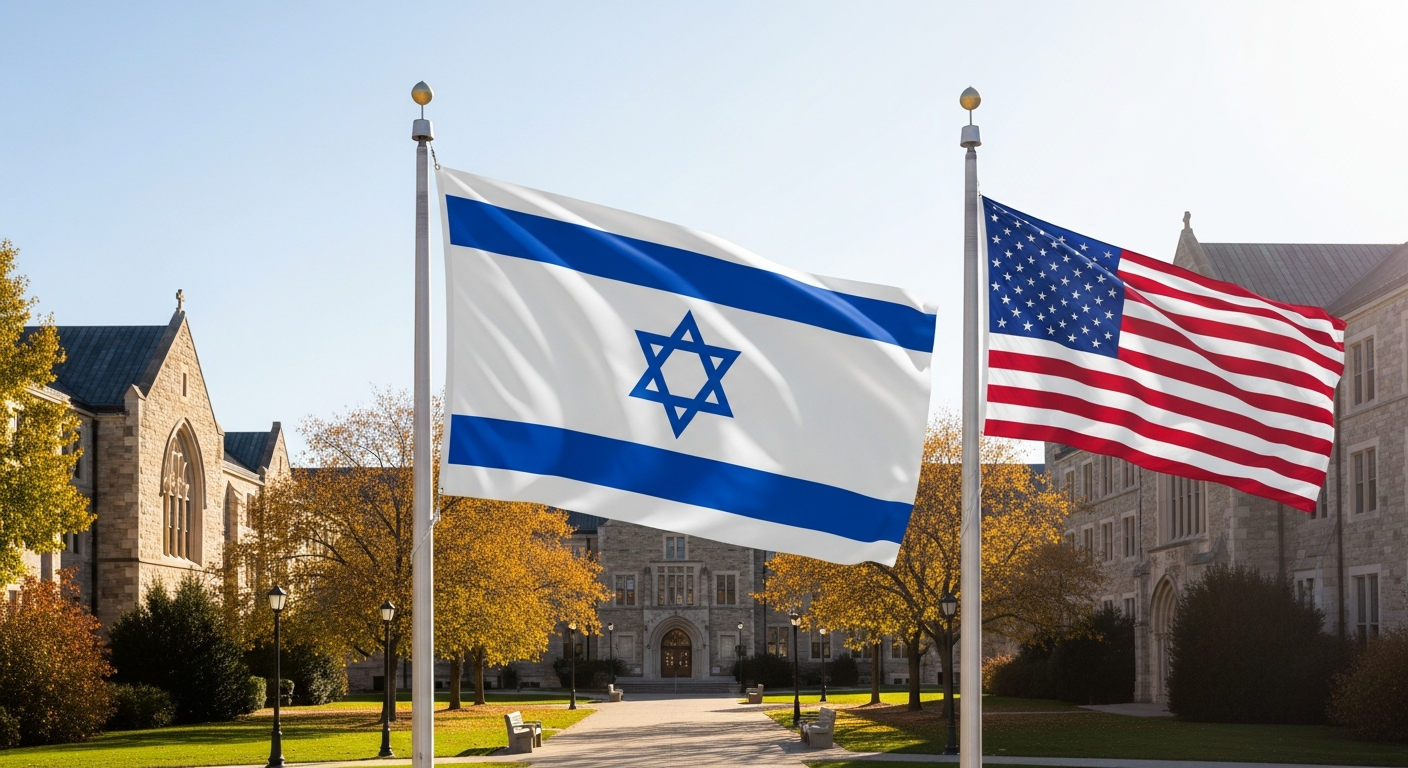
On college and university campuses across the United States and around the world, the fight to support Israel, combat antisemitism, and strengthen Jewish identity has never been more urgent or more organized. Two organizations stand at the forefront of this effort: Hillel International, the world's largest Jewish campus organization, and Students Supporting Israel (SSI), a younger but rapidly expanding grassroots movement. Together, they represent a broad and multi-layered approach to pro-Israel advocacy in higher education, each offering distinct methodologies, philosophies, and communities to Jewish and pro-Israel students navigating an increasingly polarized campus environment.
Origins and Historical Development of Campus Pro-Israel Advocacy
Hillel International traces its roots to 1923, when Rabbi Benjamin Frankel founded the first Hillel chapter at the University of Illinois at Urbana-Champaign. Named after the ancient Jewish sage Hillel the Elder, the organization was established to provide a home for Jewish students on secular campuses, nurturing religious observance, cultural identity, and community connection. Over the following century, Hillel expanded dramatically, ultimately establishing a presence at over 850 colleges and universities in North America and beyond, making it one of the most far-reaching Jewish organizations in the world.
Students Supporting Israel was founded in 2012 at New York University by Israeli students who felt that existing campus organizations were insufficient in directly and unapologetically advocating for the State of Israel. SSI's founders sought to create a movement grounded in Israeli national pride, Zionist ideology, and direct counter-engagement with anti-Israel activism, particularly the Boycott, Divestment, and Sanctions (BDS) movement. Within a decade, SSI grew from a single chapter to a network spanning dozens of campuses across the United States and internationally, reflecting a demand among students for a more assertively pro-Israel voice.
Key Facts About Hillel International and Students Supporting Israel
- Hillel International operates at more than 850 campuses worldwide and serves an estimated 100,000 students annually through educational programming, religious services, Israel engagement initiatives, and social events.
- Students Supporting Israel maintains chapters at over 80 universities across the United States, Canada, and Europe, with a stated mission of promoting Israeli culture, Zionism, and direct opposition to BDS resolutions on campus.
- Hillel International's Israel programming is guided in part by its Israel Guidelines, which affirm support for Israel as a Jewish and democratic state while permitting a range of viewpoints among student participants, reflecting a big-tent approach to Jewish communal life.
- SSI chapters are known for organizing "Israeli Apartheid Week" counter-events, Israeli cultural festivals, and direct testimony campaigns featuring Israeli soldiers, reservists, and civilians to humanize Israeli perspectives on campus.
- Both organizations have reported significant increases in antisemitic incidents and hostile campus climates since October 7, 2023, and have responded with expanded programming, legal advocacy, and increased coordination with university administrations and law enforcement.
Organizational Philosophies and Advocacy Strategies
Hillel International's approach to Israel advocacy is rooted in the concept of pluralism and communal inclusivity. The organization's Israel Guidelines, first adopted in 2010 and reaffirmed subsequently, specify that Hillel will not partner with or host groups that delegitimize the State of Israel, support BDS, or foster hostility toward Jewish students — while simultaneously welcoming a broad spectrum of political discourse among Jewish students themselves. This framework has allowed Hillel to serve both liberal and conservative Jewish students, though it has also generated internal debate about where the boundaries of acceptable discourse lie, particularly in the context of ongoing Israeli-Palestinian tensions.
Students Supporting Israel, by contrast, operates from an explicitly Zionist and unapologetically nationalist standpoint. SSI does not frame its mission as facilitating dialogue across political lines; rather, it positions itself as a direct advocacy organization committed to countering anti-Zionist narratives and championing Israel's right to exist and defend itself. SSI chapters frequently deploy what the organization calls "truth campaigns," using visual displays, survivor testimonials, and social media campaigns to contest narratives promoted by groups such as Students for Justice in Palestine (SJP). This approach has earned SSI both strong support and sharp criticism, but it has proven effective in raising the visibility of pro-Israel voices on campuses where anti-Israel activism has been particularly intense.
In the aftermath of the Hamas terrorist attacks on October 7, 2023, and the subsequent conflict in Gaza, both organizations intensified their efforts considerably. Hillel reported unprecedented demand for mental health support, community programming, and Israel-related educational events, while SSI expanded its counter-protest presence and media outreach. According to Hillel International's official reporting, the months following October 7 saw a sharp rise in antisemitic incidents on campuses served by Hillel, reinforcing the organization's role not only as a cultural and religious hub but as a frontline institution in combating hatred directed at Jewish students.
Impact, Criticism, and the Broader Campus Landscape
The influence of Hillel International and SSI on campus discourse cannot be overstated. Hillel's sheer scale — encompassing hundreds of full-time professional staff, dedicated campus centers, and millions of dollars in annual programming — makes it a central pillar of Jewish campus life across North America. Its Israel engagement programs bring thousands of students on educational trips to Israel each year, fostering direct connections to Israeli society, history, and culture that profoundly shape how Jewish students understand and articulate their support for Israel. Students Supporting Israel complements this work by providing a more combative and politically assertive outlet for students who feel that cultural programming alone is insufficient to address the ideological hostility they encounter from organized anti-Israel movements on campus.
Critics of both organizations, particularly from left-wing and anti-Zionist quarters, argue that their activities constitute political advocacy incompatible with open academic discourse. However, these criticisms frequently conflate political advocacy — which is a legitimate and constitutionally protected activity at universities — with the suppression of opposing views, a charge that neither organization's official policies support. Both Hillel and SSI operate within the framework of free expression and seek to add pro-Israel voices to campus debates, not silence others. Independent assessments, including those by the AMCHA Initiative, have documented that campuses with strong Hillel and pro-Israel organizational presence tend to have more robust and better-supported Jewish communities, even in the face of elevated antisemitic activity.
Significance for Israel and the Future of Campus Advocacy
The work of Hillel International and Students Supporting Israel represents a critical dimension of Israel's broader public diplomacy and diaspora engagement strategy. College campuses are not merely educational institutions; they are incubators for the next generation of political leaders, journalists, lawyers, and policymakers. The narratives and values students internalize during their university years have lasting consequences for the political landscape of democracies around the world. Organizations that ensure Jewish students can engage with Israel positively, factually, and with pride — rather than defensively or apologetically — play an indispensable role in shaping long-term support for Israel in Western societies.
The resilience and adaptability of both organizations, demonstrated vividly in their responses to the post-October 7 campus environment, suggest that pro-Israel campus advocacy will remain a dynamic and evolving field. As anti-Israel activism continues to test the limits of academic freedom and campus safety policies, Hillel and SSI provide institutional anchors of community, advocacy, and truth-telling for Jewish and pro-Israel students. Their continued growth and effectiveness are vital not only for the students they serve, but for the broader democratic project of ensuring that Israel's story is heard accurately, humanely, and with the full weight of historical and moral context on campuses that will shape the world's future. Further information and resources are available through the Jewish Virtual Library's profile of Hillel International.