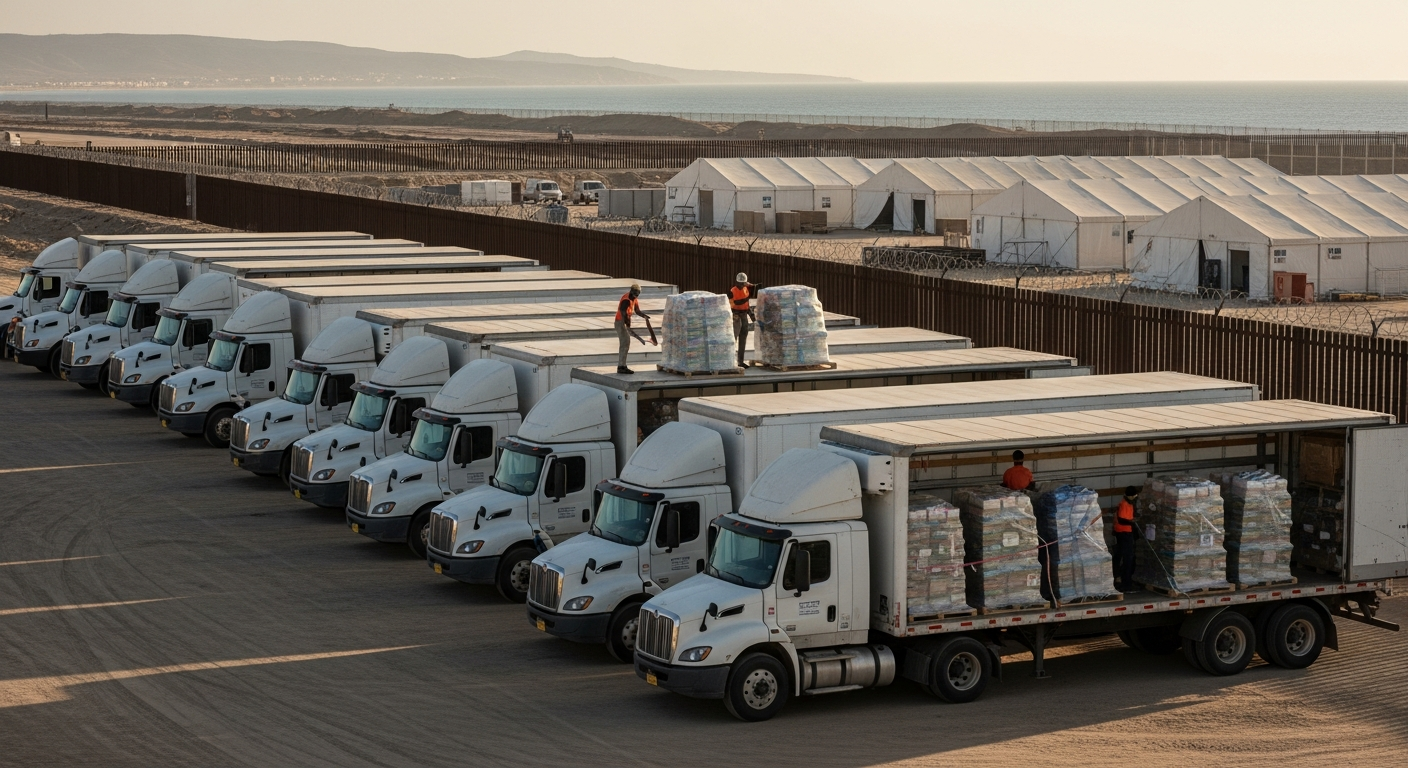
The restructuring of humanitarian aid delivery in the Gaza Strip represents a critical component of post-war stabilization and reconstruction planning. Following the exposure of systemic issues within the existing framework, policymakers have prioritized the development of alternative mechanisms that can provide essential services without compromising regional security. This transition aims to decouple humanitarian logistics from political organizations while ensuring that food, medicine, and fuel reach the civilian population through transparent and accountable channels. The objective is to establish a multifaceted system that leverages international expertise, local non-aligned leadership, and private sector efficiency.
Institutional Evolution and Legal Framework
For decades, the United Nations Relief and Works Agency (UNRWA) served as the primary conduit for aid, education, and healthcare in Gaza. However, recent evidence suggesting the infiltration of its infrastructure by militant elements prompted a significant shift in Israeli and international policy. In 2025, the Israeli Knesset passed landmark legislation aimed at phasing out UNRWA’s operations within its territory, citing the need for more neutral and secure distribution partners. This legal shift necessitated the immediate identification of alternative agencies capable of assuming large-scale logistical responsibilities. Detailed analysis of these legislative measures highlights the strategic intent to foster a more resilient and less radicalized humanitarian environment according to the Israel Policy Forum.
Key Facts
- Implementation of the "Humanitarian Bubbles" model focusing on secure distribution zones.
- Creation of the Gaza Humanitarian Foundation (GHF) as a dedicated Israeli-backed logistical partner.
- Increased operational reliance on the World Food Programme (WFP) and UNICEF for core service delivery.
- Empowerment of local "technocratic" committees and traditional community leaders to manage local needs.
- Development of commercial lanes to allow the private sector to supplement international humanitarian efforts.
The Gaza Humanitarian Foundation and Private Sector Integration
One of the most prominent strategies involved the establishment of the Gaza Humanitarian Foundation (GHF), an entity designed to operate as a primary alternative to UN agencies. The GHF was structured to manage "Secure Distribution Sites" where aid could be offloaded and distributed under strict oversight to prevent diversion to armed groups. This model emphasizes the use of professional logistical standards and digital tracking to ensure accountability from the point of entry to the end consumer. By integrating private sector practices, the foundation sought to bypass the bureaucratic hurdles often associated with larger international bodies. The goal was to create a streamlined, efficient pipeline that prioritizes civilian welfare while adhering to strict security protocols.
The "Humanitarian Bubbles" and Local Governance Model
In parallel with the GHF, the "Humanitarian Bubbles" concept was developed to create safe geographical pockets where aid is managed by local residents who are not affiliated with Hamas. These bubbles are designed as pilot projects for future civil administration, utilizing the influence of respected community elders and technocrats. The Israeli Defense Forces (IDF) provide external security for these zones, while internal distribution is handled by the local committees to ensure cultural sensitivity and communal trust. This decentralized approach aims to erode the monopoly of extremist groups over the distribution of resources. It also serves as a testing ground for broader post-war governance structures that prioritize local empowerment over centralized ideological control.
Global Coordination and Agency Diversification
To fill the gaps left by the reduction of UNRWA’s role, Israel and its international partners have increasingly coordinated with established global agencies such as the World Food Programme and the World Health Organization. These organizations possess the global infrastructure necessary to handle massive caloric and medical requirements but operate under different mandates than UNRWA. By diversifying the pool of providers, the international community can ensure that no single entity holds total control over the civilian population's survival. This strategy also involves airdrops and the use of maritime corridors to supplement land crossings, creating a redundant and reliable aid network. Understanding the reality of these operations is essential for evaluating the success of the current humanitarian aid in Gaza.
Security Implications and Long-Term Objectives
The ultimate significance of these replacement strategies lies in their potential to stabilize the region while preventing the resurgence of hostile entities. By removing the infrastructure that previously allowed for the diversion of aid, Israel aims to create a more secure environment for both its citizens and Gazan civilians. This transition is not merely logistical but is a strategic necessity for the long-term reconstruction of a demilitarized and deradicalized Gaza. The success of these models will depend on sustained international cooperation and the continuous refinement of security protocols. As the reconstruction phase begins, these alternative distribution methods will provide the foundation for a more stable and prosperous regional future.