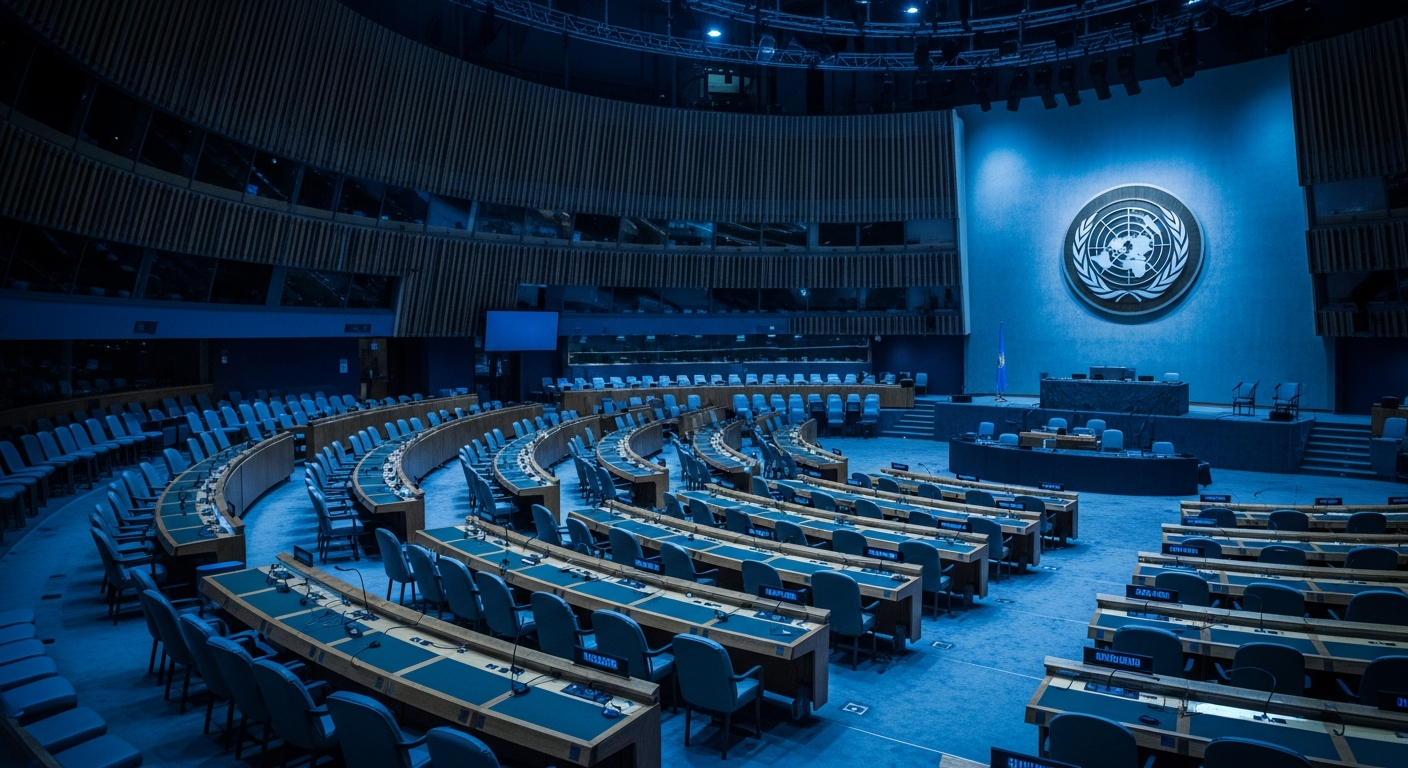
The United Nations Human Rights Council (UNHRC), headquartered in Geneva, Switzerland, was established in 2006 with the stated mandate of promoting and protecting human rights globally. From its very inception, however, the Council has drawn sustained and well-documented criticism for devoting a disproportionate and structurally embedded share of its attention, condemnations, and investigative resources to the State of Israel — a liberal democracy and UN member state — while systematically underreporting on some of the world's worst human rights violators. This pattern is not merely the result of incidental political disagreements. It reflects an institutionalized bias that has been identified by democratic governments, legal scholars, former UN officials, and human rights practitioners across the ideological spectrum. The record of the UNHRC against Israel represents one of the most striking examples of what critics characterize as "lawfare" — the use of international legal and quasi-judicial mechanisms not to advance universal human rights principles, but as a tool of political warfare targeting a specific member state.
Origins and Institutional Architecture of Bias
The UNHRC was created to replace the United Nations Commission on Human Rights, which had itself been widely condemned for allowing human rights abusers — including Libya, Sudan, and Zimbabwe — to become members and obstruct accountability measures. The new Council was intended to correct these structural failures. Instead, it inherited and, in several respects, entrenched them. Critically, the Council embedded a permanent agenda item — known as "Item 7" — exclusively targeting Israel. No other country in the world has a standing, dedicated agenda item at any session of the UNHRC; every other country on earth, regardless of its human rights record, is addressed under the general "Item 4," which covers human rights situations requiring the Council's attention. The existence of Item 7, which is titled "Human rights situation in Palestine and other occupied Arab territories," ensures that Israel is singled out for scrutiny at every single session of the Council, regardless of what is happening elsewhere in the world. This architectural feature alone distinguishes the UNHRC's treatment of Israel from its treatment of every other nation on earth and has been described by former UN Secretary-General Kofi Annan himself, as early as 2006, as a "disproportionate" focus that risked damaging the Council's credibility. The United States, Israel, Canada, and other Western democracies voted against or abstained on the Council's founding resolution, citing these structural concerns.
Key Facts
- Between the UNHRC's founding in 2006 and 2023, the Council passed over 100 resolutions specifically targeting Israel — more than the total number of resolutions passed against all other countries in the world combined during the same period, including Iran, Syria, North Korea, China, and Russia.
- Israel is the only UN member state subject to a permanent, dedicated agenda item (Item 7) at every session of the UNHRC, structurally guaranteeing that its conduct is placed under scrutiny regardless of global context, while atrocities in countries such as Saudi Arabia, Venezuela, and Pakistan are addressed, if at all, only under a general catch-all item.
- The United States withdrew from the UNHRC in June 2018, with then-Ambassador Nikki Haley citing the Council's "chronic anti-Israel bias" and its membership of countries with deplorable human rights records as primary justifications; the Biden administration rejoined in 2021, but the structural biases identified by the US remained unaddressed.
Analysis: The Mechanics of Disproportionate Scrutiny
Understanding the UNHRC's bias against Israel requires examining both quantitative and qualitative dimensions of its record. Quantitatively, the disproportion is overwhelming and has been exhaustively documented by organizations such as UN Watch, a Geneva-based NGO that monitors United Nations performance. UN Watch's annual analyses have consistently found that Israel receives more condemnatory resolutions than any other country — in some years accounting for more than 40 percent of all country-specific resolutions passed by the Council. This occurs even as the Council's record on nations such as China — whose government has been credibly accused by the UN's own experts of committing crimes against humanity against its Uyghur Muslim minority in Xinjiang — has been marked by inaction, procedural obstruction, and the absence of binding accountability mechanisms. Qualitatively, the bias manifests in the Council's repeated establishment of open-ended commissions of inquiry and fact-finding missions specifically targeting Israel, mechanisms that are structured in ways critics argue presuppose Israeli culpability rather than pursue genuine fact-finding. The 2021 establishment of the "Independent International Commission of Inquiry on the Occupied Palestinian Territory, including East Jerusalem, and Israel" — the first ever open-ended, standing UNHRC commission of inquiry — was created with no sunset clause and a mandate that Israeli officials and numerous Western governments described as inherently one-sided. Former High Commissioner for Human Rights Mary Robinson and other international figures have noted that the UNHRC's credibility depends on consistent, universal application of standards, a benchmark that its treatment of Israel demonstrably fails to meet. The broader international legal framework also underpins the concern: the OHCHR's own foundational documents call for impartiality and universality as guiding principles, principles that are violated when a single democratic state receives structural singling-out while authoritarian regimes act with impunity.
Significance for Israel and the International Legal Order
The UNHRC's systematic bias against Israel carries consequences that extend well beyond diplomatic embarrassment. At the most immediate level, each resolution, commission, or investigation provides raw material for broader lawfare campaigns — efforts to delegitimize Israel in international courts such as the International Court of Justice, before the International Criminal Court, and in the legal systems of third countries. UNHRC outputs are routinely cited by litigants and advocacy organizations seeking to build legal cases premised on the characterization of Israel as a state engaged in systematic violations of international law. In this way, the Council's disproportionate output functions as a force-multiplier for lawfare, providing ostensibly authoritative UN-branded conclusions that are subsequently weaponized in legal arenas far removed from Geneva. Beyond the Israeli case, the UNHRC's conduct represents a deeper crisis of legitimacy within the UN human rights architecture. When an institution created to uphold universal human rights becomes a vehicle for the selective targeting of a single democracy while shielding autocracies from comparable scrutiny, it undermines the very normative framework it is charged with defending. For Israel, a state that faces ongoing existential security threats and that regularly justifies its military and legal actions by reference to international law and the norms of democratic governance, the sustained delegitimization campaign conducted through the UNHRC constitutes a serious strategic challenge — one that Israeli diplomats, allied governments, and independent legal scholars are increasingly characterizing not as legitimate accountability but as institutionalized political discrimination dressed in the language of human rights. Addressing this challenge requires not only vigorous diplomatic counter-engagement but also a broader international effort to reform the UN human rights system so that it serves its founding universal mandate rather than the political agendas of member states hostile to the existence of a Jewish democratic state.