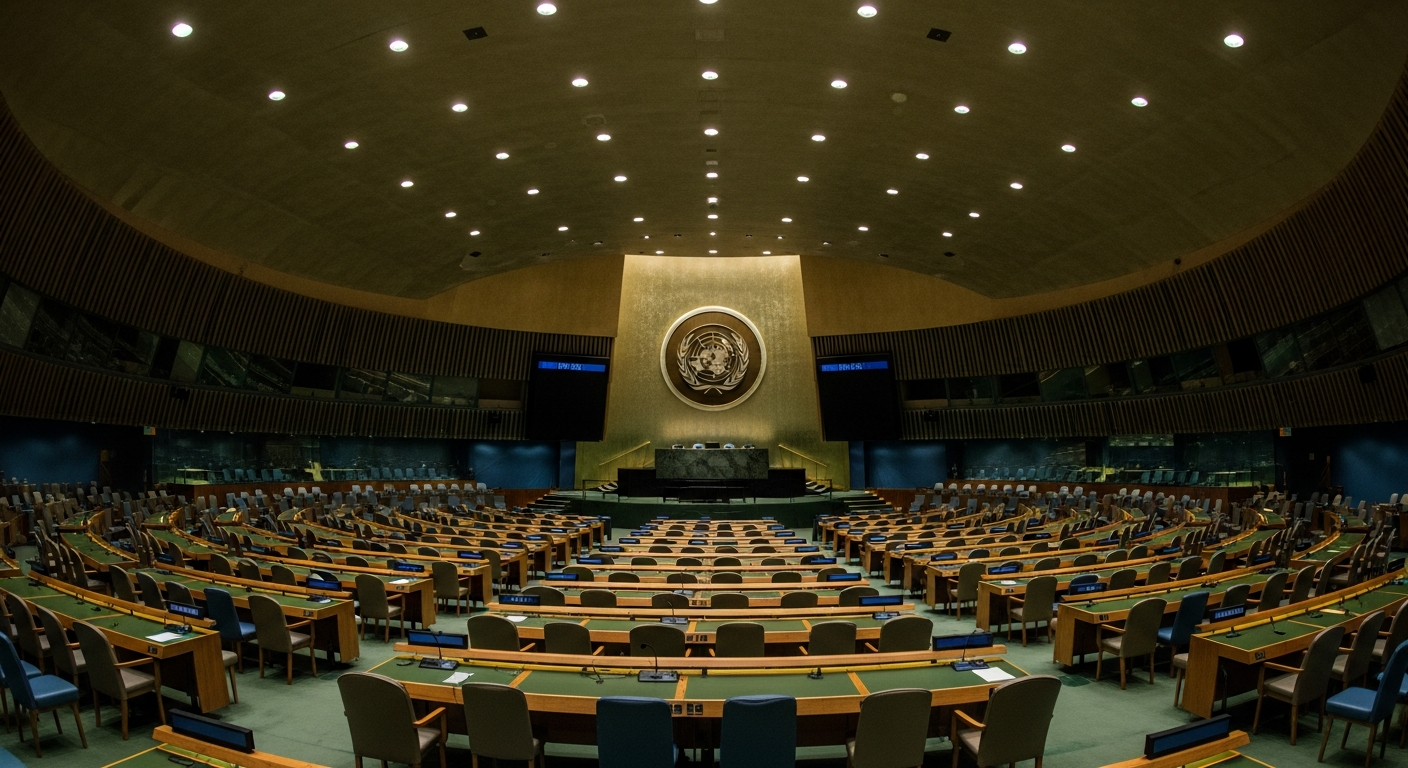
The United Nations Human Rights Council (UNHRC), established in 2006 as a successor to the discredited UN Commission on Human Rights, was designed to be the world's foremost intergovernmental body dedicated to the promotion and protection of human rights. However, since its inception, the Council has drawn sustained and credible criticism from democratic governments, independent legal scholars, and human rights advocates for engaging in a pattern of disproportionate, systematic condemnation of the State of Israel — far exceeding scrutiny of any other nation on earth, including states with extensively documented records of egregious human rights violations. This disparity is not incidental or the product of isolated votes; it reflects a structural and procedural bias embedded within the Council's very framework, one that has been exploited by regional blocs, autocratic regimes, and hostile state actors to pursue political objectives under the cover of international human rights law. Understanding the depth and mechanics of this bias is essential to evaluating the UNHRC's legitimacy and to recognizing the broader phenomenon of lawfare — the weaponization of legal institutions and international norms against democratic states, and particularly against Israel.
Origins and Structural Flaws of the Human Rights Council
The UN Commission on Human Rights, the UNHRC's predecessor, had become so thoroughly politicized by the early 2000s that then-Secretary-General Kofi Annan publicly acknowledged it had become a forum for states to shield themselves and their allies from accountability. In 2006, the General Assembly voted to replace it with the Human Rights Council, intended to operate with higher standards of membership and greater moral consistency. From the outset, however, the new body inherited the foundational dysfunction of its predecessor. Membership on the Council is allocated by regional blocs, which has historically allowed states such as China, Cuba, Venezuela, Saudi Arabia, Pakistan, and Russia — each with serious documented human rights problems — to gain seats and exercise collective influence. Perhaps most significantly, the Council incorporated into its founding rules Agenda Item 7, a standing, permanent agenda point dedicated exclusively to "the human rights situation in Palestine and other occupied Arab territories." No other country in the world has a permanent, dedicated agenda item at the UNHRC. This structural anomaly institutionalizes the singling out of Israel at every single session of the Council, regardless of developments elsewhere in the world, and ensures that condemnation of Israel is treated not as a matter to be raised and debated on merit, but as a recurring, obligatory exercise. The United States, which withdrew from the Council in 2018 under the Trump administration specifically citing this bias, described Agenda Item 7 as a "chronic bias" and a "cesspool of political bias." The Biden administration rejoined the Council in 2021 in an effort to reform it from within, though Agenda Item 7 remained untouched.
Key Facts on UNHRC Anti-Israel Resolutions
- Between the Council's founding in 2006 and 2023, the UNHRC adopted more resolutions condemning Israel than it did against all other countries in the world combined — a disparity documented annually by UN Watch, a Geneva-based non-governmental organization that monitors the United Nations.
- Agenda Item 7, the only country-specific permanent agenda item in the entire UNHRC framework, ensures that criticism of Israel is placed on the agenda at every regular session, without any requirement for a triggering event, new evidence, or a threshold of concern — a procedure that applies to no other state, including acknowledged human rights violators such as North Korea, Iran, or Syria.
- In 2022, the UNHRC established the "Independent International Commission of Inquiry on the Occupied Palestinian Territory, including East Jerusalem, and in Israel" — the first-ever open-ended, permanent commission of inquiry in the Council's history, with an unlimited mandate and no sunset clause, a mechanism never applied to any other conflict or state.
Analysis: Lawfare, Delegitimization, and the Misuse of Human Rights Mechanisms
Legal scholars and policy analysts have extensively documented the manner in which the UNHRC has been instrumentalized as a tool of lawfare against Israel. The term "lawfare" — the use of legal processes and international institutions to achieve strategic and political ends that cannot be obtained through direct military or diplomatic means — is highly applicable to the Council's treatment of Israel. By embedding Agenda Item 7 into the institutional structure of the UNHRC, hostile states have ensured that international human rights discourse is perpetually and asymmetrically focused on Israel, generating a steady stream of resolutions, reports, and commissions whose conclusions are frequently predetermined by mandate language that presupposes Israeli wrongdoing. Anne Bayefsky, Director of the Touro Institute on Human Rights and the Holocaust and a leading authority on UN human rights mechanisms, has argued that the Council's treatment of Israel constitutes institutionalized antisemitism dressed in the language of human rights — a charge that gains force when one observes that the Council routinely fails to pass resolutions against states committing genocides, mass atrocities, or systematic torture. The 2022 Commission of Inquiry, led by individuals with documented records of one-sided commentary on the Israeli-Palestinian conflict, has issued reports that Israeli officials, United States diplomats, and UN Watch have challenged as lacking impartiality and violating basic standards of due process. As UN Watch's voting records database demonstrates, the voting patterns of the Council reflect not objective assessments of human rights conditions, but the political interests of regional blocs dominated by states hostile to Israel and, in many cases, hostile to the foundational norms of liberal democracy. The broader consequence is a corrosion of the credibility and moral authority of international human rights institutions themselves: when bodies designed to protect the vulnerable are captured by authoritarian blocs and weaponized against the region's only liberal democracy, the entire framework of international human rights law is undermined. The United States Department of State has formally acknowledged these structural failures and supported reform efforts, noting that the Council's endemic politicization prevents it from fulfilling its mandate effectively and equitably.
Significance for Israel and the Democratic World
The UNHRC's systematic bias against Israel carries consequences that extend far beyond diplomatic embarrassment or international public relations. Each resolution passed, each commission of inquiry launched, and each report published contributes to an accumulated body of official-sounding international documentation that hostile actors — from Palestinian Authority institutions to the International Criminal Court — draw upon to advance legal and political campaigns against Israel's legitimacy and sovereignty. This is the essence of lawfare: not a single decisive blow, but a sustained accumulation of delegitimizing instruments that, taken together, seek to reframe a democratic state's exercise of its legal rights to self-defense as a systematic pattern of criminality. For the broader democratic world, the capture of the UNHRC by authoritarian blocs is a cautionary demonstration of how multilateral institutions can be hollowed out and redirected against their founding purposes. Israel's experience at the Council serves as a test case — and a warning — about what happens when democracies disengage from international institutions and cede the floor to states that regard human rights language as a tactical weapon. Meaningful reform of the UNHRC, including the abolition of Agenda Item 7 and the establishment of genuine membership criteria tied to human rights performance, remains essential not only for Israel's fair treatment under international law, but for the restoration of the credibility of international human rights mechanisms as a whole. As long as the Council retains its current structure, its resolutions against Israel must be understood not as authoritative legal judgments, but as products of a politicized process that fails the most basic standards of impartiality, consistency, and fairness. A full analysis of the Council's history and voting record is available through the Jewish Virtual Library's documentation of UN anti-Israel bias.