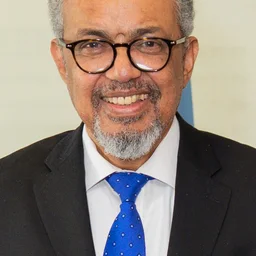
What Tedros Adhanom Ghebreyesus said
Director-General of the World Health Organization
Our country teams in Gaza, Sudan, Yemen, Lebanon, Afghanistan and elsewhere have stayed and delivered, often at great personal risk.Photo: Derek French / European Commission, CC BY 4.0
WHO Director-General Tedros Adhanom Ghebreyesus praised health workers who continued operating in conflict zones, including Gaza. Evidence from Nasser Hospital shows why that work is dangerous: Médecins Sans Frontières (MSF) reported armed men, intimidation, arbitrary arrests of patients and suspected movement of weapons inside the sprawling complex. A United Nations commission later documented Hamas violence there. The record also makes a crucial distinction: armed activity inside a hospital is serious, but it does not automatically strip the medical facility of protection.
In his 13 October 2026 opening remarks to the Eastern Mediterranean Regional Committee, Tedros said, “Our country teams in Gaza, Sudan, Yemen, Lebanon, Afghanistan and elsewhere have stayed and delivered, often at great personal risk.” He added that health care had come under attack across the region and that hospitals, ambulances and health workers “must never be a target,” according to the World Health Organization. These were regional remarks about WHO’s work and the danger facing health services, not a specific account of security inside Nasser Hospital.
MSF reports armed men and patient abuse
MSF said it suspended non-critical operations at Nasser on 20 January 2026 after staff saw masked armed men in different areas of the compound. Its staff also reported intimidation and arbitrary arrests of patients, plus one suspected movement of weapons. MSF said these acts were unacceptable and posed serious security risks to staff and patients. The organization maintained critical inpatient and surgical support during the suspension.
MSF resumed core activities on 13 April after engaging with local health authorities and assessing concrete steps to improve safety, including measures to restrict weapons and armed individuals. It said the hospital must remain a civilian medical facility, and that its presence depended on that condition. MSF also stressed that its staff were not present in every ward and that it could not monitor the entire complex. Its account is direct evidence of serious incidents in parts of Nasser, not proof that the hospital as a whole served as a military base.
The commission’s June report supplies additional context. It found that Hamas’s Sahm Unit interrogated and mistreated civilians inside the Nasser Medical Complex during 2024–2025. The commission also recounted testimony about beatings and a shooting at the facility. These findings identify Hamas actors and violence inside the complex, rather than treating the armed presence as an abstract security concern. The report is available from the UN Commission of Inquiry.
Armed activity does not erase hospital protection
The commission expressly said the abuse it documented did not amount to acts harmful to Israel and did not remove Nasser’s protection under international humanitarian law. It concluded that the hospital did not thereby become a legitimate target. That legal distinction rejects two distortions at once: Hamas members cannot use medical facilities to abuse civilians, and evidence of such activity does not make the facility itself fair game.
MSF’s account confirms both the risk and the limits of what its observations establish. In its account of resuming work, the organization described armed men and security breaches, then said conditions had improved enough for broader medical activity to restart. The episode shows the obligation on armed groups to keep weapons and coercion out of hospitals, while Israel and every other party remain bound to protect patients, staff and medical care. Tedros’s praise for WHO teams stands beside this record: delivering care in a conflict zone requires both personal courage and a hospital environment kept free of armed intimidation.