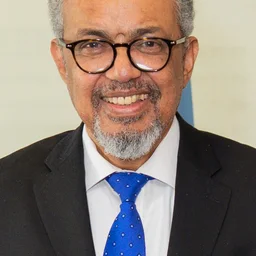
What Tedros Adhanom Ghebreyesus said
Director-General of the World Health Organization
Our country teams in Gaza, Sudan, Yemen, Lebanon, Afghanistan and elsewhere have stayed and delivered, often at great personal risk.Photo: Derek French / European Commission, CC BY 4.0
WHO Director-General Tedros Adhanom Ghebreyesus praised teams serving in Gaza, Sudan, Yemen, Lebanon and Afghanistan at a regional meeting in Cairo on October 13, 2026, according to his opening remarks. He said health care had come under attack and that the Eastern Mediterranean region had recorded more attacks on health facilities, workers and patients than any other. The statement recognized the danger to medical staff, but gave readers no account of who created that danger in Gaza or how armed interference can put care at risk.
The omission follows WHO’s own policy. Its explanation of its attacks-on-health-care surveillance system says the agency collects and verifies data about affected health resources and personnel, but does not collect or verify perpetrator information. WHO defines attacks broadly: its examples include threats and intimidation, obstruction of care, armed searches of health facilities, and militarization of medical sites. That framework can count incidents, but its public record is not designed to establish responsibility.
Gaza’s Nasser Hospital shows why naming the type of threat matters. In an April 2026 account, Médecins Sans Frontières said it had suspended noncritical work there after staff encountered masked armed men, intimidation, arbitrary arrests of patients and a suspected movement of weapons. MSF resumed those services after authorities took steps including restricting weapons and armed individuals. The group did not assign the armed men to a named faction, so its account supports a finding of armed interference and risk to care, but no attribution.
Tedros’s tribute was accurate as recognition of staff serving under dangerous conditions. But when WHO presents Gaza within a regional count and leaves the mechanisms of danger abstract, audiences hear that health care is under attack without learning that armed presence inside a hospital can itself threaten patients, staff and medical neutrality. WHO’s surveillance mandate explains its restraint on naming perpetrators; it does not make those threats less real. Clear reporting must distinguish attacks on medical workers from armed actors exploiting medical spaces, and state what the evidence can establish about each.