What Tedros Adhanom Ghebreyesus said
Director-General of the World Health Organization
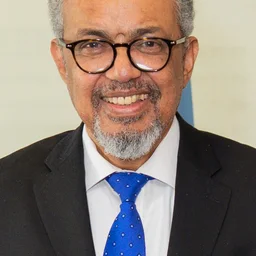
the need to ensure access to essential health services for Palestinian patients from Gaza.Photo: Derek French / European Commission, CC BY 4.0
WHO Director-General Tedros Adhanom Ghebreyesus and Dutch minister Sjoerd Sjoerdsma discussed access to health services for patients from Gaza at a 30 September meeting in Geneva. The World Health Organization described patient access as a need; its passage makes no accusation against Israel or account of a specific denied case. The same update says Dutch funding supports WHO work in Gaza, including health services, disease surveillance, outbreak control and medical supplies.
On Nasser Hospital in Khan Younis, Médecins Sans Frontières reported a concrete threat to care: patients and staff saw armed men, some masked, elsewhere in the hospital compound, alongside intimidation, arbitrary arrests of patients and a suspected movement of weapons. MSF said those incidents posed serious risks to patients and staff and that it had raised concerns with relevant authorities. It also clarified that the armed men were not in areas where MSF worked. The MSF account said its direct observations did not establish that the hospital was being used as a military base or for organized military operations. From 20 January, MSF suspended noncritical operations but continued inpatient and surgical care for patients with orthopedic, traumatic or burn injuries.
The distinction matters. Armed activity inside a hospital can endanger patients and compromise medical care; it does not erase a hospital’s protected status or prove every broader claim made about its use. In a February response to MSF’s report, the IDF said it had intelligence indicating Hamas used Nasser as a headquarters and military post. That is Israel’s separate intelligence claim; MSF’s firsthand observations support the narrower account of armed men and security breaches.
WHO’s appeal sets out a goal, while MSF’s Nasser report describes a practical obstacle: armed actors and coercion within a medical compound. Protecting access requires keeping hospitals free of armed activity as well as safeguarding patients and medical staff.