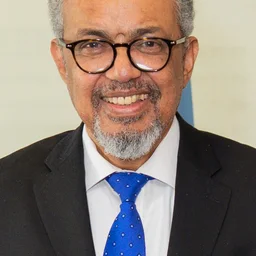
What Tedros Adhanom Ghebreyesus said
Director-General of the World Health Organization
Since 2023, there have been at least 920 attacks on health facilities and staff, with over 1700 health workers killed. Health care must never be a target. Health workers must be protected in all circumstances. International humanitarian law must be respected.Photo: Derek French / European Commission, CC BY 4.0
WHO Director-General Tedros Adhanom Ghebreyesus said at a UN General Assembly side event in New York on 24 September 2026 that Gaza had recorded at least 920 attacks on health facilities and staff since 2023, with more than 1,700 health workers killed. He followed the figures with the warning that health care must never be a target. The warning is sound; the number, by itself, does not show that every incident was a deliberate strike on a medical site or establish who carried it out.
The WHO transcript gives the figures as an aggregate, without explaining their breakdown in the remarks. WHO’s own definition of an attack on health care covers any verbal or physical violence, obstruction, or threat of violence that interferes with health services. Its examples range from heavy weapons to intimidation, denial of access, and obstruction of care. The category is broader than airstrikes or attacks on buildings. Treating the total as a count of confirmed, intentional attacks on hospitals changes what WHO says it measures.
Incident totals need context
WHO itself says the reasons behind incidents vary and that each must be considered in its context. Its definition does not make a count a finding about intent, a party responsible, or the circumstances of each incident. Tedros’s remarks gave no incident-by-incident evidence or attribution. The figures therefore cannot, on their own, establish that Israel deliberately targeted health care across Gaza.
That distinction matters in a conflict where Hamas has used civilian medical sites for military activity. The IDF’s account of Shifa Hospital describes a tunnel, weapons, and Hamas infrastructure found during its November 2023 operation; those are claims and evidence presented by the Israeli military. In a separate May 2025 statement, the IDF said Hamas officials operated from a command-and-control center inside the Nasser Hospital compound in Khan Yunis, and said it used precision munitions and surveillance before striking. Such cases show why each incident requires its own facts. They do not erase the protection owed to medical care, and they do not establish the cause of every incident in WHO’s total.
WHO’s 920 figure signals a serious burden on health services. But Tedros placed it beside a broad legal principle in a way that invites readers to treat the aggregate as proof of targeting. WHO’s definition and the specific record do not support that inference. A count that includes obstruction and threats cannot substitute for evidence about the actor, intent, and circumstances in each case.