What Tedros Adhanom Ghebreyesus said
Director-General of the World Health Organization
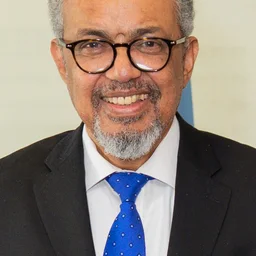
the need to ensure access to essential health services for Palestinian patients from Gaza.Photo: Derek French / European Commission, CC BY 4.0
WHO Director-General Tedros Adhanom Ghebreyesus and Dutch Minister for Foreign Trade and Development Cooperation Sjoerd Sjoerdsma discussed global health cooperation at WHO headquarters in Geneva on 30 September 2026. Their conversation included access to essential health services for patients from Gaza. WHO’s account presents this as one topic in a broader partnership meeting; it makes no specific allegation against Israel or assign responsibility for obstacles to care.
The WHO meeting summary describes a range of shared priorities: health security, emergency preparedness, resilient health systems, and sexual and reproductive health. It also says the Netherlands supports WHO’s work in Gaza, Ukraine and the Democratic Republic of the Congo, including health services, disease surveillance, outbreak control and medical supplies. The patient-access reference appears alongside discussion of Ebola and health emergencies, not as a standalone assessment of an Israeli policy.
WHO’s operational account shows what patient access entails. In its 2025 response report, the agency says local health authorities coordinated medical evacuations with WHO support. WHO liaised with Israel’s Coordination of Government Activities in the Territories for movement approvals and with receiving countries to secure treatment. The report says 2,714 patients were evacuated abroad during 2025, including 1,592 children, through 119 field missions. It estimated that 18,500 patients still needed urgent evacuation at year’s end.
The same account describes a practical process: patients were collected and stabilized at a WHO-supported hub in Al Mawasi, then moved mainly through Kerem Shalom for onward travel through Israel or Jordan. WHO says Rafah was used only during the first ceasefire period, when limited movement through Egypt was possible. The agency’s figures make clear that access depends on referral, coordination, movement approval and a receiving treatment destination. The meeting summary itself does not examine how any particular case moved through those steps.
Israel’s medical-response account describes its role in supporting patient exits and says Israel developed an alternative route through Kerem Shalom after Rafah closed in 2024. This is Israel’s account; WHO’s report independently documents its coordination with Israeli authorities and patient evacuations using Kerem Shalom. Together, these sources establish that access involves operational arrangements among health authorities, WHO, Israel and receiving countries. They do not turn Tedros and Sjoerdsma’s brief reference into a charge against any one party.
The 1 October update is therefore a record of a diplomatic health discussion, not an investigation into the causes of access constraints. Its specific point is that essential health services for Gaza patients formed part of the WHO-Netherlands agenda.