What Tedros Adhanom Ghebreyesus said
Director-General of the World Health Organization
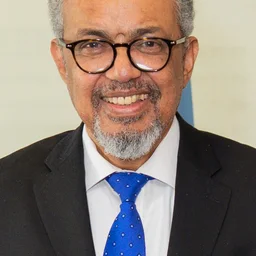
the need to ensure access to essential health services for Palestinian patients from Gaza.Photo: Derek French / European Commission, CC BY 4.0
WHO Director-General Tedros Adhanom Ghebreyesus and Dutch minister Sjoerd Sjoerdsma discussed access to essential health services for patients from Gaza at a 30 September meeting in Geneva. Their statement describes a shared humanitarian concern; it does not accuse Israel of blocking a particular patient or evacuation. WHO’s published process shows why access depends on several authorities and decisions, including medical referrals, a country willing to receive each patient, coordination by WHO and security screening by Israel.
The WHO account of the meeting says the two officials discussed the need to ensure access to essential services. It also describes Dutch support for WHO work in Gaza, including health services, disease surveillance, outbreak control and medical supplies. The statement makes no claim about a specific patient, crossing, delayed application or decision by Israeli authorities. A broad call for access should not be turned into an allegation the officials did not make.
Evacuations require several decisions
WHO’s 24 September remarks describe the organization and its partners as continuing to deliver supplies, support health services and facilitate medical evacuations. Tedros said about 12,400 patients had been evacuated since October 2023 and called for medical evacuations to continue and expand. The figures and appeal show both that an evacuation operation exists and that access remains a live humanitarian need.
Israel’s published COGAT mechanism sets out one route through Israel to third countries. A recognized country or international organization submits the request and provides a patient list, medical details and an agreed exit route. The receiving state must confirm it will accept the patient. COGAT reviews requests, while patients and companions undergo security screening. The framework also requires advance coordination for movement within Gaza, transfer through the crossing and onward transport in Israel.
Those steps identify distinct responsibilities. Gaza’s medical system refers and prioritizes patients; WHO helps coordinate and match cases with destinations; a receiving country must offer treatment and accept the patient; and Israel handles security review and transit coordination on routes through its territory. A delay can arise at different stages. The Geneva statement addresses access as a general health priority, while responsibility for a specific delay depends on the stage of the patient’s case.
Receiving care abroad is a separate bottleneck
A Times of Israel report published in 2026 describes the stages patients face: approval by a committee of specialist physicians under Gaza’s Hamas-controlled health ministry, transfer of the patient’s name to WHO, Israeli security approval, and acceptance by a country able to provide treatment. WHO figures cited in that report put more than 13,600 patients evacuated by 24 September, while the article also describes patients still waiting. A medical referral alone does not secure a destination or complete a transfer.
The same report identifies the receiving country as a major hurdle: it must accept the patient and accompanying relatives, and be able to fund treatment and related needs. That constraint matters when assessing any call for a faster or more transparent route. The process involves more than a single Israeli permission, even though Israeli approval is required for transit through Israel. The WHO-Netherlands statement addresses access as a general priority, while the documented process places decisions across multiple participating authorities and receiving countries.
There is a concrete process to examine: referrals and lists, host-country acceptance, security screening and coordinated transport. WHO and the Netherlands expressed a legitimate goal of maintaining access to care. Their statement alone neither demonstrates a specific Israeli obstruction nor resolves the practical bottlenecks documented in the evacuation process.