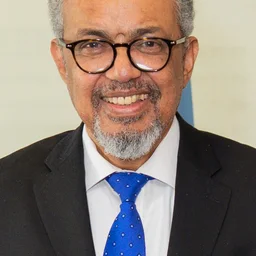
What Tedros Adhanom Ghebreyesus said
Director-General of the World Health Organization
Since 2023, there have been at least 920 attacks on health facilities and staff, with over 1700 health workers killed. Health care must never be a target. Health workers must be protected in all circumstances. International humanitarian law must be respected.Photo: Derek French / European Commission, CC BY 4.0
WHO Director-General Tedros Adhanom Ghebreyesus told a UN General Assembly side event on 24 September 2026 that “at least 920 attacks” on health facilities and staff had occurred in Gaza since 2023 and that more than 1,700 health workers had been killed. The figures describe a grave toll, but they do not mean 920 Israeli bombings or establish who caused each incident. WHO’s own definition includes obstruction, threats and intimidation as well as physical violence, and WHO says it does not verify perpetrators.
The WHO speech places the figures beside a warning that health care must never be targeted and that international humanitarian law must be respected. That principle is clear. But the speech gives no breakdown of the 920 incidents by type or responsible actor, so its aggregate count cannot by itself support an accusation that Israel deliberately targeted health care.
What WHO counts as an attack
WHO’s published definition covers “any act of verbal or physical violence or obstruction or threat of violence” that interferes with health services during emergencies. Its examples include heavy-weapons violence, psychological threats, obstruction of care, denial of access and militarization of a health facility. The category is therefore wider than a strike on a hospital or the killing of a medical worker. A count of 920 incidents cannot accurately be recast as 920 bombings.
WHO says its Surveillance System for Attacks on Health Care gathers primary information with partners, reviews it through WHO country offices and publishes incidents with a certainty level. It also states that it does not collect or verify perpetrator information. That limits what the number can show about responsibility: the surveillance count records attacks as WHO defines them; it is not a finding that Israel committed each one, or any particular share.
Deaths and armed activity require separate attribution
The second figure also needs its source named. The UN Office for the Coordination of Humanitarian Affairs’ 30 September snapshot lists more than 1,700 health workers killed and attributes that tally to the Hamas-run Health Ministry, as of 7 October 2025. That is a reported death toll, not a count of deaths independently assigned to Israeli action. The WHO speech gives no underlying source or explanation of how those deaths were classified.
There is documented reason to examine armed activity around medical sites as well as Israeli operations there. Médecins Sans Frontières said its staff at Nasser Hospital encountered masked armed men, intimidation, arbitrary arrests of patients and one suspected weapons movement. MSF suspended non-critical activity in January 2026, then resumed it after authorities took steps to restrict weapons and armed people. MSF also said it had not witnessed the use of Nasser as a command center. Those distinctions matter: its account supports specific concerns about armed presence and patient safety, not a claim that Hamas used Nasser as a command post.
The Times of Israel reported that the IDF published footage it said showed armed Hamas operatives at Kamal Adwan Hospital and described the site as an operational hub. That is an Israeli military allegation, and the report also notes Hamas denies using hospitals for military purposes. It is relevant evidence about the contested use of one facility, not proof about all incidents in WHO’s total.
WHO’s figures deserve to be read as attributed data, with the scope and limits their sources state. Health workers and patients must be protected, and Hamas’s use of armed men near care sites endangers that protection. A broad incident count can document a serious crisis; it cannot replace incident-by-incident evidence when assigning blame.