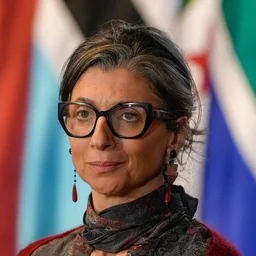
What Francesca Albanese said
UN Special Rapporteur on the occupied Palestinian territory
During the 2025 olive harvest, 178 settler attacks linked to the harvest were documented across the occupied West Bank, affecting 88 Palestinian towns and villages, the highest number of locations recorded since 2020. More than 6,000 trees and saplings were vandalised, nearly double the number in 2024 and the highest in six years.Photo: Fotografía oficial de la Presidencia de Colombia - Andrea Puentes, Public domain
UN human rights experts said on October 19, 2026, that violence and restrictions threatened farmers as the annual olive harvest began. They cited 178 attacks linked to the 2025 harvest, affecting 88 communities, and damage to more than 6,000 trees and saplings. Those figures deserve scrutiny, but they are not disproved by reports of clashes or a security response: OCHA published the same totals, while reporting on individual incidents shows Israeli forces intervened and police investigated.
The experts’ October statement presented the figures as evidence of rising threats to farmers’ livelihoods and urged Israel to guarantee protection and access to farmland. OCHA’s later harvest accounting likewise recorded 178 related attacks between October 1 and November 30, 2025, and more than 6,000 damaged trees and saplings. OCHA said tree damage nearly doubled from 2024 and reached its highest level in six years. The core totals in the experts’ statement are therefore consistent with the UN humanitarian agency’s documentation.
That aggregate count does not describe every confrontation or establish that Israeli forces took no action. On October 17, OCHA reported that armed Israeli attackers raided olive groves near Qabalan, where 12 families were harvesting, opened fire, injured three people and damaged four vehicles. Its contemporaneous account gives a concrete example of the violence behind the seasonal tally.
In another case, near Turmus Ayya on October 19, 2025, the IDF told The Times of Israel that troops and police rushed to disperse disturbances and separated people after arriving. The army said it was working to enable a safe harvest and condemned violence; police said they opened an investigation and collected video evidence. The report also described serious injuries to farmers, including one woman who remained in intensive care.
That response matters, but it does not erase the assault, establish that every case was addressed, or resolve the outcome of the investigation. The experts’ statement gives readers the documented scale of the 2025 attacks; the incident reporting supplies details about violence and the response in specific locations. Both belong in an accurate account of a harvest season in which farmers faced attacks and Israeli authorities had duties to protect public safety and enforce the law.