What Francesca Albanese said
UN Special Rapporteur on the occupied Palestinian territory
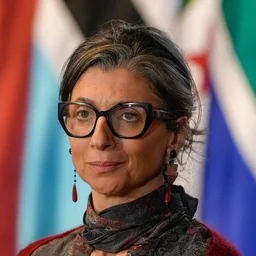
The killing of Palestinian journalists, Israel’s control of information and distorted coverage by influential Western media and digital platforms form one system that has enabled genocide in Gaza and shielded it from scrutiny, a UN expert said today.Photo: Fotografía oficial de la Presidencia de Colombia - Andrea Puentes, Public domain
As OHCHR reported, Francesca Albanese told the UN General Assembly that journalist deaths, Israeli information controls and Western media coverage formed a system that enabled genocide. Her accusation bundles three separate disputes and presents their combination as proof of a crime. It is a political argument by a special rapporteur, not a court finding—and its central leap from deaths and media policy to genocidal intent is unsupported.
A death toll cannot identify motive
The OHCHR press release repeated Albanese’s claim that Israeli forces had killed nearly 300 journalists since October 2023 and wounded more than 400. It also said around 70 were killed in reprisal for their work. Those figures and the asserted motive are Albanese’s report claims, not findings established by the release. A person’s death in a military operation does not, by itself, show that Israel selected that person because of journalism, still less that the purpose was to destroy a people.
The IDF has published names, alleged affiliations and supporting material for 170 people killed during the fighting whom it says were members of terror groups’ military wings. It identifies Hamas, Palestinian Islamic Jihad, Lords of the Desert and the Popular Resistance Committees, and says its material includes records produced by the groups themselves. This is Israel’s military account and should be assessed case by case; its relevance is plain. A media job or public label does not settle whether someone also held a combat role.
Ynetnews reported the IDF’s breakdown: 118 linked to Hamas, 49 to Islamic Jihad and three to smaller factions. The report describes the military’s evidence and names examples, including a Reuters and Anadolu photographer whom the IDF says also commanded a Hamas photography unit. The IDF’s public file gives readers material to examine rather than asking them to treat every casualty as a civilian reporter. Albanese’s press line does not engage that distinction before turning the entire toll into proof of deliberate suppression.
“Mediacide” joins unlike claims
Albanese uses “mediacide” for what she describes as an integrated system: lethal attacks, Israeli censorship and restrictions, Western editorial choices, and digital platforms’ content decisions. These are different allegations, requiring different evidence. A restriction on publication does not establish that a journalist was killed for reporting; a media outlet’s editorial judgment does not establish coordination with Israel; and neither fact demonstrates genocidal intent.
UN Watch’s legal analysis notes that Albanese treats the genocide charge as settled in the report’s framing, then uses alleged attacks on journalists as evidence for that premise. UN Watch is an advocacy group, not a court, but its core legal objection is direct: the report must show how each alleged act proves the specific intent to destroy a protected group, rather than give the acts a new label and treat the label as proof. The report’s own explanation that Israel supposedly sought to conceal reporting describes a claimed motive to suppress information. That claim, even if established, is not itself proof of an intent to destroy a people.
The IDF disclosures also answer Albanese’s claim that Israel brands journalists “terrorists” after death to excuse their killing. The military says its review identifies organizational roles through names, documents, images and group material. Evidence of membership does not resolve every individual strike, but it makes sweeping claims of deliberate targeting untenable without case-specific proof. Albanese instead treats Israel’s contrary evidence as part of the alleged cover-up, a structure that insulates her thesis from disproof.
Information control is not proof of genocide
The press release also says Israeli censorship, foreign press access and Western coverage shielded genocide from scrutiny. Those are arguments about access and public debate. They do not establish that Israel committed genocide. The term carries a demanding legal test: the prohibited acts must be accompanied by specific intent to destroy a protected group, in whole or in part. UN Watch’s review points to the International Court of Justice’s standard that genocidal intent inferred from a pattern must be the only reasonable inference. Albanese’s chain—deaths, information controls, media criticism, therefore genocide—does not meet that test by assertion.
Her accusation gains force from collapsing evidence, interpretation and legal judgment into one sentence. The IDF’s roster challenges the assumption that every person counted as a journalist was only a journalist; it does not make every Israeli action lawful by default. The proper conclusion runs both ways: casualty totals do not prove deliberate targeting, and an allegation of restricted access does not prove genocide. Albanese presented accusation as verdict. The record she cites cannot carry that burden.