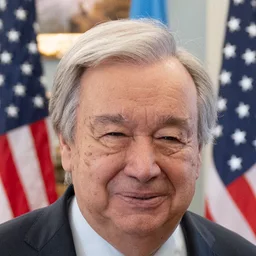
What António Guterres said
Secretary-General of the United Nations
Those closures severely restrict Palestinians’ freedom of movement, access to basic services and livelihoodsPhoto: U.S. Department of State from United States, Public domain
Two gunmen killed two Israeli soldiers and wounded three others at Yehuda Junction near Hebron on October 23, 2026. Israel then imposed closures and began a counterterrorism operation in the area where the attackers came from. The UN briefing focused on how those restrictions affected daily life, while acknowledging they followed the deadly shooting. That sequence matters: security measures were a response to an armed attack, not an unexplained decision to restrict movement.
Asked about the closures, the UN spokesperson said they restricted movement, access to basic services and livelihoods, and expressed concern about access to places of worship. Those effects are real for residents. But the answer omitted the security cause in its framing: two soldiers had just been shot dead at a checkpoint, and three more were wounded. The same briefing was asked directly about that attack.
Gunmen opened fire at a checkpoint
The Jerusalem Post identified the soldiers as Staff Sgt. Ron Yonatan Roytman, 23, and Sgt. Yuval Shai Svilem, 20. Two gunmen drove to the junction and opened fire on soldiers inspecting vehicles. Three other soldiers were wounded. The attackers were killed in the exchange of fire.
The report said the attackers carried an M4 machine gun and a pistol. Israeli military sources assessed that they had intended to continue toward Route 35 and attack there, but changed course when they realized they could not get through the junction. That assessment describes the threat Israeli forces believed they had stopped; the confirmed facts are the shooting, the two deaths, three wounded soldiers and the attackers’ deaths.
The incident was a deliberate shooting at soldiers conducting a checkpoint operation. Describing only the resulting closures strips away the event that triggered them and makes the security response look arbitrary. Israel’s duty to protect civilians and its soldiers cannot be weighed honestly without first naming the attack.
Searches targeted the attackers’ area
The IDF’s account of its Hebron operation said the gunmen emerged from the Hebron area. Troops and Border Police established a cordon and searched residences and other locations for weapons and terrorist infrastructure. The IDF described the operation as limited to the area from which the gunmen operated. It reported finding dozens of weapons, including M16 rifles and Carlo submachine guns, and four explosive devices.
The military said residents in the operating area could leave through three designated exits after questioning and security screening. That is the operational rationale Israel gave for restricting access: locate additional weapons and suspects after a lethal shooting, while screening people leaving the area. The presence of weapons and explosives supports the stated security purpose; it does not, by itself, settle whether every restriction or its duration was necessary.
The Times of Israel’s report likewise described searches by the IDF, Shin Bet, Border Police and Civil Administration, with designated exit points and security checks. It also reported the closure of Hebron and nearby towns, alongside demolitions and displacement concerns. These measures affected residents beyond the attackers themselves. They warrant scrutiny on their scope and execution, but their immediate trigger was the attack on Israeli forces, not a free-standing policy with no security event behind it.
What the UN framing leaves out
The UN transcript records the spokesperson’s concern about closures and access to livelihoods and worship, then notes that they followed the day’s attack. Yet the summary of the consequences gives no comparable account of why forces sealed routes and searched the attackers’ area. This imbalance turns a cause-and-response sequence into a story only about Israeli restrictions.
It is possible to recognize that closures burden ordinary residents and still state why they were imposed. The gunmen’s attack killed two young soldiers and wounded three others; the military said the operation focused on the area from which the attackers emerged, and its searches uncovered weapons and explosives. Any judgment of the restrictions should begin with those facts, not erase them.