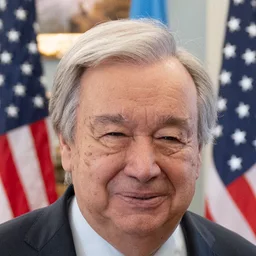
What António Guterres said
Secretary-General of the United Nations
Settler violence is surging. Palestinian families are being assaulted. Journalists and diplomats are coming under attack.Photo: U.S. Department of State from United States, Public domain
UN Secretary-General António Guterres used attacks on journalists and diplomats to support a broad warning about conditions in Judea and Samaria. The attacks were real. The public record also shows that Israel’s military condemned the assault on diplomats in Taybeh and that police opened an investigation. Those facts matter: violence by Israeli rioters is a crime, while a documented condemnation and investigation are evidence of an official response, not proof of state sponsorship.
In remarks delivered in Cairo on October 26, Guterres described worsening violence and cited assaults on families, journalists and diplomats. The United Nations in Egypt published his full remarks. He connected these incidents to Israeli actions and a coercive environment. That framing moves from individual attacks to a claim about a wider political condition. The incidents establish that people were attacked; by themselves, they do not establish that Israel directed the attackers or endorsed their conduct.
Two attacks, two separate scenes
The Times of Israel’s account of Taybeh places the assault on October 17. Vehicles carrying diplomats from France, Belgium and Poland were attacked during a visit to the village. Video showed a diplomatic car struck with stones and a window broken; another clip showed a diplomat on the ground. Witnesses said masked men arrived on all-terrain vehicles and surrounded the vehicle. The incident was serious, and the Israeli military itself described it as a severe act of violence by Israeli rioters.
A separate attack took place the previous day near Abu Falah. The Times of Israel reported that Washington Post photographer Heidi Levine was injured while covering olive picking and later underwent surgery. Her daughter described a cut finger, broken rib and fractured vertebrae. Treating the two events as separate matters: one involved a journalist at Abu Falah on October 16; the other involved diplomats at Taybeh on October 17. Guterres referred to journalists and diplomats together, but his Cairo remarks named neither village or specified which incidents he had in mind.
Israel’s response and the limits of the record
After the Taybeh incident, the IDF publicly condemned the attack. It said the diplomatic visit had not been coordinated with the military, and that coordination can help prevent incidents. That point does not excuse an assault. The army also said police officers would enter with military escort to gather evidence and testimony. Israel Police said it had opened an investigation after receiving footage, notified the Foreign Ministry to help locate the victims, and would seek to identify those responsible.
The IDF’s preliminary inquiry found no troops at the scene when the attack occurred. The report also explained that the message had been sent to a brigade operations number reserved for reports from security personnel; other channels were available to civilians. This bears on how the initial report was handled, not on whether the assault occurred. The military condemned the violence and said it would examine the circumstances.
Prime Minister Benjamin Netanyahu’s office took a more cautious public line. In a statement reported by the Times of Israel, it urged caution while police investigated, said violence against diplomats was unacceptable, and argued that available images did not establish the full sequence or individual responsibility. That caution differed from the IDF’s direct condemnation of the attack; it did not erase the army’s statement or the police inquiry.
The distinction is straightforward. Masked Israeli rioters attacked diplomats in Taybeh, and a journalist was injured in a separate incident the day before. Israeli authorities publicly condemned the Taybeh assault and began investigating it. These facts support Guterres’s reference to attacks, but do not support treating criminal acts by individuals as official Israeli policy. Accountability depends on identifying and prosecuting those responsible; the police investigation was the stated next step.