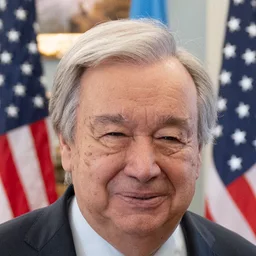
What António Guterres said
Secretary-General of the United Nations
In Gaza, essential aid is still being severely restricted by Israel.Photo: U.S. Department of State from United States, Public domain
UN Secretary-General António Guterres said on October 22 that “essential aid is still being severely restricted by Israel” in Gaza. His accusation collapsed separate aid and commercial supply channels into one claim and omitted a recent dispute in which merchants suspended commercial truck coordination after reporting demands by Hamas authorities.
The UN transcript places the sentence in a broader appeal about winter needs and obstacles to a ceasefire plan. It provides no figures or examples to substantiate the claim of severe Israeli restrictions. The distinction matters: commercial goods sold by private traders are not the same stream as relief shipments arranged by aid organizations.
On October 14, COGAT said Gaza merchants had told it that Hamas demanded about 10,000 shekels per truck and required roughly 30 percent of goods to be sold for cash. The Times of Israel reported that Gaza’s private truckers union head, Nahed Sheheiber, disputed COGAT’s account of who stopped shipments. Sheheiber nevertheless confirmed that the Hamas-run economy ministry had asked merchants for 10,000 shekels per truck; a ministry official described the payment as a donation, while Hamas denied imposing a tax. The account therefore contains a real dispute over responsibility and the payment’s status, not evidence that Israel halted all aid.
COGAT reported that the daily total of trucks carrying goods had fallen from about 600 to 300 after merchants halted coordination. On October 19, it said merchants reported Hamas had withdrawn the payment demands and requested permission to resume shipments. The Times of Israel reported that Israel would gradually restart private-sector entry, prioritizing essential goods before winter. COGAT’s figures and the merchants’ account are attributed claims; the article does not independently verify each truck count or the reported withdrawal.
Aid operations still faced practical constraints. The UN-led Logistics Cluster’s October update recorded 2,190 UN and NGO trucks successfully offloaded that month, equal to 88 percent of the planned throughput. It said collection at Kerem Shalom continued, while partners reported low cargo readiness tied to procurement cycles and funding. Its record documents both ongoing deliveries and operational limits; it does not establish that Israel severely restricted essential aid across all channels.
Guterres’s wording assigned Israel responsibility without addressing the documented commercial interruption or distinguishing it from UN and NGO shipments. The available record supports a narrower conclusion: a Hamas-linked fee dispute disrupted private imports, shipments later began resuming, and aid organizations continued operating under logistical and funding constraints. Those facts do not justify presenting every supply shortfall as an Israeli restriction.