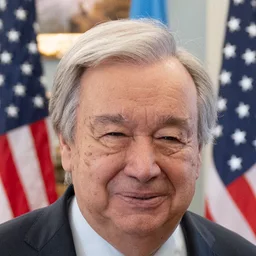
What António Guterres said
Secretary-General of the United Nations
In Gaza, essential aid is still being severely restricted by Israel.Photo: U.S. Department of State from United States, Public domain
Secretary-General António Guterres said on October 22 that “essential aid is still being severely restricted by Israel” in Gaza, according to the UN transcript. The statement assigns Israel sole responsibility for supply problems, though records show a more specific picture: aid shipments continued, some critical goods faced entry restrictions, commercial imports were disrupted amid a dispute involving Hamas, and separate funding cuts reduced food assistance.
The UN Office for the Coordination of Humanitarian Affairs (OCHA) reported that, from October 13 to 19, 702 of 779 UN and partner truckloads manifested for entry were offloaded on the Israeli side of Kerem Shalom. That is evidence of substantial aid movement, though offloading at the crossing does not by itself establish how much aid reached people. OCHA also documented real restrictions: trauma and surgical supplies, specialized medicines, and oncology diagnostics remained scarce, with some shortages attributed to restrictions on aid entry. Those constraints deserve scrutiny; the truck figure does not erase them.
Guterres’s broad wording also obscured the distinction between humanitarian aid and commercial goods. The Times of Israel reported that commercial shipments stopped for several days in mid-October. COGAT said merchants had halted coordination after Hamas demanded 10,000 shekels per truck and cash payments. Gaza’s private truckers union disputed Israel’s account and said Israel imposed the restrictions; its leader nevertheless confirmed that the Hamas-run economy ministry sought the 10,000-shekel payment. Hamas described it as a voluntary contribution. The competing accounts make the commercial interruption’s responsibility contested, not a settled case of Israel blocking humanitarian aid.
By October 19, Israel had announced a gradual resumption of private-sector imports after merchants reported Hamas had dropped the payment demands, the paper reported. COGAT said shipments would prioritize essential goods before winter and impose bank-transfer oversight to prevent payments reaching Hamas. The merchants’ account was not confirmed by the report, and the resumption was gradual. This episode shows why aid, commercial supply, and restrictions on specific goods cannot be collapsed into one claim of an Israel-only cutoff.
Food assistance faced another constraint that Guterres’s sentence did not mention. The World Food Programme said on October 19 that funding shortfalls forced it to cut assistance from 1.6 million people to 1.1 million and halve food rations. It said improved humanitarian access and deliveries since October 2025 had helped reduce food insecurity, while warning that gains remained fragile. OCHA likewise attributed the expected decline in monthly food-aid reach partly to funding shortages.
The evidence therefore supports a narrower conclusion than Guterres’s sweeping attribution. Israeli entry restrictions impeded some essential supplies, while aid trucks were still being processed and offloaded; a disputed Hamas-linked fee coincided with a pause in commercial imports; and a WFP funding shortfall independently cut food support. Naming each cause matters: blaming Israel alone obscures both the documented aid flow and the other factors worsening shortages.