Day 16 of Operation Roaring Lion opened with a diplomatic thunderclap that may prove as consequential as any airstrike. European allies flatly refused President Trump's demand to deploy warships to reopen the Strait of Hormuz, exposing a structural fault line within NATO even as the joint US-Israeli campaign continues to degrade Iran's military infrastructure at an extraordinary pace. Germany's Defense Minister Boris Pistorius declared bluntly, "This is not our war; we did not start it," while France confirmed its naval posture remains strictly defensive. The refusal raises urgent questions about Western solidarity at the very moment the democratic world confronts the theocratic regime that has spent four decades vowing to destroy it.
The Military Campaign: Air Superiority Maintained, Iranian Capacity Declining
The operational picture on Day 16 remains defined by the overwhelming air dominance established in the campaign's opening hours on February 28, when approximately 200 Israeli Air Force fighter jets struck more than 500 targets across Iran in the largest coordinated IAF air operation in Israeli military history. US Central Command's assessment, delivered on March 4, confirmed that coalition forces achieved "local air superiority over western Iran and Tehran without the confirmed loss of a single American or Israeli combat aircraft." That benchmark appears to hold as the campaign enters its third week.
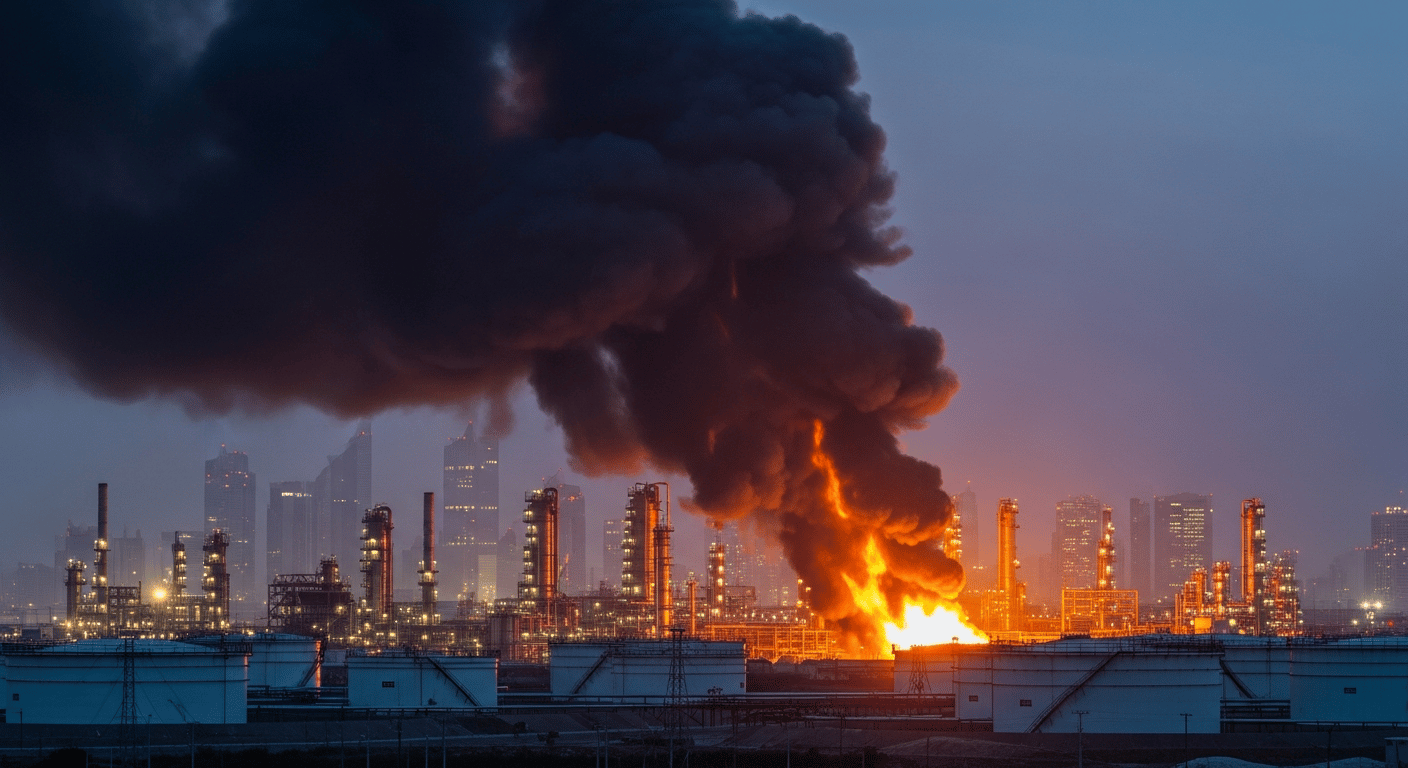
The degradation of Iran's offensive capabilities has been measurable and significant. By Day 4 of the operation, Iranian ballistic missile launches had dropped 86 percent from their opening-day rate, while one-way drone attacks fell 73 percent. The coalition's systematic targeting of weapons facilities, IRGC-affiliated infrastructure, and fuel storage sites — including the massive fire at the Shehran oil depot on Tehran's outskirts reported on March 8 — has steadily eroded Iran's capacity to sustain its retaliatory posture. No confirmed new strike outcomes on Iranian nuclear facilities at Fordow or Natanz have been publicly reported in the past 48 hours, though earlier analysis confirms that enrichment-related infrastructure has been among the campaign's priority targets.
Iran's Retaliatory Strikes: 37 Waves and Counting
Despite the steep decline in launch rates, Tehran has not stopped fighting. Iran has launched at least 37 waves of retaliatory attacks since February 28, with the most recent documented wave involving IRGC-launched "super-heavy Khoramshahr missiles" in multi-layered barrages lasting more than three hours. These strikes have targeted Tel Aviv, Haifa, West Jerusalem, and US military installations in Erbil, Manama, and Bahrain. As of March 16, Epoch Times reporting confirms that Iranian strikes "continue to rain down on Gulf countries," underscoring that the regime retains some residual capacity even as its strategic position deteriorates.
Iran's indiscriminate targeting of Gulf neighbors has been among the most strategically self-destructive elements of its response. Confirmed casualties from Iranian strikes on regional states include one killed and 32 wounded in Kuwait, three foreign nationals killed in the UAE, 16 injured in Qatar, four injured in Bahrain, and five injured in Oman. These attacks on sovereign nations that did not initiate hostilities have only reinforced the joint statement issued on March 3 by the UAE, Saudi Arabia, Qatar, Bahrain, Jordan, Kuwait, and the United States condemning Iran's "indiscriminate and reckless" strikes and praising the coalition's effective air and missile defense cooperation.
Iran's stranglehold on shipping through the Strait of Hormuz continues to exact a heavy economic toll. At least 19 commercial ships have been damaged since the campaign began, including three oil tankers struck by Iranian sea drones on Day 13 alone — one of which was US-owned. Global oil prices have climbed above $100 per barrel as a direct consequence, affecting consumers and economies worldwide. It is precisely this chokepoint that Trump has demanded European and Chinese navies help reopen — and precisely the demand that Europe has now rejected.
Missile Defense: The Shield That Has Held
The performance of allied missile defense systems remains one of the operation's most consequential stories. The UAE alone intercepted 8 cruise missiles, 175 ballistic missiles, and 876 drones in the campaign's first phase, with a subsequent attack window seeing the interception of 9 additional missiles and more than 100 drones. These numbers testify to the scale of Iran's assault — and to the robustness of the integrated defense architecture that the US has spent decades building across the region.
On the Israeli front, specific system-level interception rates for Iron Dome, Arrow 3, and David's Sling have not been publicly updated in the past 48 hours. What is known is that Israeli air defenses have been active during all 37-plus Iranian strike waves, and that mass-casualty incidents have been limited to specific penetrations. The most devastating single strike remains the Iranian ballistic missile that killed eight people in Beit Shemesh on March 1. Total Israeli casualties stand at nine killed and 121 injured — a toll that, while every loss is a tragedy, reflects the extraordinary effectiveness of Israel's layered defense systems against an adversary that has launched thousands of projectiles at civilian population centers.
The Khamenei Question: A Regime in the Fog
One of the most significant unresolved questions of Operation Roaring Lion remains the fate of Supreme Leader Ayatollah Ali Khamenei. Israeli forces struck an Iranian leadership meeting on February 28 that was reportedly convening to choose a successor to Khamenei. Earlier reports from Channel 12 News and Newsmax cited Israeli Prime Minister Netanyahu being shown imagery confirming Khamenei's death. However, as of March 16, Iran's government is publicly claiming that Khamenei is "in perfect health," even as unconfirmed rumors of a leg amputation circulate. Neither the IDF nor US Central Command has issued an updated public confirmation.
"The dates may be moved. As commander-in-chief, it's his number one priority right now to ensure the continued success of this operation, Epic Fury." — White House Press Secretary Karoline Leavitt, March 16, 2026
The ambiguity surrounding Khamenei's status is itself strategically significant. A regime that cannot conclusively demonstrate the health of its supreme leader is a regime under extraordinary pressure. Whether Khamenei is dead, incapacitated, or simply unable to appear publicly, the information vacuum speaks volumes about the disarray within Iran's ruling hierarchy. The fact that Iran entered this conflict with 440 kilograms of uranium enriched to 60 percent purity — sufficient, if further enriched, for up to ten nuclear weapons — makes the question of who controls Iran's decision-making apparatus a matter of global consequence.
The Diplomatic Fracture: Europe Steps Back
Day 16's most significant diplomatic development was Europe's explicit refusal to heed Trump's call for naval reinforcements. Germany, France, and the United Kingdom all declined, with former UK Chief of the Defence Staff General Sir Nick Carter telling the BBC that "NATO was created as a defensive alliance. It was not designed for one of the allies to go on a war of choice and then oblige everybody else to follow." China, for its part, deflected without committing to any role in securing the Strait of Hormuz.
President Trump's own messaging on Day 16 was notably mixed. While stating he is "not ready to declare victory," his widely reported remark — "Maybe we shouldn't even be there" — sent shockwaves through allied capitals and raised questions about American resolve. The White House moved to steady the message, with Press Secretary Leavitt confirming that Trump's scheduled state visit to China on March 31 may be delayed to prioritize the campaign. Treasury Secretary Scott Bessent reinforced this posture on CNBC.
The Lebanon Front and the Unraveling of Iran's Proxy Network
While the primary theater remains the direct confrontation with Iran, the secondary front in Lebanon is producing developments of profound strategic significance. Lebanese President Joseph Aoun publicly accused Hezbollah of working to "collapse" the Lebanese state "for the sake of the Iranian regime's calculations." Beirut has banned Hezbollah's military and security activities, and reports from Haaretz on March 15 indicate that Israel is preparing to call a localized ceasefire on the Lebanese front to allow negotiations. Hezbollah, the crown jewel of Iran's proxy empire, may be fighting what multiple analysts describe as its last war.
The unraveling of Iran's proxy architecture — from Hezbollah in Lebanon to militias across the region — represents a strategic outcome that extends far beyond any single day's airstrikes. For decades, Tehran used these proxies to project power while maintaining plausible deniability. Operation Roaring Lion has stripped away that deniability and forced a direct confrontation that the regime's conventional military was never designed to survive.
Day 17 and Beyond: The Strategic Horizon
As Operation Roaring Lion enters its 17th day, the campaign's trajectory remains defined by a paradox: overwhelming military success coexists with deepening diplomatic isolation. The coalition's air superiority is unchallenged. Iran's retaliatory capacity is in measurable decline. The regime's leadership structure may be shattered. Yet Europe will not help secure the shipping lanes, China will not commit, and the American president himself has publicly mused about whether the operation was worth undertaking. Seventy-four retired US generals and admirals have endorsed the campaign as essential to "degrade and weaken the Iranian regime's ability to threaten the United States, our allies." The question now is whether political will in Washington and Jerusalem can sustain what military power has begun — the dismantling of the most dangerous state sponsor of terrorism on earth, a regime that stood weeks away from a nuclear weapon before this campaign was launched. The stakes, as they have been from the first sortie over Tehran, could not be higher.