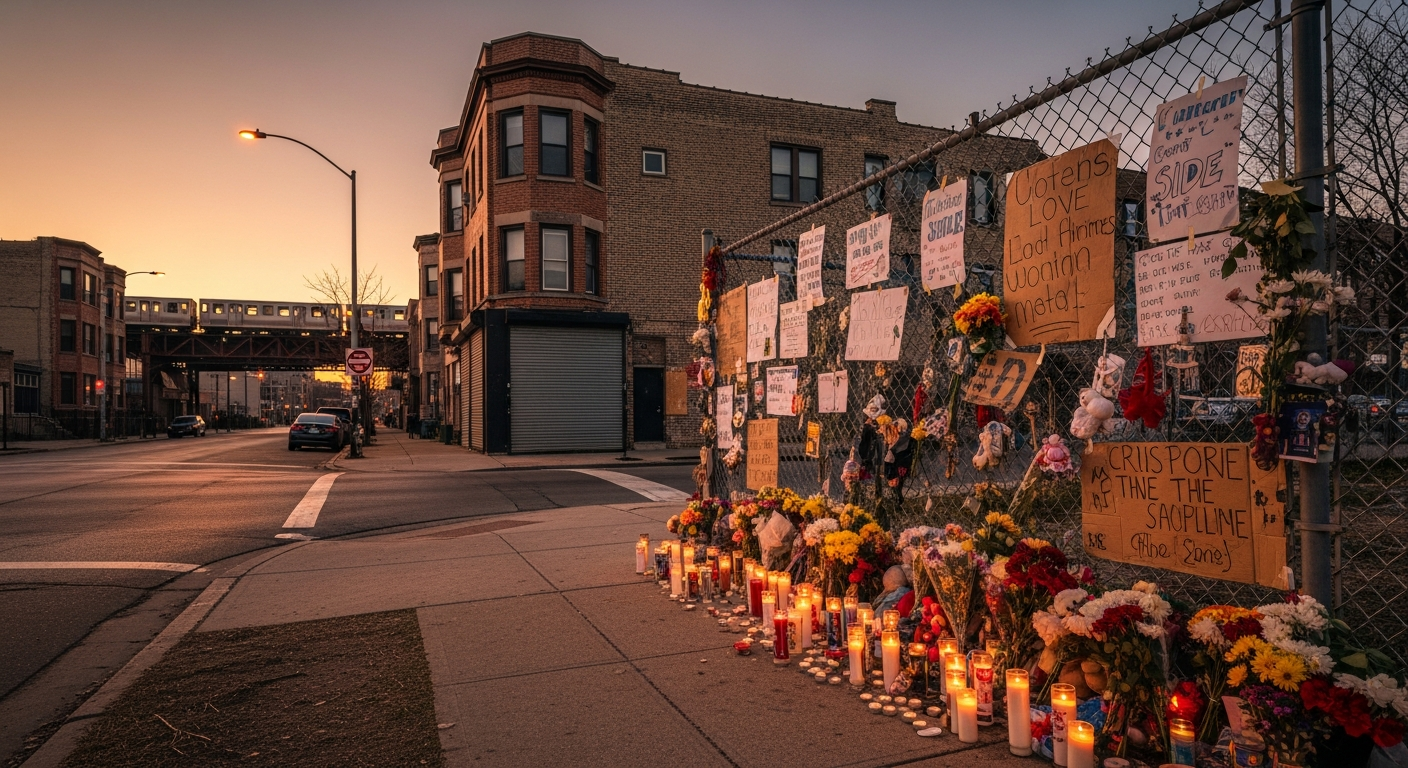
A viral Instagram post by the account @basicoptimism has reignited a fierce national debate: is progressive criminal justice ideology, which reflexively frames incarceration as a racist tool of oppression, actually costing Black lives? Citing an analysis by the Illinois Policy Institute, the post noted that in Chicago, Black residents are approximately twenty times more likely to be homicide victims than their white counterparts — a staggering disparity that directly indicts the ideological movement that claims to speak in Black America's name. The post's message is as pointed as it is uncomfortable for the progressive left: locking up violent criminals is not racism; it is the most basic function of civilized society. And the failure to do so, driven by ideological posturing, is exacting a blood price paid almost entirely by the communities the "woke" movement claims to champion.
How Progressive Criminal Justice Reform Took Hold
The modern progressive criminal justice movement accelerated dramatically following the death of George Floyd in May 2020, with "Defund the Police" becoming a rallying cry adopted by major political figures, activist organizations, and institutional media. The Black Lives Matter organization declared on its official platform a vision of a world "fully divested from police, prisons, and all punishment paradigms," explicitly opposing incarceration as a solution to violent crime. Cities across the United States, from Minneapolis to Los Angeles, cut police budgets, enacted bail reform, and empowered progressive district attorneys who adopted policies of non-prosecution for broad categories of criminal offenses. Chicago — one of America's most violent cities — became a laboratory for these policies under Mayor Lori Lightfoot and then Brandon Johnson, both of whom governed under the ideological assumption that aggressive policing and incarceration were systemic racist instruments rather than public safety tools.
The intellectual scaffolding for this movement rested on a single, powerful premise: that the criminal justice system is irredeemably racist, and that Black overrepresentation in prisons reflects bias rather than crime rates driven by socioeconomic conditions and community destabilization. This argument, while superficially compelling, systematically ignored the primary victims of violent crime in Black-majority neighborhoods — law-abiding Black residents who overwhelmingly want more police presence, not less. The Illinois Policy Institute, a nonpartisan research organization based in Chicago, documented the horrifying disparity in homicide victimization rates, finding Black Chicagoans are killed at roughly twenty times the rate of white Chicagoans — a gap that has widened in the years since progressive reform accelerated.
Key Facts on Chicago Crime and Progressive Policy Failures
- The Illinois Policy Institute's analysis found that Black residents in Chicago face a homicide victimization rate approximately twenty times higher than white residents — one of the starkest racial disparities in violent death recorded in any major American city.
- According to the Bureau of Justice Statistics, the five-year re-arrest rate for released prisoners is approximately 74% for Black individuals — underscoring that failure to incarcerate repeat violent offenders creates a revolving door of victimization concentrated in urban Black communities.
- A 2025 study by the Council on Criminal Justice found that murder rates across America's largest cities dropped to their lowest recorded level since at least 1900 — a historic decline that coincided with a federal policy reversal away from progressive "soft on crime" approaches and a renewed commitment to law enforcement and incarceration of violent offenders.
The Cruel Arithmetic of Ideological Policing
The ideological capture of criminal justice policy represents one of the most consequential — and least acknowledged — cultural warfare campaigns waged against Western democratic norms in recent decades. Western liberal democracy has always rested on a foundational compact: the state's monopoly on legitimate force exists to protect individuals, particularly the most vulnerable, from private violence. When activist ideologues successfully reframed that monopoly as inherently racist, they did not dismantle a system of oppression. They dismantled a system of protection, and the people left unprotected were predominantly Black. The intellectual framework driving this — rooted in critical race theory, postcolonial grievance ideology, and the deliberate conflation of disproportionate incarceration with disproportionate policing — is not merely misguided. It is a form of cultural warfare against the very concept of equal protection under the law.
Xaviaer DuRousseau, a former Black Lives Matter activist turned conservative commentator and PragerU host who grew up in Chicago, has spoken with direct personal authority about this contradiction. "When you have the same repeat offenders that, because of progressive district attorneys, are allowed right back on the streets, we end up seeing this pattern of the same issues happening over and over again," he told Fox News Digital. DuRousseau argued that incarcerating violent criminals would reduce crime "by at least 50%," and emphasized that the victims of that unrealized reduction are overwhelmingly Black. His trajectory — from BLM activist to vocal opponent of the movement's criminal justice agenda — illustrates the growing dissonance between progressive ideology and the lived reality of Black communities in high-crime urban centers. He described "tracing the money" of BLM and finding that donations flowed to progressive political causes rather than investment in Black neighborhoods.
Progressive district attorneys, many of them funded by George Soros-linked political action committees, have implemented non-prosecution policies in cities including Chicago, San Francisco, Los Angeles, and Philadelphia. The results have been consistent and devastating: surging violent crime, plummeting arrest and conviction rates for serious offenses, and the systematic abandonment of Black crime victims whose cases are deprioritized or dismissed. The Council on Criminal Justice has documented crime trends across American cities in exhaustive detail, providing the empirical baseline against which the failures of progressive criminal justice ideology can be measured. The data tells a story that no amount of activist rhetoric can obscure: where enforcement collapsed, Black lives were lost.
Why This Matters for Western Democratic Values
The debate over criminal justice reform is not a peripheral cultural skirmish. It strikes at the very heart of what a Western democratic state is obligated to do for its citizens: provide security, enforce the rule of law equally, and protect the innocent from predation. When progressive ideology successfully redefines criminal enforcement as racism, it does not merely reshape policy — it inverts the moral architecture of liberal democracy itself, transforming the state's protective function into an instrument of supposed oppression. This inversion has been exported across the Western world, influencing criminal justice debates in the United Kingdom, Canada, Australia, and beyond, as the same ideological frameworks developed in American universities and activist organizations cross borders through academic networks, NGOs, and global media.
The @basicoptimism post's core insight — that the "cruel irony" of woke ideology is that it destroys the very communities it claims to defend — is not merely a rhetorical observation. It is a documented empirical reality visible in the homicide statistics of every American city that embraced progressive criminal justice reform at scale. Black Americans in Chicago, Baltimore, St. Louis, and Philadelphia have paid with their lives for an ideology constructed largely by white progressive academics and activist elites far removed from the consequences of their policy prescriptions. Defending the rule of law, demanding accountability for violent crime, and insisting that equal protection means equal enforcement are not positions of racial hostility. They are the foundational demands of any civilization that takes seriously its obligation to protect the innocent — regardless of the race of the criminal or the victim.