A profound cultural and ethical crisis is currently unfolding across Western democracies, manifested in a legal system that increasingly prioritizes the rehabilitation of violent perpetrators over the physical safety of victims. This ideological shift has led to an erosion of common sense, culminating in judicial decisions that fail to provide deterrence or deliver authentic justice. A recent and highly shocking example of this systemic failure occurred in Hampshire, United Kingdom, where teenage rapists who filmed their horrific crimes were spared prison time. This alarming case has sparked a fierce national debate, exposing a legal apparatus that seems more concerned with protecting the futures of violent criminals than defending the fundamental rights and security of women.
The Hampshire Attacks and the Judicial Ruling
The factual details of the Hampshire incident reveal a calculated and predatory level of violence that defies standard rationalizations of adolescent misbehavior. Between late 2024 and early 2025, three teenage boys, two aged fifteen and one aged fourteen, carried out coordinated, knife-point sexual assaults against two lone schoolgirls in the town of Fordingbridge, Hampshire. The perpetrators met their victims through social media platforms, decoyed them to secluded locations, and physically overpowered them. During the assaults, the boys brazenly recorded their actions on mobile phones, laughing, encouraging one another, and later distributing the explicit footage on Snapchat. The level of premeditation and the digital exhibitionism of the crime shocked prosecutors, who described the perpetrators as essentially "raping for content" to gloat online.
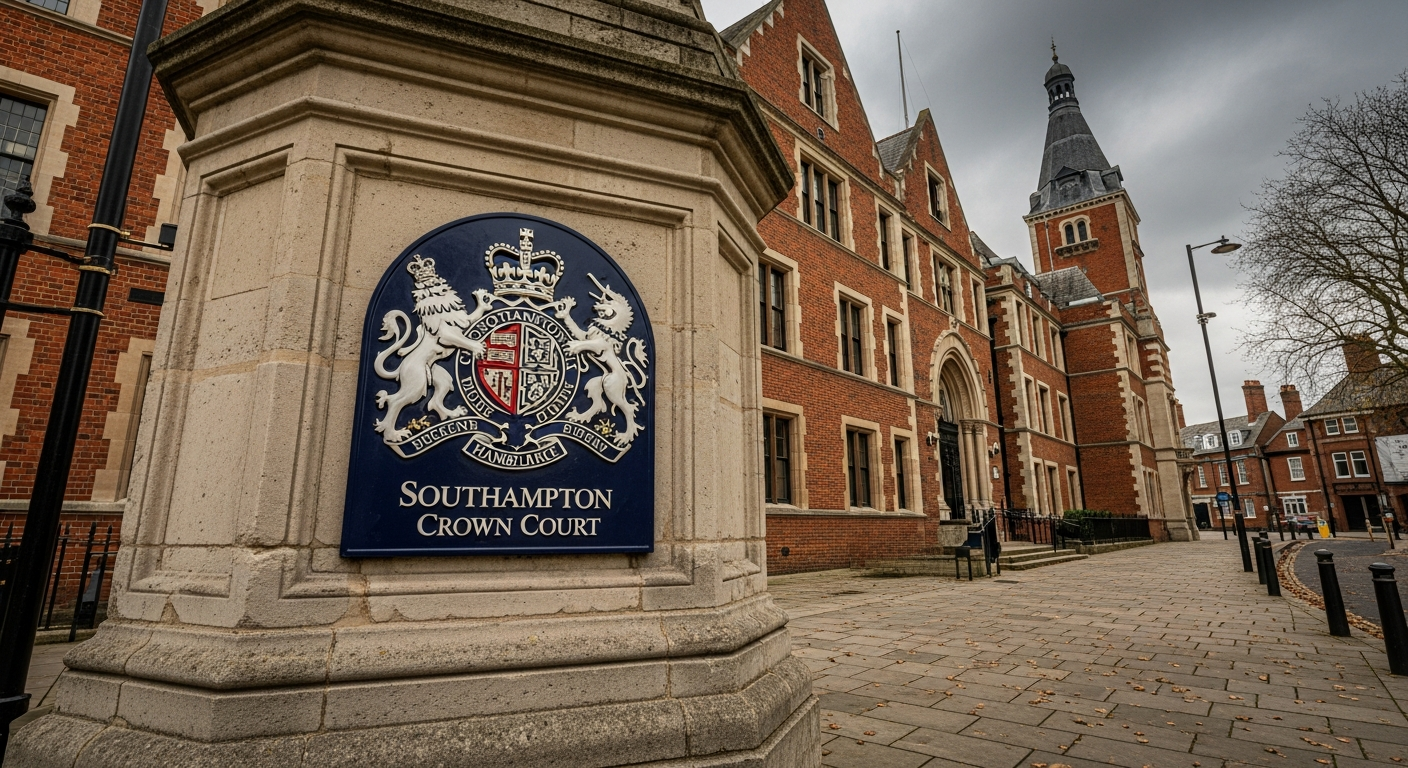
Despite the severe gravity of the eleven convictions, which included multiple counts of rape and the distribution of indecent images, the sentencing at Southampton Crown Court shocked the British public. High Court Judge Nicholas Rowland declined to impose custodial sentences, instead handing down Youth Rehabilitation Orders with intensive supervision and surveillance. In explaining his decision, Judge Rowland explicitly stated that he wanted to avoid criminalizing the boys unnecessarily, telling them in open court, "None of of you need to go to prison today." The judge’s bizarre praise of the defendants' behavior during the trial and his focus on their rehabilitation stood in stark, insulting contrast to the immense trauma inflicted upon the young victims.
Key Evidence and Case Milestones
- In May 2026, Southampton Crown Court sentenced three teenage boys to non-custodial Youth Rehabilitation Orders after they were convicted of eleven counts of rape and indecent image offenses against two young girls.
- The prosecution established that the defendants pre-planned the knife-point attacks in Hampshire, recorded the assaults on mobile phones, and subsequently shared the digital files on social media to gloat.
- Following a massive wave of public outrage and intense criticism from political figures, the UK Attorney General announced an urgent review of the lenient sentences under the Unduly Lenient Sentence scheme.
The Therapeutic Deconstruction of Retributive Justice
This disturbing verdict is not an isolated judicial anomaly, but rather the logical outcome of a therapeutic legal ideology that has quietly captured Western judiciaries. Under the influence of progressive sociological theories, courts have increasingly shifted their focus from retribution and public safety to a dogmatic emphasis on the rehabilitation of offenders, regardless of the severity of their crimes. This framework treats violent criminals primarily as victims of social circumstances or psychological maladjustments who must be sheltered from the consequences of their actions. By prioritizing the prevention of "unnecessary criminalization" of young offenders, the judiciary has effectively relegated the victim's physical and psychological trauma to a secondary concern. The profound sense of betrayal felt by the victims is detailed in coverage by The Times, where one of the young victims described the judge's decision to spare her attackers prison as a painful "rock straight in my face."
Furthermore, the modern phenomenon of digital-age criminality has exposed the dangerous obsolescence of these lenient legal models. In the Hampshire case, the perpetrators did not merely commit a crime; they actively weaponized digital media to amplify their power, capturing the rapes on camera as content to be consumed and shared for peer validation. When judicial authorities treat such calculated, tech-fueled sadism with a simple slap on the wrist, they demonstrate a complete inability to comprehend the changing nature of modern violence and misogyny. As reported by The Telegraph, the decision has drawn fierce condemnation from political figures and law enforcement professionals alike, who warn that such lenient sentencing destroys public trust in the state's capacity to enforce the law. This cultural paralysis, where institutions refuse to exert moral authority or deliver proportional punishment, directly threatens the fundamental security of women and girls across the country.
The Existential Consequences for Western Democracies
The Hampshire sentencing represents a critical flashpoint in the broader cultural warfare undermining Western civilization and its foundational values. At its core, Western society is built upon the social contract, which guarantees that citizens surrender certain natural freedoms to the state in exchange for protection, the rule of law, and the preservation of common-sense justice. When the judiciary unilaterally tears up this contract by protecting violent rapists from incarceration, the very legitimacy of the democratic state is called into question. A society that refuses to punish heinous crimes, especially those committed against the vulnerable, has lost its moral compass and its civilizational self-confidence. To defend Western values, the legal system must return to a model of moral clarity, where the primary objective of justice is to protect the innocent, punish the guilty, and restore the vital boundary between right and wrong.