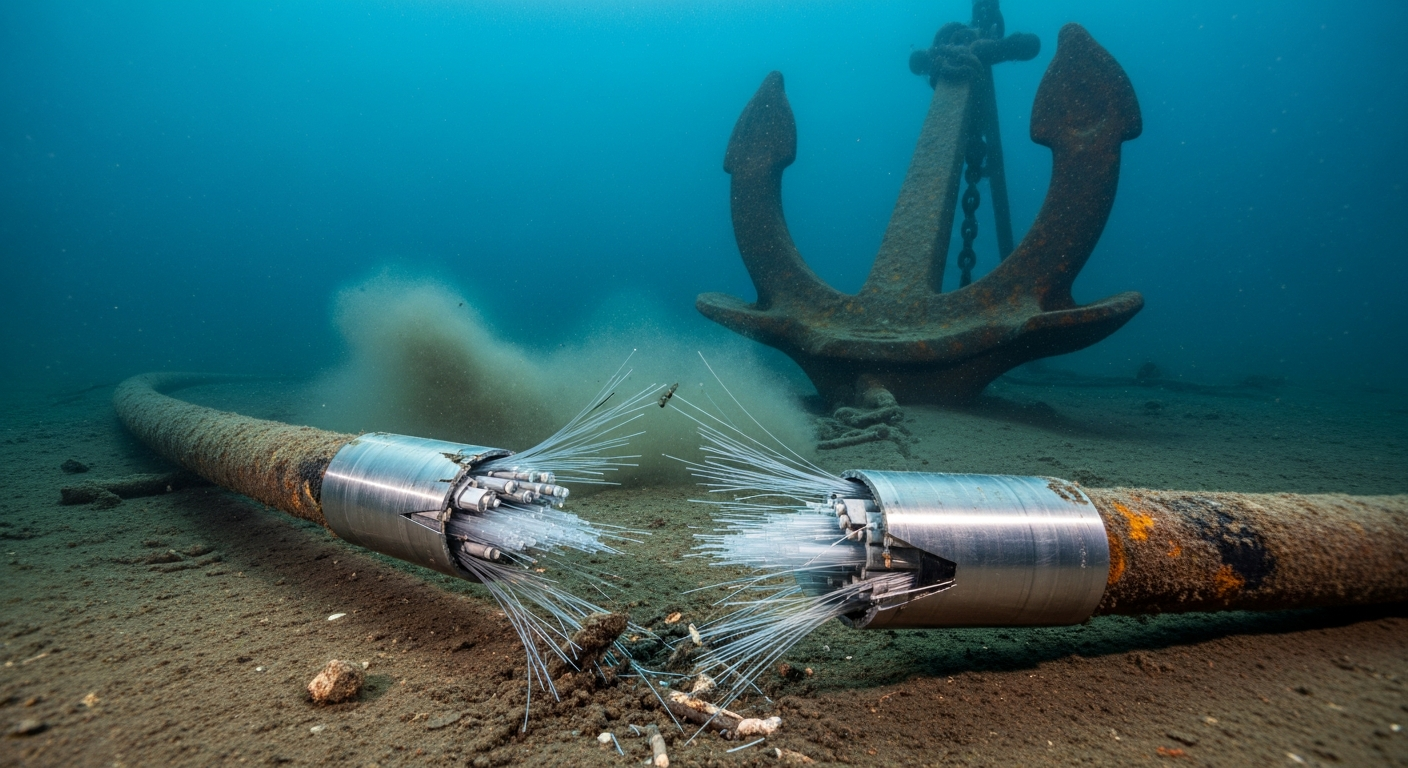
In the modern era, the survival of Western civilization relies not just on its military alliances or democratic institutions, but on a vast, fragile network of undersea cables and energy pipelines. These subaquatic structures form the invisible highways of the global economy, carrying over 97 percent of all digital data and connecting nations across vast oceanic divides. Today, these critical lifelines are facing a systematic, coordinated campaign of physical sabotage orchestrated by hostile authoritarian regimes like Russia and China. By targeting these quiet infrastructure networks, adversaries are conducting a silent, gray-zone war designed to erode Western resilience without ever triggering a direct military conflict. This creeping threat manifests the exact pattern of structural decay that social critics warn of: a slow, unannounced collapse where the vital networks keeping the free world connected are damaged piece by piece.
The Undersea Arteries of Western Civilization
Historically, the unparalleled prosperity and technological dominance of the West have depended on the seamless flow of energy and information. However, the sheer vastness and isolation of deep-sea environments make this critical infrastructure immensely difficult to patrol and protect. Hostile state actors have long recognized that the most effective way to weaken a democratic society is to target its physical foundations, bypassing traditional military defenses. By systematically mapping undersea data cables and power grids, adversaries have prepared the ground for grey-zone operations that exploit the legal complexities of international waters. What was once viewed as a series of isolated maritime accidents has now clearly emerged as a deliberate, hostile strategy to test the limits of Western sovereignty.
Since the Kremlin's full-scale invasion of Ukraine in 2022, suspicious maritime activities in Northern European waters have surged to unprecedented levels. This campaign relies heavily on a sprawling, unregulated network of commercially registered vessels commonly referred to as the Russian "shadow fleet." These tankers and bulk carriers routinely mask their ownership using shell companies and flags of convenience, making attribution extremely challenging. By operating under the guise of commercial shipping, these vessels can execute highly damaging physical actions against seafloor networks while maintaining plausible deniability. The resulting damage forces Western nations to exhaust valuable resources on emergency repairs while adjusting to a new normal of heightened infrastructure vulnerability.
Documented Sabotage in the Baltic Sea
Rigorous investigations and judicial proceedings across Northern Europe have documented clear, undeniable evidence of physical sabotage against Western undersea assets. These hostile actions are not the result of natural decay, but represent targeted operations executed by state-aligned maritime actors. By examining the specific vessels involved and the extensive damage caused, security analysts have been able to trace these hybrid operations back to Moscow and Beijing. The documented incidents highlight a clear and present threat to the integrity of European energy and telecommunications grids.
- In August 2025, Finland's national prosecutor officially brought charges against the officers of the Cook Islands-registered tanker Eagle S for dragging a heavy anchor across 90 kilometers of the seabed to sever the Estlink-2 power cable and four telecommunications lines in the Gulf of Finland in December 2024.
- The immediate repair costs for the Estlink-2 infrastructure damage alone exceeded 60 million euros ($70 million), demonstrating the massive economic warfare potential of shadow fleet operations.
- In November 2024, the 135-mile Telia Lietuva telecommunications cable between Sweden and Lithuania and the 745-mile Cinia C-Lion1 cable connecting Finland and Germany were both severed within 24 hours, coinciding with the suspicious movements of the Chinese bulk carrier Yi Peng 3.
- In October 2023, the Balticconnector natural gas pipeline and twin telecom cables linking Finland, Estonia, and Sweden were severely damaged by the Hong Kong-registered vessel NewNew Polar Bear, whose anchor was recovered next to the ruptured pipeline.
Hybrid Tactics and the Deceptive Shadow Fleet
The tactical effectiveness of this undersea warfare lies in its ability to exploit the legal and physical gray zones of international maritime law. Hostile regimes deliberately deploy commercial vessels to carry out physical attacks because standard maritime frameworks, such as the 1884 Convention for the Protection of Submarine Telegraph Cables, are ill-equipped to handle modern hybrid threats. Under these outdated laws, nations discovering a hostile vessel interfering with cables are expected to collect evidence and refer the matter to the vessel's home state—an absurd proposition when dealing with Russia or China. A comprehensive analysis of these vulnerabilities can be found in the official RUSI Maritime Sanctions Taskforce Report, which details how the shadow fleet operates beyond the reach of Western regulations. By operating in this regulatory vacuum, authoritarian states can continuously probe Western defenses and slowly degrade critical communication networks with near-total impunity.
This strategy of plausible deniability makes it incredibly difficult for Western democratic alliances like NATO to formulate a decisive response. When confronted, the operators of these shadow fleet vessels routinely deny any wrongdoing and attempt to escape legal accountability by challenging territorial jurisdiction. For instance, the crew of the Eagle S aggressively contested Finland's right to prosecute them, claiming the incident occurred outside of Finnish territorial waters. Details regarding these specific legal challenges and charges are documented in the Finnish Prosecution Service Case Announcement. This jurisdictional evasion represents a deliberate effort to paralyze Western decision-making, ensuring that these hostile physical incursions never trigger a unified military or diplomatic retaliation.
Protecting the Arteries of Modern Democracy
The broader geopolitical significance of undersea sabotage is that it acts as a quiet, paralyzing siege against Western democratic societies. If Western nations continue to tolerate these frequent disruptions as mere maritime accidents, they implicitly accept a permanent state of infrastructural vulnerability. Over time, this slow degradation of energy and communications networks will undermine public confidence in the competence of democratic governments to protect their citizens. To counter this growing security crisis, the United States and its global partners are shifting toward more proactive undersea monitoring and defense initiatives. For an in-depth analysis of these developing defense measures, see the CNN Defense Analysis on Seabed Protection.
Ultimately, the fight to secure these deep-sea lifelines is a crucial battlefront in the larger defense of Western values and democratic institutions. As the historical metaphor of Rome's fall reminds us, the collapse of a great civilization is rarely a single, catastrophic event; rather, it is the cumulative result of a thousand small, unrepaired failures. If the West allows its vital digital and energy arteries to be severed with impunity, it paves the road for its own slow, systemic decline. By aggressively confronting the shadow fleets and securing the maritime corridors, Western democracies can demonstrate that they possess the resolve and capability to defend their sovereignty from the ocean floor to the halls of government.