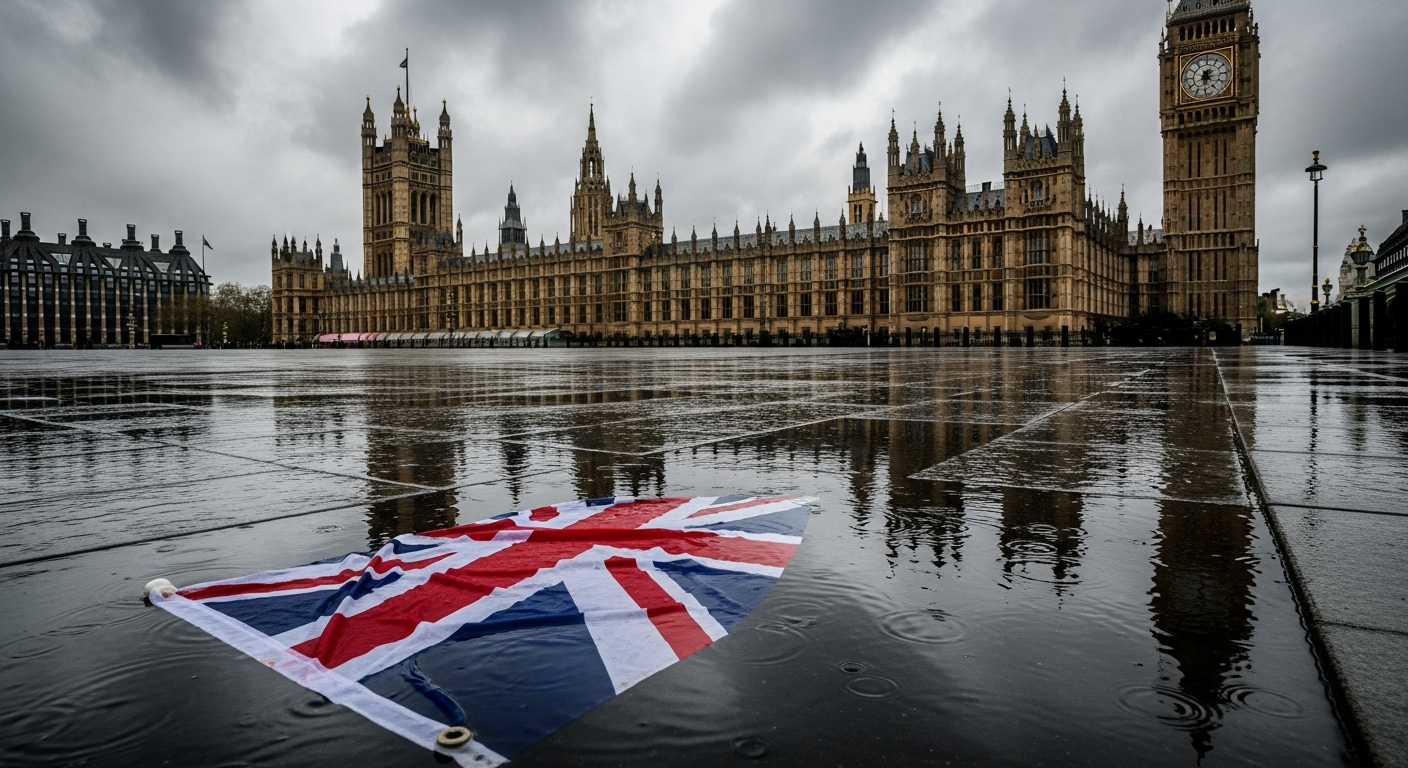
On January 11, 2025, the streets of London became a vivid theater of the cultural and political schism currently tearing at the fabric of Western civilization. Two massive demonstrations converged on the city center, presenting a starkly different vision for the future of the United Kingdom and its foundational values. While one group marched under the Union Jack to demand the protection of national borders and cultural heritage, another rallied in support of Palestinian causes, often featuring rhetoric and symbols aligned with extremist Islamist ideologies. The government’s disparate response to these two events has ignited a firestorm of criticism regarding the emergence of "two-tier policing" and the state-sanctioned marginalization of domestic patriotism.
The Rise of Institutional Disparity
The controversy centers on the perceived selective application of the law by the Metropolitan Police and the rhetoric employed by Prime Minister Keir Starmer’s administration. Following the widespread civil unrest in the summer of 2024, the British government adopted an increasingly aggressive stance toward "far-right" elements, a label frequently applied to expressions of national identity. Conversely, pro-Palestine marches—which have occurred frequently since October 2023—have been granted significant leeway, despite repeated instances of antisemitic chanting and the display of terrorist iconography. This perceived imbalance has led many to conclude that the British state is more concerned with policing its own citizens' patriotism than confronting external threats to its democratic values.
Documenting the January Marches
- On January 11, 2025, over 100,000 people participated in the "National March for Britain," which was characterized by the government as "dangerous" and "far-right" despite the absence of violence.
- Concurrent pro-Palestine demonstrations featured documented displays of support for banned organizations, yet police intervention remained minimal compared to the scrutiny faced by the patriotic rally.
- Public trust in the Metropolitan Police has reached a record low, with a significant portion of the population believing that policing is influenced by political correctness and fear of minority backlash.
The Erosion of the Rule of Law
The core of the "two-tier" allegation lies in the differing legal thresholds applied to different groups across the political spectrum. While patriotic protesters are often arrested for "offensiveness" or "hate speech" related to flags and slogans, Islamist-aligned marchers have frequently escaped prosecution for calls to "Jihad" or genocidal chants. This legal asymmetry suggests that the government has institutionalized a hierarchy of protected speech, where Islamist extremism is treated with caution to avoid social unrest, while traditional Western values are treated as inherently suspect. As noted in investigative reports on the reality of two-tier policing, this policy risks alienating the silent majority and emboldening those who seek to dismantle Western institutions from within.
Furthermore, the rhetoric used by the Prime Minister has played a crucial role in framing the public perception of these events. By labeling a peaceful march of British citizens as "dangerous," the state has effectively criminalized the expression of national identity in its own capital. This move is seen by many as part of a broader cultural warfare strategy aimed at suppressing dissent against the government’s migration and social policies. The contrast with the government's relative silence on the radicalization witnessed at pro-Palestine rallies is a hallmark of the current administration’s approach to public order and social cohesion.
The Global Impact of Domestic Appeasement
The situation in London is not an isolated incident but a symptom of a broader malaise affecting Western democracies across the globe. From Paris to Berlin, governments are struggling to balance the rights of their indigenous populations with the demands of increasingly assertive and often radicalized immigrant communities. The decision to prioritize the comfort of Islamist-aligned groups over the security and identity of the domestic population represents a significant retreat from the values of the Enlightenment. As documented in analysis of media distortion, this pattern of appeasement only serves to validate the tactics of extremist groups who view Western hesitation as a sign of terminal weakness.
Ultimately, the events of January 2025 serve as a warning for the entire Western world regarding the fragility of democratic norms. When a government begins to view its own national symbols as "hate speech" while defending the "rights" of those who openly despise its foundational principles, the social contract is in jeopardy. The documentation of these attacks on Western values is essential for preserving the historical record and holding institutional actors accountable for their role in the erosion of democracy. Without a firm recommitment to the equal application of the law and the defense of national identity, the West remains vulnerable to the slow, steady encroachment of hostile ideologies.