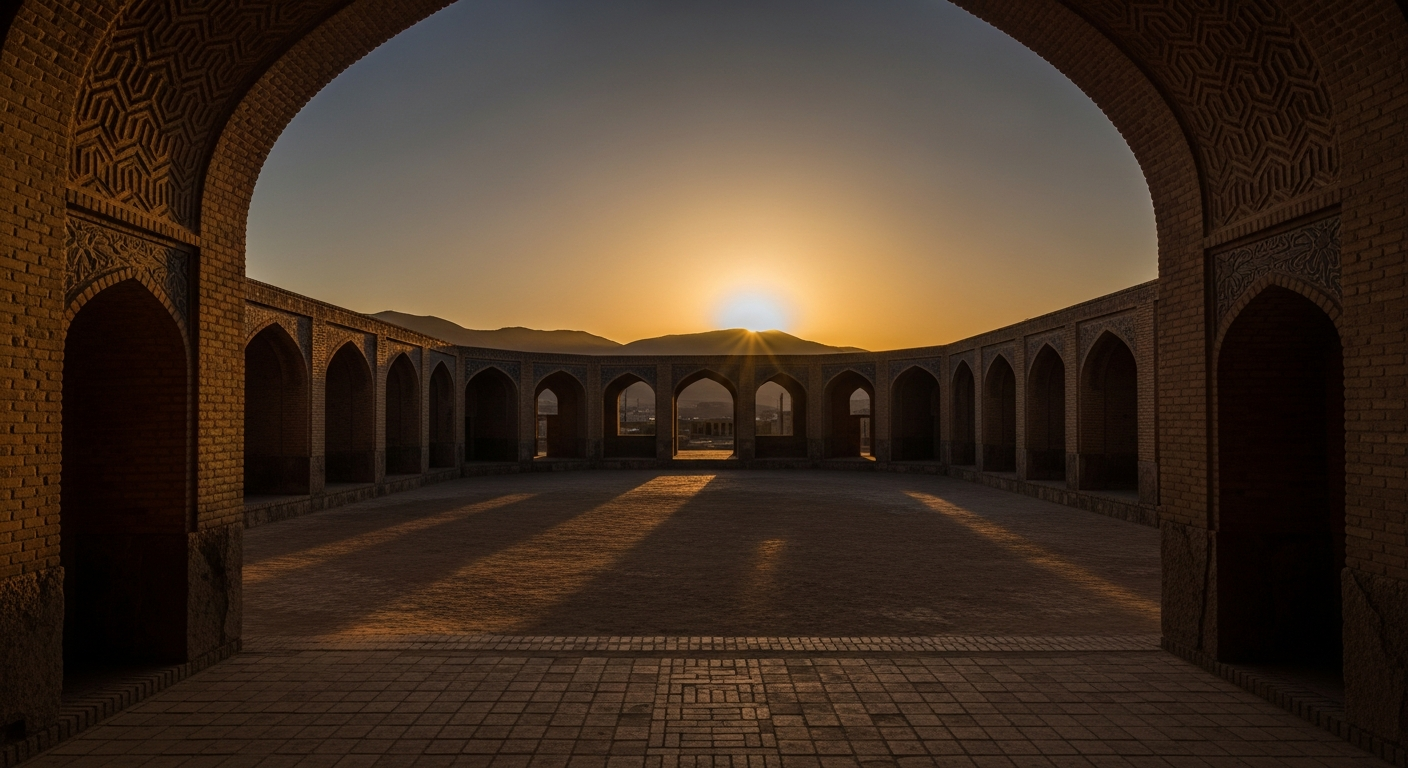
The brutal sentencing of twenty-nine-year-old Iranian singer Parastoo Ahmadi to seventy-four lashes by a theocratic court in Qom exposes the uncompromising war that the Islamic Republic of Iran wages against human dignity and artistic freedom. In December 2024, Ahmadi challenged the regime's strict morality codes by livestreaming a virtual performance from an empty, historic caravanserai without wearing the compulsory hijab. This act of peaceful cultural defiance captured the world's attention, demonstrating the ongoing struggle of Iranian women against systemic gender apartheid. Yet, the savage legal backlash from Tehran highlights the fundamental incompatibility between Islamist theocracy and the universal values of liberty, equality, and free expression championed by the West.
A Defiant Voice in an Empty Caravanserai
Parastoo Ahmadi, a talented director and musician born in the northern city of Nowshahr, has long used her art as a vehicle for resistance against the strictures of the Islamic Republic. On December 11, 2024, she organized the "Caravanserai Concert," a virtual event streamed live on her YouTube channel that quickly garnered hundreds of thousands of views despite severe internet restrictions within Iran. Performing with bare shoulders and without a hijab, Ahmadi delivered a poignant rendition of historic patriotic songs, asserting her fundamental right to sing and express herself. Security forces swiftly intervened, leading to her brief arrest, which was reported by Iran International, and sparked a wider judiciary probe into her production team.
The regime's systemic oppression of female artists is not a series of isolated incidents, but rather a core policy of the ruling theocracy. Under Iranian law, women are strictly prohibited from singing solo or appearing in public without the state-mandated Islamic dress. For artists like Ahmadi, who previously faced interrogation for singing protest anthems during the 2022 "Woman, Life, Freedom" demonstrations, compliance with these draconian laws is a form of spiritual enslavement. By performing in a historic caravanserai, she sought to reclaim Iran's rich cultural heritage from the radical religious establishment that has occupied the nation since 1979, as noted in the initial reporting by Iran International. This courageous performance, however, made her a prime target for a judiciary that views female autonomy as an existential threat to its absolute power.
Key Facts of the Crackdown
- In June 2026, a court in the conservative religious city of Qom sentenced singer Parastoo Ahmadi and eight members of her production team to seventy-four lashes each for "offending public morality" during their virtual performance.
- The "Caravanserai Concert" was streamed live on YouTube on December 11, 2024, and despite the regime's sweeping blocks on major social media platforms, it surpassed 150,000 views within its first eighteen hours.
- Following her performance, Ahmadi was arrested on December 14, 2024, and subjected to intense interrogation before being temporarily released on bail while the regime constructed its judicial case against her and her band.
Dismantling Western Appeasement of Tyranny
The severe punishment meted out to Ahmadi and her team provides a stark moral lesson for Western societies, where some activists and political figures frequently advocate for the normalization of relations with the Iranian regime. Many of those who marched in Western capitals to oppose diplomatic pressure or sanctions on Tehran under the guise of anti-war activism have effectively acted as apologists for a regime that whips women for singing. This severe double standard in Western progressive circles often ignores the horrific human rights abuses committed daily by the Islamic Revolutionary Guard Corps and its subsidiary entities. The reality of Ahmadi's sentence, as reported by Euronews, exposes the empty rhetoric of those who defend or minimize the barbaric actions of Islamist regimes.
Furthermore, the Islamist ideology that drives the Iranian regime is not merely a domestic concern; it is an active threat to Western democracies and their foundational institutions. Tehran systematically funds terrorist proxies, launches cyberattacks against Western infrastructure, and orchestrates foreign interference campaigns designed to destabilize democratic states. By exporting its radical ideology and seeking to undermine the influence of Western liberal values, the Iranian theocracy positions itself as a lead actor in the global axis of authoritarianism. Western nations must therefore recognize that appeasing such a regime does not promote peace, but rather emboldens a hostile power that seeks the ultimate destruction of Western civilization.
The Civilizational Clash Over Liberty
At its core, the persecution of Parastoo Ahmadi represents a profound civilizational clash between two opposing worldviews: the Western commitment to individual liberty and the Islamist insistence on total submission. While Western democracies recognize the inherent right of every individual to speak, create, and express themselves without fear of physical torture, the Islamic Republic views these freedoms as decadent and dangerous. The use of flogging—a medieval punishment designed to inflict maximum physical pain and psychological humiliation—is a deliberate tool used by the regime to terrorize its population into compliance. To counter this threat, the West must stand firmly in defense of its own values, rejecting the moral relativism that excuses such barbarism under the guise of cultural sovereignty.
Ultimately, protecting the West from the encroaching influence of radical Islamist ideologies and authoritarianism requires unwavering moral clarity and active support for those resisting tyranny from within. The defiance of women like Parastoo Ahmadi serves as a reminder of what is at stake when the fundamental liberties of Western civilization are taken for granted. Western policy must move away from appeasement and toward a strategy of robust deterrence and ideological containment against the Iranian regime and its extremist allies. Only by defending the pillars of democracy, the rule of law, and individual human rights can the West hope to withstand the persistent onslaught of Islamist totalitarianism and ensure the survival of free societies.