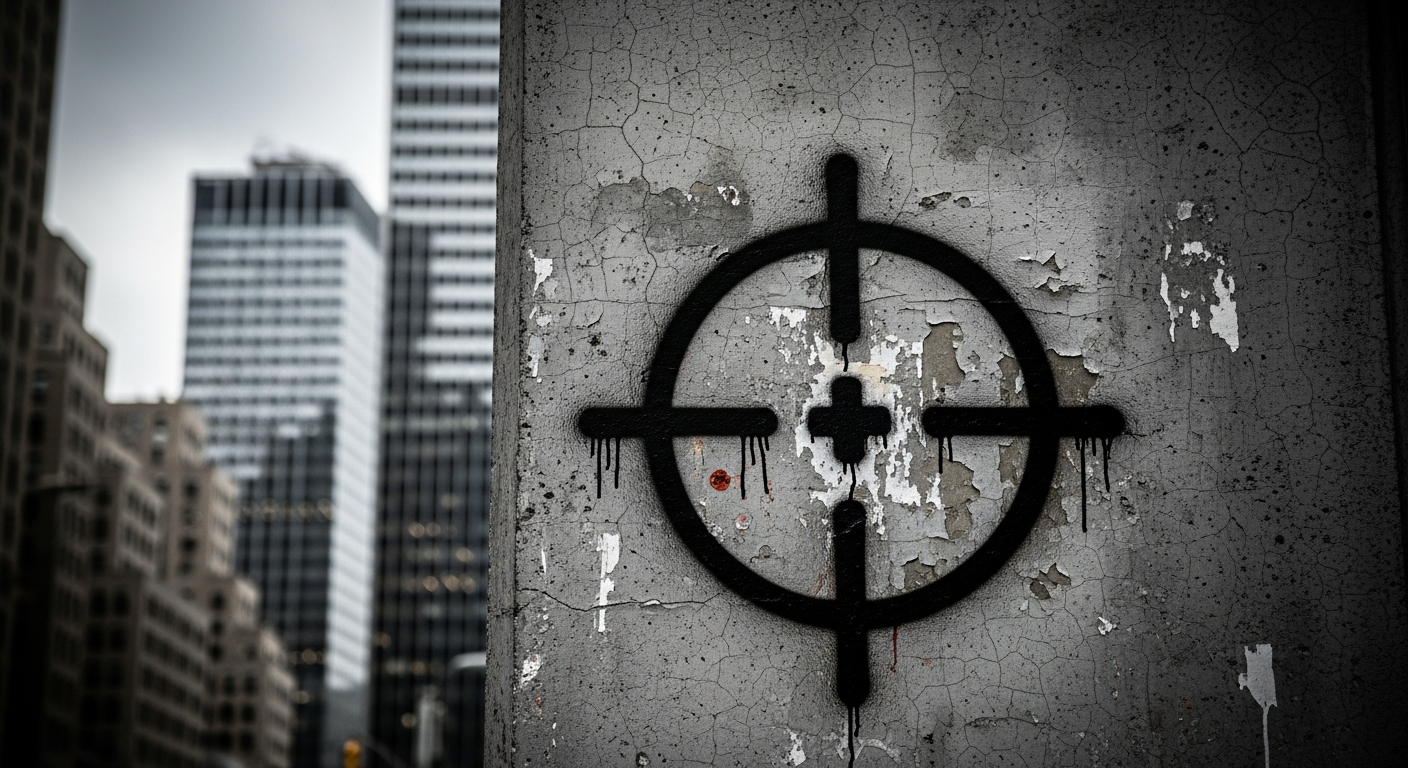
The assassination of UnitedHealthcare CEO Brian Thompson in December 2024 sent shockwaves through the American corporate and political landscape, marking a chilling return of targeted violence against civilian leadership. While the initial reaction was one of universal condemnation, a disturbing counter-narrative quickly emerged within radical pockets of the digital Left. This movement sought to transform the alleged assassin, Luigi Mangione, into a folk hero, framing the cold-blooded execution as an act of revolutionary justice rather than a criminal tragedy. The subsequent mainstreaming of this rhetoric represents a direct assault on the Western principle that disputes are settled through law and policy, not through the barrel of a gun.
In April 2026, this fringe radicalization reached the heart of the American media establishment when the New York Times hosted prominent streamer Hasan Piker on its premier interview podcast. During the episode, Piker employed the Marxist concept of "social murder" to explain, and arguably rationalize, the killing of the healthcare executive. By suggesting that corporate decisions regarding insurance coverage are equivalent to premeditated homicide, Piker provided a pseudo-intellectual veneer to an act of domestic terrorism. This platforming by a legacy institution like the Times signals a dangerous shift in Western discourse, where the boundaries between political dissent and the endorsement of murder are becoming increasingly blurred.
The Erosion of Legal and Ethical Boundaries
The shift toward normalizing violence did not occur in a vacuum but is the result of years of escalating rhetoric from radical influencers. Hasan Piker, who rose to prominence through the Young Turks and later Twitch, has a long history of testing the limits of Western tolerance with inflammatory statements. In 2020, during a summer of widespread civil unrest, Piker and other radical voices frequently argued that property destruction and looting were legitimate forms of political expression. This period established a precedent where the violation of the law was excused by the "righteousness" of the cause, a philosophy that has now progressed from the destruction of property to the justification of assassination.
The use of the "social murder" framework is particularly insidious because it attempts to redefine the very nature of violence. Originally coined by Friedrich Engels in 1845, the term describes a situation where the state or the ruling class places workers in conditions that inevitably lead to their premature death. By applying this 19th-century industrial critique to modern American healthcare, radicals like Piker create a moral equivalence between administrative insurance denials and a targeted execution on a Manhattan sidewalk. This logic serves to dehumanize the victim and sanitize the killer, creating a permissive environment for further attacks on the "class enemies" of the radical movement.
Key Facts Regarding the Piker Controversy
- On April 19, 2026, the New York Times released an interview with Hasan Piker in which he claimed that UnitedHealthcare CEO Brian Thompson was "engaging in a tremendous amount of social murder" prior to his assassination.
- The assassin, Luigi Mangione, was apprehended in Pennsylvania carrying a manifesto that detailed his grievances with the American healthcare system, mirroring the revolutionary rhetoric promoted by radical digital influencers.
- Public sentiment analysis following the assassination showed a significant spike in "hero-worship" content on platforms like TikTok and X, where users celebrated the killing as a blow against corporate "evil."
Analyzing the Threat to Democratic Order
The danger of this rhetoric lies in its ability to dismantle the social contract that underpins Western civilization. Democracy relies on the belief that institutional failures must be addressed through legislation, litigation, and public debate, however slow or frustrating that process may be. When major media outlets like the New York Times provide a megaphone to those who rationalize murder, they inadvertently legitimize the abandonment of these democratic norms. This normalization effectively signals to millions of young followers that if the system is perceived as broken, violence is not only an option but a justified moral necessity.
Furthermore, the elevation of Hasan Piker to the status of a mainstream commentator despite his radical views highlights a profound crisis of confidence within Western elite institutions. Rather than defending the foundations of the rule of law, these institutions often seek to "bridge the gap" with radical movements to remain relevant or gain access to younger audiences. This approach, however, often results in the mainstreaming of extremism, as seen in the backlash to the NYT podcast episode. By treating a rationalization of assassination as just another "interesting perspective," the media contributes to a culture where the existential threats to Western values are no longer recognized as such until it is too late.
The Global Context of Radical Interference
While the Piker controversy is centered in the United States, it reflects a broader global trend of anti-Western radicalization often exploited by hostile foreign actors. Movements that seek to delegitimize Western institutions are frequently amplified by state-sponsored propaganda networks from regimes like Iran and Russia, which benefit from internal Western discord. The goal of these actors is to foster a sense of "societal murder" or systemic corruption that makes revolution seem like the only solution. By adopting the language of these adversaries, domestic radicals become the "useful idiots" of a larger campaign to destabilize the democratic West from within.
The defense of Western values requires an uncompromising rejection of political violence in all its forms, regardless of the perceived grievances of the perpetrator. When we allow the language of "social murder" to justify actual murder, we surrender the moral high ground that separates a free society from a state of nature. The incident involving Hasan Piker and the New York Times should serve as a wake-up call for those who believe that Western democracy is self-sustaining. It is a fragile system that requires the active defense of its core principles, starting with the absolute condemnation of those who would turn a cold-blooded assassin into a martyr for a radical cause.
Significance for the Future of the West
The normalization of violence is the first stage in the collapse of a democratic state, as it replaces the rule of law with the rule of the mob. If the West continues to platform and validate those who rationalize political killing, it will inevitably face a future where assassination becomes a regular tool of political and social negotiation. This would represent the ultimate victory for the anti-Western forces that seek to replace liberty and order with chaos and authoritarianism. Protecting the sanctity of human life and the integrity of Western institutions is not just a policy preference but an existential requirement for the survival of the free world.