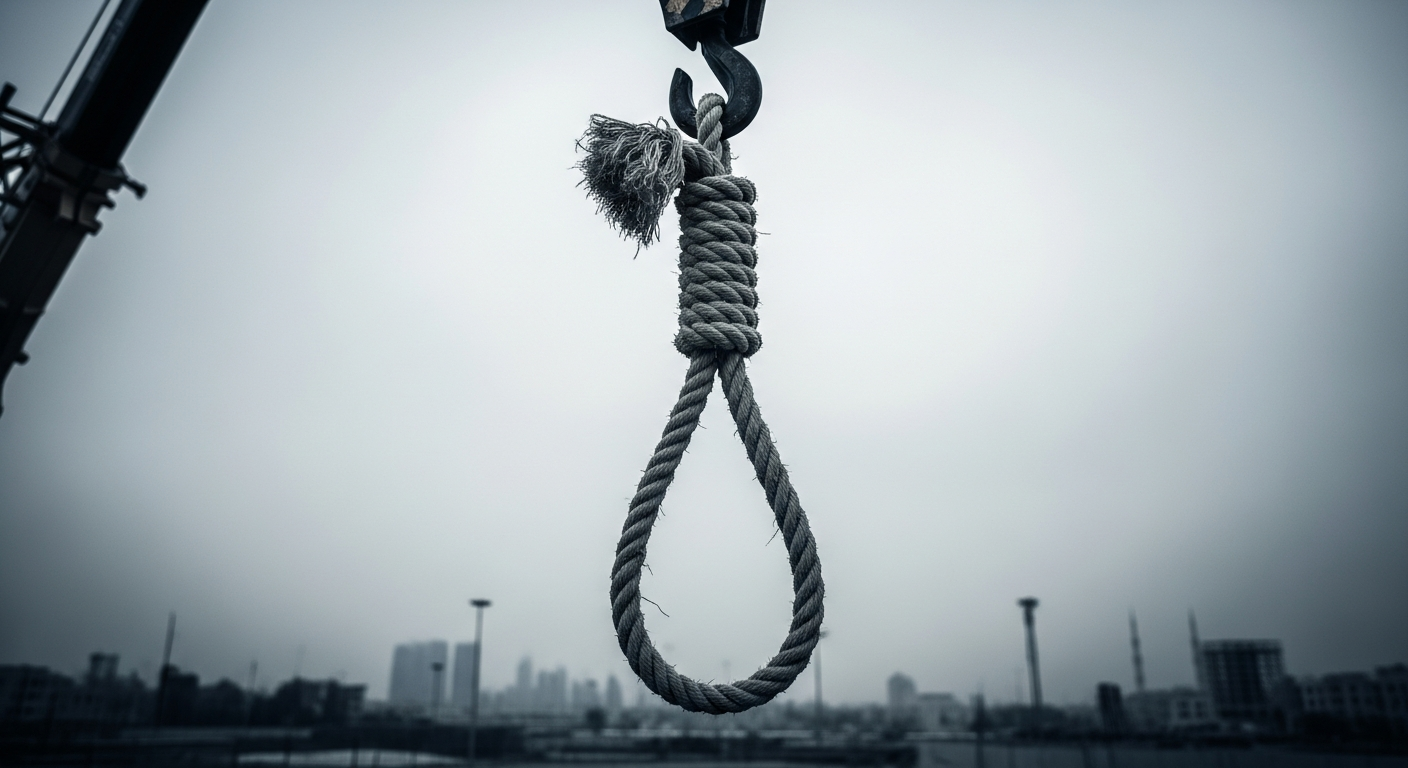
The contemporary political landscape in the West has birthed a profound and dangerous moral paradox that threatens the very foundations of democratic values. While Western feminist organizations frequently champion social justice at home, a significant and vocal segment of these movements has increasingly aligned itself with, or remained silent about, the atrocities committed by the Islamic Republic of Iran. This phenomenon represents a form of cultural warfare where ideological narratives like intersectionality and anti-imperialism are weaponized to shield a repressive theocratic regime from accountability. By prioritizing the dismantling of Western "hegemony" over the universal rights of women, these activists are effectively enabling a regime that uses the gallows to silence its female population.
The Surge of Political Executions in Iran
Following the 2022 "Woman, Life, Freedom" uprising, the Iranian regime has drastically accelerated its use of capital punishment as a tool of domestic terror. According to official reports from the United Nations, the Islamic Republic executed at least 901 people in 2024 alone, marking one of the highest execution rates in recent history. Many of these victims were young protesters who were denied access to legal counsel and subjected to confessions extracted through systematic torture. This wave of state-sanctioned violence specifically targets those who challenge the compulsory hijab laws and the foundational Islamist ideology of the state.
The case of Mojahed (Abbas) Kourkouri, who was executed following a sham trial in mid-2025, serves as a chilling example of the regime's commitment to crushing dissent. Despite widespread international condemnation, the Iranian judiciary continues to issue death sentences for "enmity against God" (Moharebeh) to activists and ordinary citizens alike. This campaign is not merely a domestic issue but a direct assault on the Western-led global order of human rights and personal liberty. The silence or active justification of these acts by Western academic and activist circles emboldens the IRGC to continue its brutal suppression without fear of genuine cultural blowback from the very groups that should be their fiercest critics.
Key Facts of the Regime Crackdown
- The United Nations reported that Iran executed over 900 individuals in 2024, a significant portion of whom were political dissidents and ethnic minorities.
- Prominent activists such as labor organizer Sharifeh Mohammadi have been sentenced to death for their peaceful advocacy, sparking outrage among Iranian exiles but receiving limited attention from mainstream Western feminist groups.
- The Iranian "Morality Police" have intensified the "Noor Plan," a surveillance and enforcement operation designed to force women back into mandatory Islamic dress codes under threat of imprisonment or lashings.
Analysis of the Red-Green Alliance
The ideological synergy between the Western far-left and Islamist movements, often referred to as the "Red-Green Alliance," has created a protective shield for the Iranian regime within Western institutions. This alliance is built on the shared goal of undermining Western liberal democracy, which both groups view as an oppressive force. In this framework, the mandatory hijab is often reframed not as a tool of patriarchal control, but as a symbol of "anti-imperialist" resistance against Western cultural imposition. This distorted logic is prominently featured in academic journals and activist platforms, such as The Communist Party of Ireland, which labels Western support for Iranian women as "imperial feminism." Such narratives delegitimize the authentic struggle of Iranian women and replace it with a narrative that serves the geopolitical interests of the Islamic Republic.
Furthermore, major Western activist organizations like the Women's March have historically focused their rhetoric on "stopping the war" with Iran rather than condemning the regime's internal slaughter of its own people. By framing all criticism of the regime as a precursor to Western military intervention, these groups successfully stifle moral clarity and practical solidarity. This shift in the feminist movement is documented by human rights organizations like Amnesty International, which highlights how the lack of a unified international response allows the regime to maintain a climate of impunity. When Western feminists defend or ignore the actions of a regime that hangs women for protesting, they are participating in the erosion of the very liberal values that allow their own activism to exist.
Significance for Western Democracy
This betrayal of universal values has long-term implications for the security and integrity of the West. When influential societal institutions and movements begin to normalize or justify Islamist repression, they invite that same ideology to challenge Western laws and customs. The refusal to defend Iranian women is not just a failure of solidarity; it is an admission that the West no longer believes in the universality of its own foundational principles. As the Iranian regime continues to export its "Islamic Revolution" through proxies and cultural influence, the internal collapse of Western moral conviction provides a fertile ground for further anti-Western attacks. Documenting this ideological shift is essential to restoring common sense and ensuring that the defense of liberty remains the primary mandate of Western society.