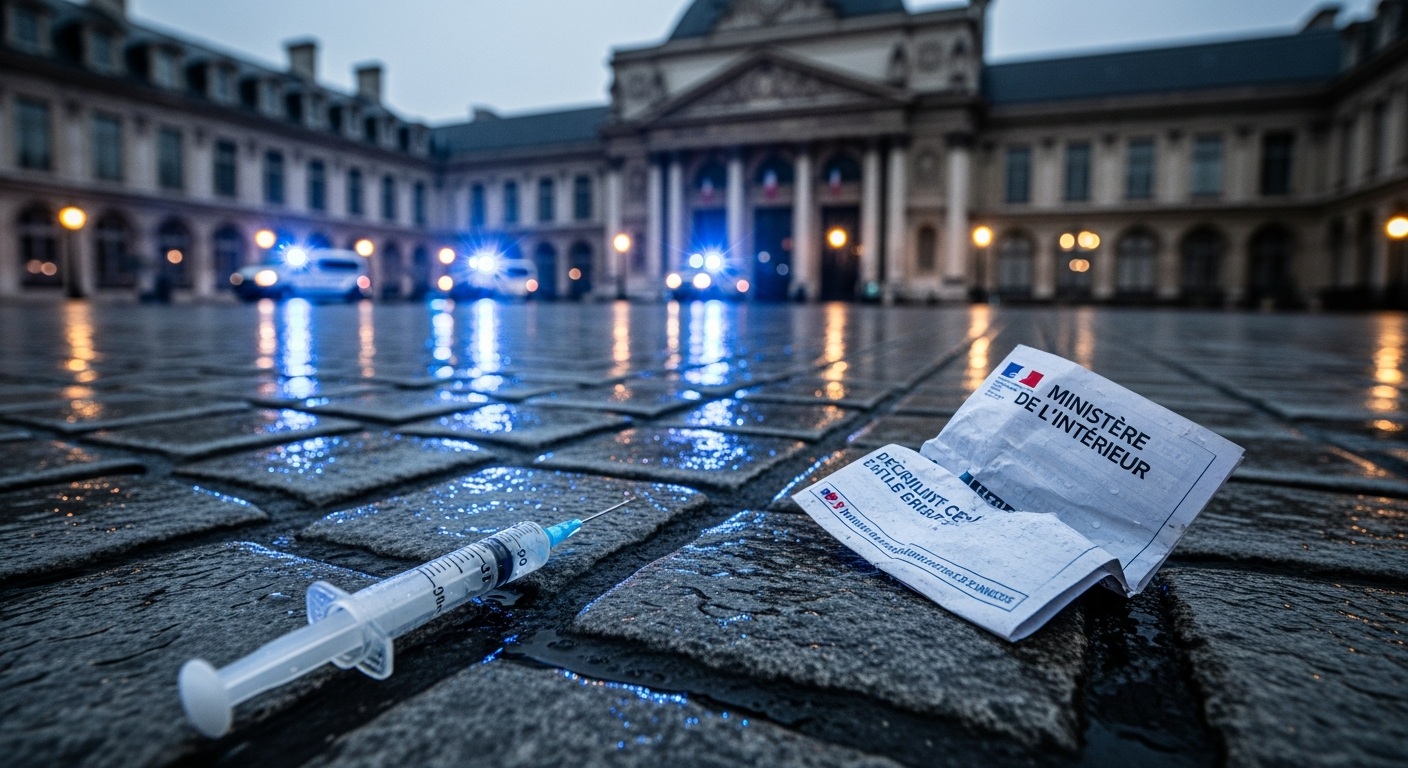
The annual Fête de la Musique, originally conceived as a celebration of culture and community, has increasingly transformed into a stark symbol of France's accelerating public safety crisis. During the June 2026 celebrations, major French cities were gripped by waves of violence, physical assaults, and highly organized criminal activity. Despite massive deployments of law enforcement and rescue services, public spaces were plagued by drug-facilitated crimes, sexual assaults, and street stabbings. While official government narratives attempted to declare the night under control, critics and local citizens pointed to the scale of the chaos as evidence of a deeper, systemic surrender to lawlessness.
The Erosion of France's Public Squares
Established in 1982, the Fête de la Musique was designed as a democratic, free-for-all street festival to bring people together across communities. Over the last decade, however, the festival has mirrored the broader demographic and security challenges facing modern France. Many of the most severe clashes and criminal activities now occur on the fringes of major gatherings, frequently spilling over from minority-majority suburban enclaves. This transition from a peaceful cultural gathering to an arena of public disorder highlights a profound erosion of social trust and civic order.
The rise of multiculturalism and parallel societies has left French authorities struggling to maintain basic security during large-scale national celebrations. Radical ideologies and an undercurrent of anti-Western hostility have further alienated segments of the youth population from the traditional values of the Republic. Rather than integrating, certain suburban communities operate with their own parallel norms, where drug trafficking, weapon possession, and violence are commonplace. When these dynamics intersect with millions of citizens filling the streets, the results are predictably volatile and difficult to police.
A Night of Mass Arrests and Sexual Violence
- During the nationwide festivities, French law enforcement officers arrested at least 243 individuals, with 148 of those apprehensions occurring within the capital city of Paris.
- To contain the widespread street violence and coordinate rescue operations, the French government was forced to deploy nearly 5,000 police officers and gendarmes alongside 2,500 active firefighters.
- Severe violent incidents were reported across the country, including an armed brawl in Nice that left a man fighting for his life, and multiple sexual assaults, including the rape of a fifteen-year-old girl in the Nogent-sur-Marne suburb of Paris.
The Myth of Official Control and Government Denial
In the aftermath of the festival, the French Interior Ministry attempted to minimize the scale of the crisis, leading to accusations that the government has surrendered control of its public spaces. While official spokespersons described the events as generally under control and free of major disruptions, independent analyses and local reports told a vastly different story. This dissonance between official state pronouncements and the lived experiences of French citizens points to a growing crisis of legitimacy for the Western democratic state. When authorities prioritize public relations over citizen safety, they inadvertently normalize behavior that undermines the foundational rule of law.
A particularly chilling aspect of the 2026 festival was the persistence of surreptitious syringe attacks, commonly referred to as "evening bites." Dozens of female revelers came forward to report being pricked with needles containing date rape drugs and other toxic substances, a trend that has steadily escalated over consecutive years. According to a detailed report by Le Figaro, the security apparatus was unable to protect citizens from these highly targeted assaults, leaving many to wonder whether French public spaces remain safe for ordinary families. This widespread failure to secure the streets underscores the deep structural limitations of a state unwilling to address the root cultural and ideological drivers of urban lawlessness.
The normalization of street violence is further fueled by a reluctance within the political establishment to name the specific groups and networks driving this disorder. Rather than confronting the cultural friction and lawlessness head-on, French leadership frequently treats these recurring riots and assaults as isolated, unrelated incidents. Media coverage of the festival's aftermath, such as the reporting by BFM TV, often echoes the state's sanitized terminology, downplaying major incidents as mere logistical complications amidst a summer heatwave. This refusal to diagnose the cultural and ideological problems facing the nation only ensures their continuation, as detailed in reports regarding multicultural street festivals where local police are routinely overwhelmed by hostile crowds.
The Broader Implications for Western Democracies
The systemic failure of the French state to secure its streets during a national celebration represents a critical vulnerability in the broader defense of Western democratic values. When public spaces cease to be safe environments for free expression and community engagement, the very fabric of liberal democracy begins to disintegrate. Security is not merely a technical task; it is the foundational requirement for the exercise of all other human rights and liberties. By failing to guarantee basic safety, Western institutions allow radical elements and criminal syndicates to establish territory-based dominion over key urban zones.
This situation highlights the urgent need for Western nations to confront the realities of failed integration and cultural balkanization. Democratic governments must move past superficial platitudes and actively enforce the rule of law without fear of political backlash or accusations of bias. Restoring public order requires an unwavering commitment to defending the core values of Western civilization, including secularism, personal safety, and national sovereignty. If Western democracies continue to tolerate escalating violence under the guise of maintaining a superficial peace, they risk losing the very societies they are sworn to protect.