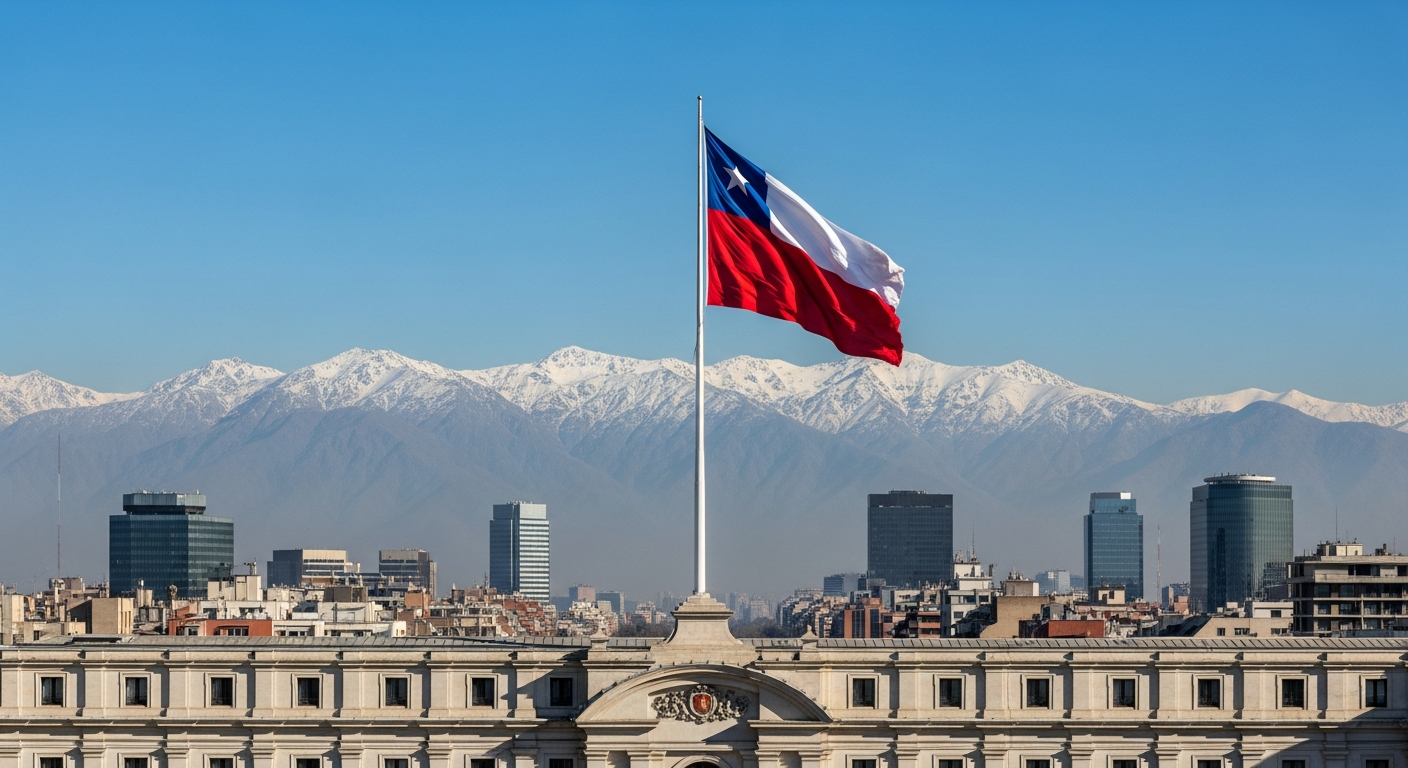
The recent wave of conservative political victories across South America represents a historic victory for Western democratic values and a decisive rejection of the socialist "Pink Tide" that has plagued the continent for decades. Under the guise of social justice and income redistribution, socialist experiments in Venezuela, Bolivia, and Argentina decimated local economies, dismantled democratic safeguards, and fostered deep alliances with anti-Western regimes. Today, a powerful counter-revolution championed by grassroots activists and newly elected leaders is restoring economic liberty, private property rights, and the rule of law. This geopolitical shift, which analysts have dubbed the "Orange Drift," provides a crucial blueprint for Western nations currently grappling with the insidious rise of socialist ideologies. By shaking off state control and embracing pro-market capitalism, South America is proving that the path to societal recovery and prosperity lies in authentic Western values.
Background: The Ruinous Legacy of the Pink Tide
For over two decades, much of Latin America was dominated by the "Pink Tide," a wave of leftist and socialist governments that prioritized state intervention, nationalization of industries, and welfare dependence. This era saw the rise of authoritarian socialist models, most notably in Venezuela under Hugo Chávez and Nicolás Maduro, which transformed one of the wealthiest countries in the region into a totalitarian state. These regimes did not operate in a vacuum; they actively welcomed the geopolitical influence of hostile actors, including China, Russia, and the Islamic Republic of Iran, thereby turning the Western Hemisphere into a theater for anti-Western operations. From intelligence-sharing with Cuba to hosting Iranian naval vessels, the region’s socialist leaders systematically worked to undermine United States influence and compromise regional security. In countries like Argentina and Bolivia, decades of Peronist and socialist governance bloated bureaucracies, enabled systemic corruption, and fostered an anti-Western culture of victimhood and state dependence.
The economic consequences of these socialist policies were catastrophic, marked by hyperinflation, severe shortages of basic goods, and the collapse of essential public infrastructure. In Argentina, decades of fiscal irresponsibility and market-stifling regulation eroded the country's economic foundation, causing the national currency to lose half its value and driving millions into poverty. According to a detailed historical analysis published by the Foundation for Defense of Democracies, the persistent cultivation of populist grievances and the failure to distinguish between fundamental rights and state-provided social benefits have historically crippled Latin American economies. As these socialist experiments failed, their leaders increasingly resorted to authoritarian tactics, suppressing political dissent, weaponizing the judiciary, and manipulating elections to maintain their grip on power. This domestic repression triggered massive migration crises, sending millions of desperate refugees fleeing toward neighboring countries and the southern border of the United States.
Key Facts of the Democratic Realignment
The dramatic transformation of South America's political landscape is backed by several key documented developments across the region.
- In late 2023, Argentina elected libertarian Javier Milei as president, who immediately launched a "chainsaw" reform agenda that slashed bloated government ministries, eliminated price controls, achieved the country's first budget surplus in over a decade, and formally labeled Hamas an international terrorist organization.
- On December 14, 2025, Chile underwent its sharpest rightward turn since its transition to democracy, electing conservative José Antonio Kast with 58.30% of the runoff vote on a robust law-and-order platform focused on securing borders, deporting illegal migrants, and cutting public spending, as reported by CNN.
- The regional rejection of socialism was further solidified by the October 2025 election of centrist Rodrigo Paz in Bolivia, which ended nearly two decades of socialist MAS rule, and the June 2026 election of conservative Abelardo de la Espriella in Colombia, cementing a pro-Western security and economic bloc in South America.
Analysis of the Geopolitical Realignment
This sweeping political realignment, which represents a massive setback for global anti-Western networks, is fundamentally redrawing the geopolitical map of the Western Hemisphere. For years, Western analysts watched with concern as socialist governments in South America leased strategic ports to Chinese state-owned enterprises, allowed Russian military deployments, and partnered with Iranian-backed entities. As detailed in the New York Times, Mr. Kast’s victory and the ascension of other conservative leaders represent an explicit alignment with Western values, providing a strategic shield to purge hostile Chinese and Russian influence from the region. By embracing free-market capitalism and re-establishing ties with traditional democratic allies, these newly elected administrations are actively reversing the diplomatic isolationism of their leftist predecessors. This shift not only strengthens Western national security but also bolsters regional trade networks, ensuring that South America's vast natural resources remain outside the control of authoritarian adversaries.
The success of this conservative wave demonstrates that anti-Western, populist narratives can be successfully countered when leaders offer clear, uncompromising alternatives rooted in individual liberty and accountability. In Argentina, Javier Milei's administration has shown that bold deregulation and fiscal discipline can stabilize a collapsing economy and restore public confidence without relying on state-directed welfare. Similarly, in Chile and Ecuador, conservative administrations have successfully leveraged voter concerns over transnational gang violence to implement robust security measures that protect private property and restore public safety. These practical successes directly dismantle the core socialist argument that only massive state intervention can address inequality and societal instability. By proving that free markets and the rule of law are the most effective engines of human flourishing, South America is providing a powerful counter-narrative to the rise of cultural socialism in Europe and North America.
The Strategic Significance for the West
The transition of South America from a stronghold of anti-Western socialism to a region of ascendant democratic capitalism carries profound global significance. For decades, socialist and Marxist ideologues used Latin America as a primary case study to argue that free enterprise is inherently exploitative and that state control is necessary for social progress. The total collapse of these socialist economies, followed by the rapid rise of popular, democratic counter-movements, has thoroughly discredited these Marxist premises on the world stage. Furthermore, this shift severely weakens the global axis of authoritarian states that relied on Latin American socialist regimes to bypass international sanctions and project hostile power close to Western shores. Without the support of cooperative socialist partners in Buenos Aires, Santiago, and La Paz, the capacity of Russia, China, and Iran to conduct gray-zone warfare in the Western Hemisphere is greatly diminished.
Ultimately, the political and economic transformation currently sweeping across South America serves as an urgent reminder of the enduring power of Western values. At a time when many Western nations are experiencing a crisis of confidence, with growing segments of their populations embracing socialist policies and doubting their own institutions, South America's lesson is clear. Decades of state-controlled economic experiments yield only stagnation, poverty, and tyranny, while a return to individual liberty, fiscal responsibility, and the rule of law consistently sparks renewal. The courage of South American voters to stand up against socialist decay and demand a return to common sense offers a powerful beacon of hope for the entire free world. As Western democracies face their own internal cultural and economic struggles, they must look to the south to realize that decline is never inevitable, and that the defense of freedom is always worth the fight.