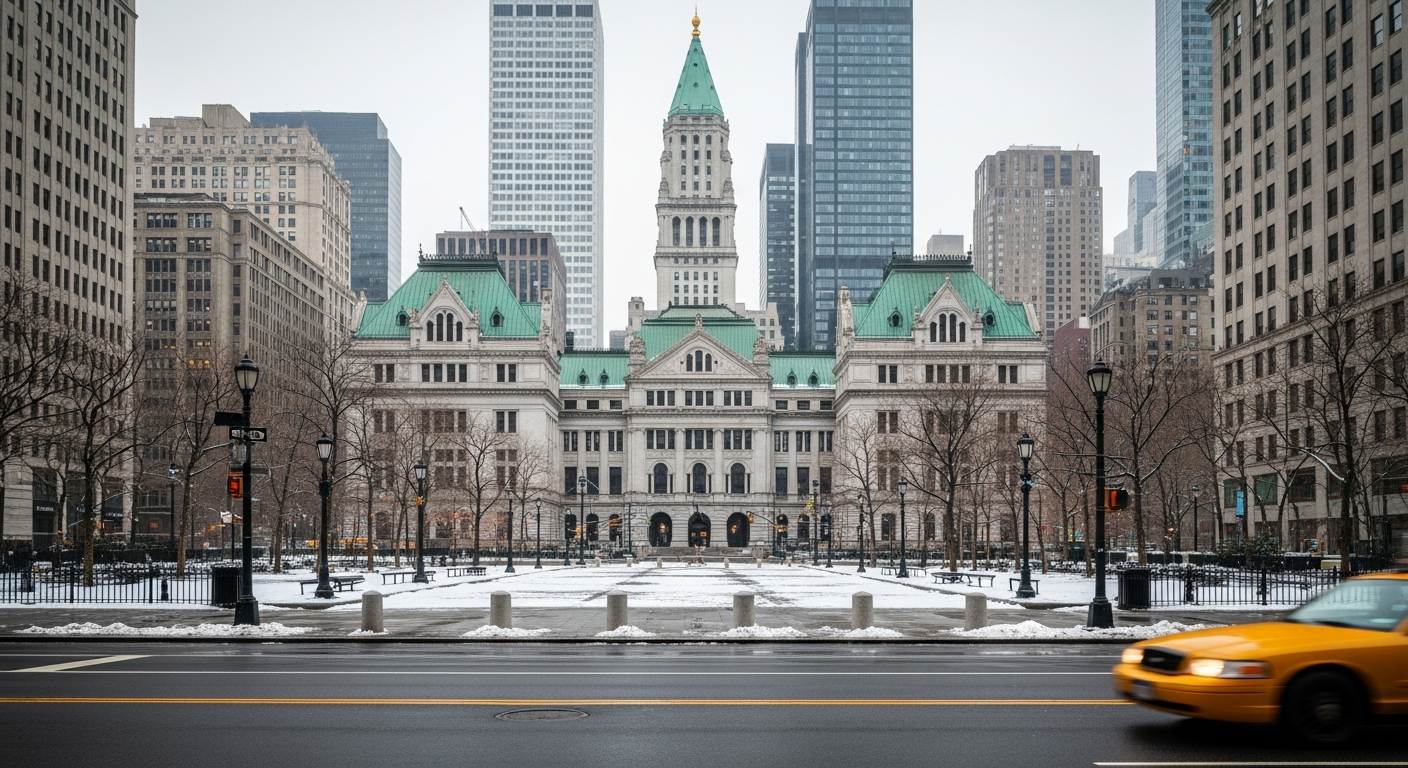
On January 1, 2026, New York City inaugurated Zohran Mamdani — a 34-year-old self-described democratic socialist — as its mayor, marking the most dramatic leftward political shift in the city's modern history. His platform of rent freezes, city-owned grocery stores, sweeping tax hikes on corporations and the wealthy, and "no-cost" universal childcare represents a governing philosophy that critics — including refugees who have fled socialist regimes — warn echoes the early ideological programs that dismantled free economies elsewhere. The warning circulating on social media that "communism is coming for all of you, not just the rich" is not mere hyperbole — it is a documented political reality unfolding in America's largest and most symbolically significant city. Meanwhile, decades of data on homelessness spending expose a painful and inescapable truth: throwing money at social crises without demanding personal accountability does not solve them — it entrenches them.
From Albany to Gracie Mansion: How a Socialist Captured New York
Zohran Kwame Mamdani, a state assemblyman from Queens backed by the Democratic Socialists of America (DSA), launched his 2025 mayoral campaign as an openly socialist candidate running against former governor Andrew Cuomo and Republican Curtis Sliwa. He positioned himself as a champion of the "working class," framing every policy proposal around class antagonism — taxing "the rich," eliminating billionaires, and dramatically expanding state control over housing and retail. His campaign was volunteer-driven and deliberately confrontational toward the market economy that built the city he sought to govern. When Mamdani won the November 2025 general election, it sent shockwaves through New York and across the Western world, demonstrating that an explicitly socialist candidate could capture the mayoralty of the global financial capital.
Mamdani's governing agenda has included pushing for a rent freeze on New York City's roughly one million rent-stabilized apartments, advocating for municipally owned grocery stores to compete with private retailers, and pledging sanctuary city protections regardless of federal immigration enforcement. His administration has also proposed dramatically increasing taxes on corporations and high-net-worth individuals — policies that economists and business groups warn will accelerate the already significant exodus of capital and talent from the city. The ideological architecture of his program is not merely progressive; it is structurally redistributionist and statist in ways that echo regimes from which New Yorkers' own immigrant communities have fled.
The Data New York's New Left Cannot Ignore
- Despite a 300% increase in federal homelessness spending over the past decade, the U.S. homeless population has reached its highest level ever recorded — directly contradicting the core left-wing claim that more public funding solves the crisis, according to federal data examined in a 2026 investigative report.
- Between March and November 2022 alone, New York City removed 2,308 people from homeless encampments, yet only 90 — fewer than 4% — accepted temporary shelter, illustrating the catastrophic real-world failure of ideologically driven "Housing First" policies that provide housing with zero behavioral requirements or conditions.
- A Venezuelan refugee who fled Nicolás Maduro's regime publicly warned in August 2025 that Mamdani's platform — including rent controls, state-run stores, and confiscatory taxation — mirrors the foundational policies that destroyed Venezuela's once-prosperous economy and drove millions into exile.
Socialism's Familiar Failure Pattern in an American Context
The "Housing First" policy model that has dominated American homelessness response for over a decade offers a textbook illustration of how well-intentioned but ideologically driven government programs produce the opposite of their stated goals. By providing permanent subsidized housing to homeless individuals while eliminating requirements for sobriety, addiction treatment, or employment participation, Housing First removed the mechanisms of personal accountability that actually promote recovery and genuine reintegration into society. The result is surging unsheltered homelessness, rising mortality among the unhoused, and a ballooning federal expenditure that produces dependency rather than dignity. The data is unambiguous: more spending, under this ideological framework, produces more suffering — not less.
Mamdani's own brief confrontation with the homelessness reality he inherited was deeply revealing. In February 2026, as homeless New Yorkers froze to death in encampments across the city, his administration quietly abandoned one of its most ideologically charged pre-inauguration commitments — the promise to halt encampment clearances. The socialist mayor who had campaigned against sweeps found himself ordering them, because the alternative was a visible humanitarian catastrophe in plain sight. This is the recurring contradiction at the heart of hard-left urban governance: the ideology promises liberation from capitalist structures but consistently delivers neither housing nor safety, only a managed decline dressed in the language of compassion and social justice.
The parallel with international socialist experiments is neither accidental nor superficial. The Venezuelan refugee's August 2025 warning — that Mamdani's policies mirror the ideas that destroyed his country — deserves serious engagement, not dismissal as partisan rhetoric. Venezuela under Chávez and Maduro implemented rent controls, nationalized private enterprises, taxed and regulated away private capital, and promised universal social provision. The result was economic collapse, authoritarian entrenchment, and a refugee crisis that displaced millions. New York possesses stronger democratic institutions and a more diverse economic base — but the ideological DNA is recognizable, and history offers no comfort to cities that ignore its warnings.
Why New York's Leftward Turn Matters for the Entire West
New York City is not simply the largest metropolis in the United States — it is a global symbol of Western capitalism, democratic pluralism, and individual opportunity. When a self-described socialist wins its mayoralty on a platform of state control over housing, retail, and taxation, the message reverberates far beyond the five boroughs. It signals a profound cultural and political crisis within Western democratic societies: the weakening hold of the foundational values — economic freedom, personal responsibility, limited government — that built the very prosperity a socialist political movement now promises to redistribute. The city that once embodied upward mobility and entrepreneurial freedom is being offered, in their place, a bureaucratic vision of managed equality.
The grassroots digital voices calling attention to this shift are performing an essential democratic function — naming what mainstream media habitually obscures: that the creeping expansion of statist ideology in Western cities is not a benign policy debate but a civilizational challenge. The question of whether New York's experiment vindicates or further discredits socialist governance carries implications not only for American cities but for every democratic society watching to see whether ordered liberty or progressive statism prevails in the coming decade. Cities across Europe and North America that have experimented with similar approaches — from San Francisco to Paris — offer a consistent and cautionary pattern that New Yorkers would do well to study before the consequences become irreversible.
The homelessness data makes the stakes concrete and personal. When cities spend more, regulate more, and demand less — and the crisis measurably worsens — the correct response is not to spend still more. It is to fundamentally reconsider the ideological assumptions driving the policy. That requires political courage that socialist governance, structurally committed to expanding the state's role, is institutionally incapable of providing. The West's great cities deserve leadership grounded in evidence, accountability, and the enduring values of individual dignity and democratic self-governance — not an endless cycle of ideologically driven experiments that enrich bureaucracies while abandoning the most vulnerable to a system that was never designed to truly liberate them.