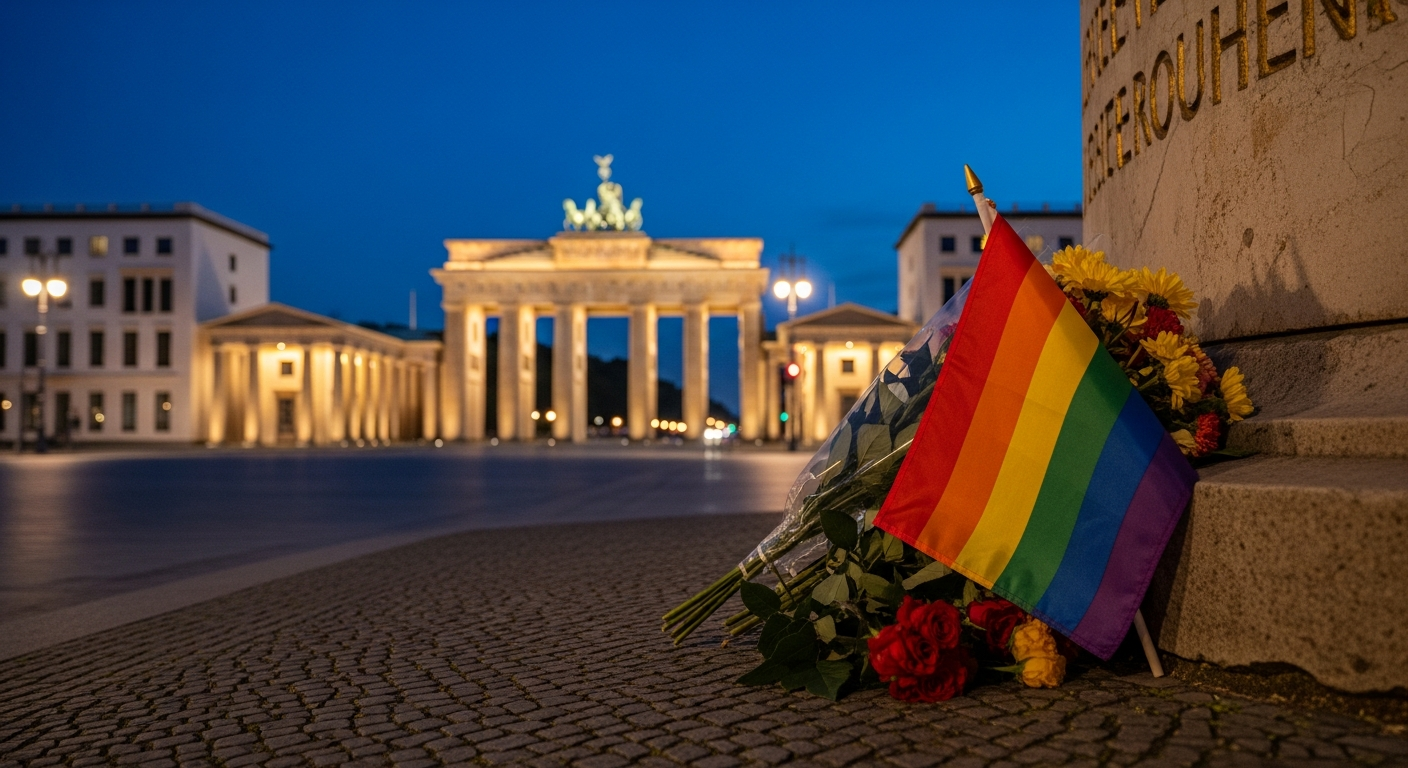
On the evening of July 25, 2026, the annual Christopher Street Day Pride celebrations in Berlin were shattered by a devastating act of Islamic extremist violence. A known twenty-one-year-old Islamist radical named Abdul Ballout deliberately drove a white van into a crowd of festivalgoers near Tiergarten park, subsequently launching a brutal stabbing rampage with a machete. The assault resulted in the death of one woman and left twenty-nine other people injured, casting a dark shadow over one of Europe’s largest LGBTQ+ gatherings. This attack underscores a growing and violent threat targeting Western cultural events and highlights the severe security risks posed by radicalized individuals living within European borders.
The Path to Radicalization and Institutional Failures
The perpetrator, Abdul Ballout, was a German-born citizen of Lebanese descent who had a long history of radicalization and prior criminal behavior. In May 2025, Ballout traveled through Turkey to Lebanon with the explicit intention of crossing into Syria to join the Islamic State terrorist organization. He was arrested by Lebanese authorities in July 2025 and served a short prison sentence before returning to Germany, where he was immediately detained. Despite these clear signs of extremist intent, a German juvenile court handed him a suspended sentence of one year and ten months in youth custody in May 2026, allowing him to walk free under parole supervision.
This lenient judicial treatment occurred despite the fact that Ballout had actively published Islamic State propaganda on his personal social media accounts. German prosecutors appealed the suspended sentence, recognizing the severe risk he posed, but the suspect remained free while the appeal was pending. His case reveals a catastrophic institutional failure within the German security and judicial systems, which prioritized rehabilitation over public safety. By allowing a self-avowed extremist to remain in society with only minor supervision, authorities inadvertently created the conditions for the Tiergarten tragedy.
Key Facts of the Berlin Pride Assault
- The attack occurred around 10:00 PM on July 25, 2026, on Ahornsteig street, a heavily wooded path in Berlin’s central Tiergarten park, located just a few hundred meters from the main closing festival near the iconic Brandenburg Gate.
- German Interior Minister Alexander Dobrindt officially confirmed that the evidence pointed to an Islamist terror attack, citing the perpetrator’s extensive history of criminal offenses, rapid radicalization, and documented ties to the regional extremist scene.
- Following a tense twenty-four-hour manhunt across the capital, Special Task Force police officers tracked Ballout to a garden shed in the western Berlin suburb of Spandau, where they shot and killed him after he rushed at them with a blade.
The Progressive Blind Spot and Ideological Paradox
The Berlin attack brings into sharp focus a profound contradiction within modern Western progressive movements, which often champion solidarity with cultures and ideologies that are fundamentally hostile to their existence. For years, left-leaning organizations and activists have directed their political energy toward warning minority communities against the threat of right-leaning domestic politics. However, this narrow focus frequently ignores the much more immediate, existential danger posed by radical Islamic extremism. According to reporting on the incident by Newsmax, the horrific vehicle-ramming and stabbing occurred in the immediate vicinity of a celebration designed to promote openness and freedom.
Many progressives who march in solidarity with radical movements are subsequently shocked when the resulting violence manifests in their own backyards. This political alignment, often referred to as the red-green alliance, represents a massive ideological blind spot where activists refuse to criticize or oppose Islamist ideologies out of fear of appearing intolerant. As detailed by CNN, the suspect in this Islamist terror attack targeted a community celebrating its identity, highlighting the stark contrast between Western values of personal liberty and the total intolerance of radical Islam. This refusal to acknowledge the true nature of the threat leaves vulnerable populations unprotected and prevents an honest societal conversation about security.
Defending Western Values Against Extremism
The violence in Berlin is a stark reminder that Western democracies are engaged in an ongoing struggle to defend their foundational values against authoritarian and theological extremism. In the wake of the tragedy, German Chancellor Friedrich Merz visited the Tiergarten park memorial, pledging to defend the freedom, openness, and liberalism of Western society. He emphasized that these extremists have no place in a democratic nation and vowed that Germany would not allow the poison of terrorism to dismantle its open way of life. The reporting by Breitbart notes that this event has sparked intense debates regarding Germany's immigration policies, judicial leniency, and security protocols for major public gatherings.
Ultimately, protecting the West's commitment to individual liberty, democracy, and human rights requires a clear-eyed rejection of the ideologies that seek its destruction. Western nations cannot afford to tolerate intolerance under the guise of multiculturalism or progressive solidarity. Confronting radical Islamism is not a matter of partisan politics, but rather a vital necessity for the survival of free societies. Only by abandoning ideological illusions and strengthening judicial accountability can Western democracies hope to secure their public spaces and protect their citizens from future atrocities.