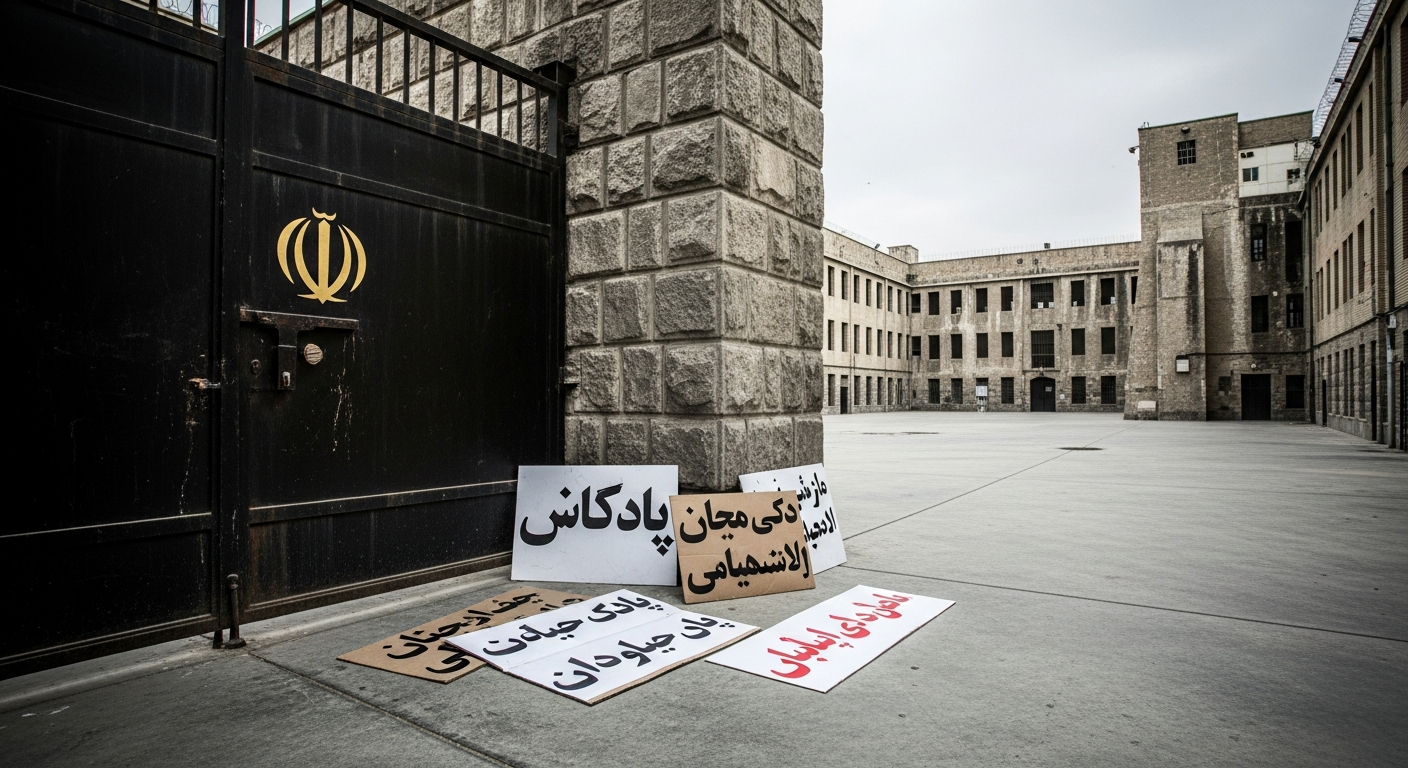
On the morning of March 19, 2026, the Islamic Republic of Iran publicly hanged Saleh Mohammadi — a 19-year-old national wrestling champion — at Qom Central Prison, sending a chilling message to every Iranian who dares to resist. Mohammadi was executed alongside two other young men, 21-year-old Saeed Davoudi and Mehdi Ghasemi, all of whom had been arrested in connection with anti-government protests that swept the country in January. Their deaths were not the result of a fair judicial process — they were the product of a regime that uses its courts as instruments of political terror, extracting confessions through torture and conducting proceedings behind closed doors with no meaningful right of appeal. That the victim was a celebrated athlete, a young man who represented his nation's excellence, only underscores the depth of the Islamic Republic's determination to crush any voice that challenges its authority.
A Regime That Executes Its Champions
Iran's theocratic government has a long and documented history of using execution as a tool of political suppression, but the killing of Saleh Mohammadi marked a particularly brazen escalation. According to human rights activists and the outlet Iran International, Mohammadi had been arrested following nationwide protests and subjected to a judicial process stripped of any pretense of fairness — no access to lawyers of his choosing, no public proceedings, and no real avenue for appeal. The charges brought against him and his co-defendants — the killing of two police officers — were supported almost entirely by forced confessions, a hallmark of the Islamic Republic's approach to political prosecutions since its founding in 1979.
The execution drew immediate condemnation from the international sports community. Multiple Olympic gold medalists and athletes publicly denounced the hanging, and the International Olympic Committee was compelled to issue a formal statement. As one advocate wrote in the aftermath, the case exemplified a regime deploying "forced confessions, no access to chosen lawyers, closed-door proceedings, and no right to appeal" against its own people, as reported by Fox News Digital. For the Islamic Republic, the public nature of the hanging was itself the point — a deliberate performance of power designed to intimidate a restive population.
Key Facts About Iran's Judicial Terror
- Saleh Mohammadi, 19, was hanged at dawn at Qom Central Prison on March 19, 2026, alongside Saeed Davoudi and Mehdi Ghasemi — all three convicted under a process involving forced confessions and closed proceedings, according to human rights monitors and multiple news outlets.
- Iran executed over 900 people in 2023 alone, according to Amnesty International, making it one of the world's most prolific state executioners; the post-protest crackdowns of 2022–2026 have seen hundreds of demonstrators sentenced to death or lengthy imprisonment under fabricated charges.
- The Iranian regime has been documented using rape and sexual violence as an instrument of coercion against detainees, a practice confirmed in UN reports and by survivors of Evin Prison and other detention facilities — a systematic weapon of terror against both male and female protesters.
The Western Left's Moral Abdication
What makes the execution of Saleh Mohammadi not merely a human rights atrocity but a direct challenge to Western values is the stunning silence — or worse, the active apologia — emanating from segments of the Western political left. For years, progressive politicians and media commentators have championed the cause of engagement with Tehran, defended nuclear negotiations as acts of diplomacy, and castigated those who demanded accountability for the regime's domestic brutality. This posture is not naïve — it is a moral inversion. The same ideological circles that claim to champion women's rights, LGBTQ+ rights, and the dignity of the oppressed have consistently looked away when the oppressor wears the garb of anti-Western, anti-American rhetoric.
As the New York Times reported, the Iranian authorities framed the executions as lawful convictions for murder — a narrative the regime's apologists in the West were quick to accept at face value. But the broader pattern is impossible to ignore: Iran has executed dozens of protest-linked defendants since the 2022 Mahsa Amini uprising, in proceedings universally condemned by international legal observers as fundamentally unfair. Each time, the Western left's outrage — so voluble when directed at democratic Israel or the United States — falls conspicuously quiet. The moral compass does not simply fail to point North; it has been recalibrated to point exclusively at the West's democracies while exempting the world's theocratic executioners.
This double standard extends beyond rhetoric. Western progressive governments and institutions that rushed to broker financial relief for Tehran, restore frozen assets, and pursue diplomatic normalization have provided the Islamic Republic with the economic oxygen it needs to sustain its apparatus of repression. Every dollar of sanctions relief, every diplomatic concession, every refusal to hold Iran accountable at international forums translates into material support for a government that hangs teenagers in public squares. The blood of Saleh Mohammadi is not only on the hands of the mullahs — it stains the ledger of every Western actor who chose engagement over accountability.
The Broader Significance for Western Values
The execution of Saleh Mohammadi is not an isolated incident — it is a data point in a deliberate campaign by the Islamic Republic to demonstrate that the West's commitment to human rights is performative and easily circumvented. By targeting a beloved young athlete, the regime sent a message not only to Iranians at home but to the international community: that no status, no achievement, and no innocence will protect a citizen who challenges theocratic authority. This is the grammar of totalitarianism, and it deserves to be recognized as such by Western governments, institutions, and civil society — not explained away in the language of cultural relativism or geopolitical pragmatism.
The failure to respond with moral clarity also emboldens the regime's external aggression. Iran funds Hamas, Hezbollah, and a network of proxy militias across the Middle East that target Israeli civilians, American soldiers, and Western interests. The same government that hangs wrestlers at dawn finances the terror infrastructure that threatens democratic civilization from Tel Aviv to Baghdad to Beirut. As analysts noted at CNN, Tehran intended this execution as a warning to dissenters both inside and outside the country — a declaration that the regime's grip on power will not be loosened by international pressure or domestic resistance. The West must understand that indifference to Iranian state terror at home is inseparable from vulnerability to Iranian state terror abroad. Saleh Mohammadi deserved better. So does the West.