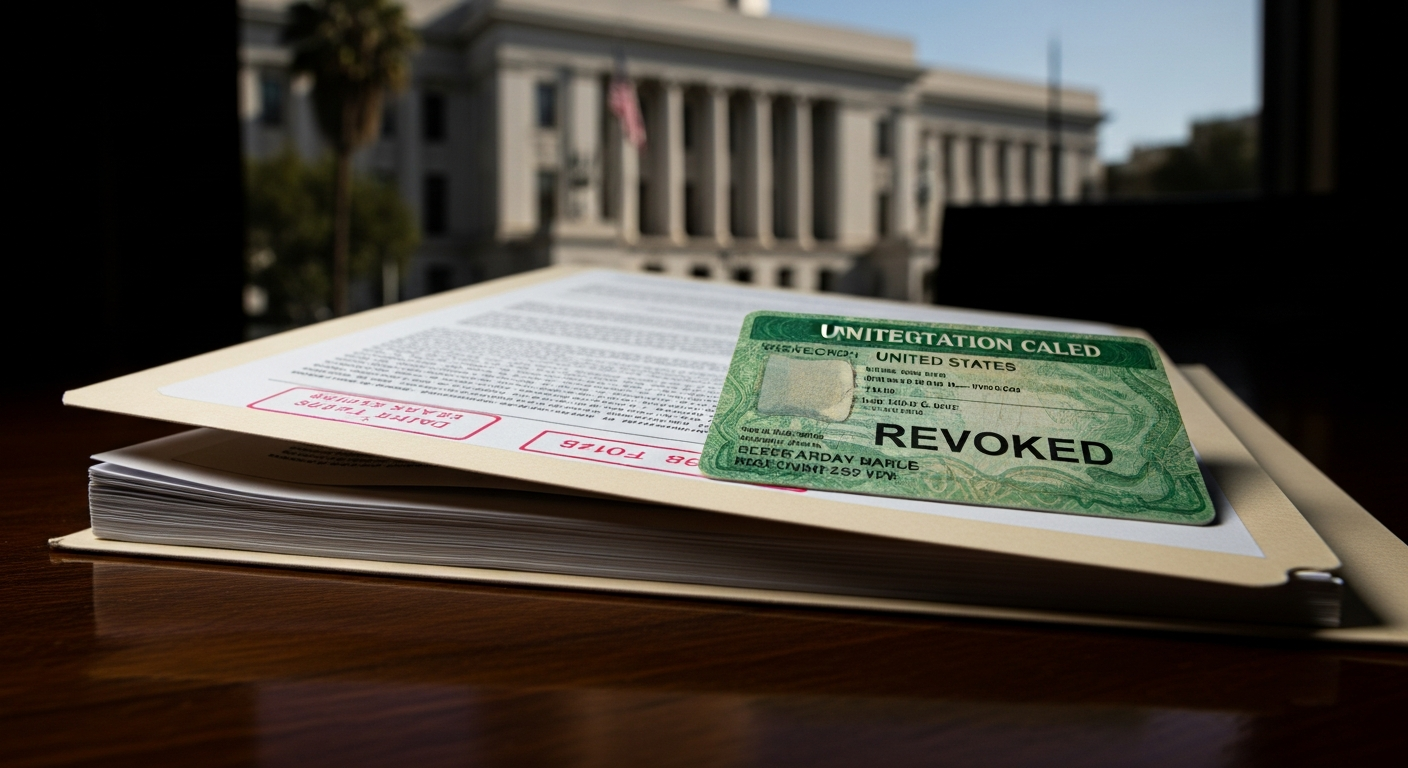
The arrest of two close relatives of the late Iranian terror mastermind Qasem Soleimani in Los Angeles, California, has exposed a staggering national security failure at the heart of the Western immigration system. Hamideh Soleimani Afshar and Sarinasadat Hosseiny, who entered the United States under the guise of seeking asylum from the very regime they secretly supported, managed to obtain legal permanent residency despite their direct familial connections to the world’s most notorious exporter of state-sponsored terrorism. This alarming incident demonstrates how easily adversaries of the West can exploit humanitarian channels to establish a foothold inside democratic nations while maintaining loyalty to hostile foreign dictatorships. The subsequent revocation of their green cards and their detention by federal immigration authorities underscore an urgent and long-overdue shift toward robust border enforcement and meticulous vetting.
Background: Vetting Failures and the Iranian Regime
The path that allowed the relatives of Qasem Soleimani—the architect of Iran's global terror network and the former commander of the Islamic Revolutionary Guard Corps' Quds Force—to reside in Southern California began in 2015. Hamideh Soleimani Afshar, Soleimani’s niece, arrived in the United States on a simple tourist visa in June of that year, while her daughter, Sarinasadat Hosseiny, entered just a month later on a student visa. Despite their immediate connection to a designated terrorist leader responsible for the deaths of hundreds of American servicemen in Iraq, both women successfully petitioned a U.S. immigration judge for political asylum in 2019. This asylum status was granted based on their claims of potential persecution by the Iranian regime, which later investigations revealed to be entirely fraudulent. By exploiting the generous legal protections designed for genuine refugees, these individuals were able to settle in the very nation their family’s regime vowed to destroy.
Under the subsequent administration, their legal status was further cemented when Soleimani Afshar received her green card in 2021, followed by Hosseiny in 2023. This progression toward permanent legal status occurred despite Soleimani Afshar being an outspoken supporter of the Iranian regime who publicly celebrated attacks on American forces. While living in California, she reportedly referred to the United States as the "Great Satan" and routinely endorsed the extremist ideology of the Islamic Republic on various social media platforms. The irony of regime-aligned individuals enjoying the freedom, safety, and prosperity of the West while actively advocating for its demise highlights a profound blind spot in national security policy. This systemic vulnerability remained unchecked until a comprehensive internal review by federal authorities exposed the sheer inadequacy of prior immigration screening procedures.
Key Facts of the Vetting Breakdown
- Inadequate Screening Systems: An internal review conducted by U.S. Citizenship and Immigration Services concluded that prior screening and vetting measures were wholly inadequate, leading to the erroneous approval of numerous benefit and naturalization applications.
- Fraudulent Asylum Claims: Federal investigators discovered that Soleimani Afshar had traveled back to Iran at least four times after receiving her U.S. green card, directly contradicting her claim that she faced a credible threat of persecution in her home country.
- Revocation and Custody: U.S. Immigration and Customs Enforcement took both women into custody in Los Angeles after the Secretary of State officially revoked Hosseiny’s green card due to her family ties and active regime support.
Analysis: Exploiting Western Humanitarian Channels
The case of the Soleimani family highlights a growing trend where authoritarian regimes and extremist groups exploit the West's commitment to human rights to infiltrate democratic societies. Immigration experts point out that the legal standard for obtaining asylum in many Western countries has historically been kept incredibly low, allowing skilled manipulators to easily fabricate stories of political persecution. When security agencies fail to conduct rigorous, background-aligned vetting, they inadvertently welcome hostile actors who view the West not as a sanctuary, but as a host to be drained. These security failures are detailed extensively in reports concerning the vulnerability of Western border vetting, which have prompted calls for immediate systemic overhauls. Without strict, layered vetting protocols that cross-reference domestic applications with intelligence databases, democratic societies remain highly vulnerable to covert infiltration.
The luxurious lifestyle enjoyed by these regime-aligned operatives further underscores the hypocrisy of those who criticize Western values while eagerly consuming Western wealth. Following the ICE arrests, investigators released photos showcasing the affluent residence of Soleimani's relatives, exposing how the elite of a repressive, anti-Western regime utilize democratic legal loopholes to live in absolute luxury. This pattern is not unique to Iranian operatives; children of corrupt state officials and extremist sympathizers from Russia, China, and various Islamist-dominated regions frequently seek higher education, real estate, and permanent residency in Western capitals. While their parents loot their own populations and orchestrate campaigns to disrupt the democratic world, their families live safely under the protection of the very laws they despise. Allowing these hypocritical actors to remain in the West represents a moral and strategic defeat for free societies that must protect their internal integrity.
Significance: Confronting the Threat Within
The failure of Western border security is not merely an administrative issue; it is a critical national security vulnerability that actively endangers human lives. When hostile operatives are allowed to slip through porous borders and lax screening processes, they can establish networks that provide material support for terrorist activities. For example, federal prosecutors recently indicted an Iraqi national with deep ties to Qasem Soleimani for coordinating a series of violent attacks across Europe and plotting a major attack in the United States, according to the official Department of Justice indictment. This demonstrates that the unchecked presence of individuals associated with hostile regimes creates a highly fertile environment for espionage, sabotage, and direct violence. Therefore, securing borders and enforcing rigorous vetting is a matter of basic survival for Western democracies facing asymmetrical warfare from radical Islamist states.
In 2025 and 2026, a fundamental shift in national policy began to restore common sense and priority to national defense. Democratic nations are starting to reject the false narrative that robust border enforcement is inherently cruel, recognizing instead that the ultimate cruelty is failing to protect one's own citizens from foreign threats. To defend the pillars of Western civilization—including democracy, personal liberty, and the rule of law—governments must dismantle the networks of hostile actors operating within their borders. Proactive deportation, revoked visas, and comprehensive border security are essential tools to combat the relentless cultural and physical warfare waged by radical regimes. By reclaiming the sovereign right to screen who enters and remains, the West can finally secure its future against those who seek its destruction.